

Anambé Cinéreo vs Tangara de Carmiol
Pachyramphus rufus frente a Chlorothraupis carmioli
Juega un quiz con Anambé Cinéreo y Tangara de Carmiol
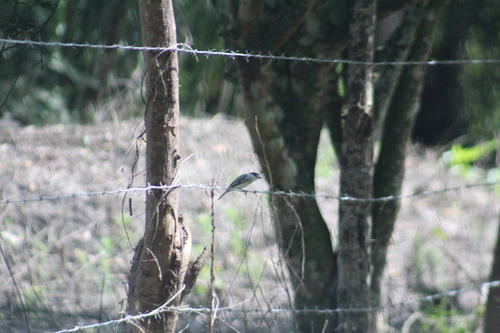 Anambé Cinéreo
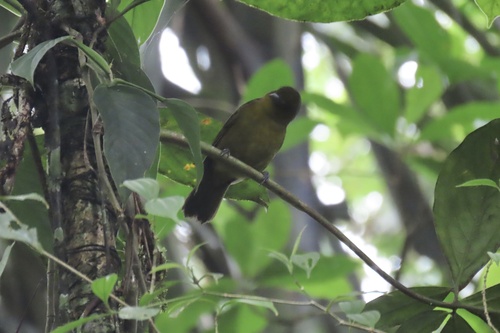 Tangara de Carmiol
En breve
The most reliable field mark between Cinereous Becard and Carmiol's Tanager is overall coloration: Cinereous Becard (especially females) shows bright cinnamon-rufous or gray tones, while Carmiol's Tanager is a uniform olive-green bird. In all ages and sexes, Carmiol's Tanager lacks the contrasting crown and wing pattern of the becard. Size is also a clue, as Carmiol's Tanager is notably bulkier. If you see a bird with a rufous or gray crown, or any strong contrast between head and body, it's not Carmiol's Tanager. In flight or perched, check for wing edging and crown color before relying on subtle differences.
Consejos de identificación
- Crown color is key: Any bird with a black (male) or rufous (female) crown is Cinereous Becard; Carmiol's Tanager always has a uniform olive-green crown matching the rest of the upperparts.
- Wing edging: Cinereous Becard shows distinct white (male) or rufous (female) edging on the flight feathers and coverts; Carmiol's Tanager's wings are plain olive-green with no contrasting edges.
- Tail color: Becard males have a slaty gray tail, females a cinnamon tail; Carmiol's Tanager's tail is olive-green and blends with the body.
- Facial contrast: Male becards have a white forehead and lores, females a pale cinnamon face; Carmiol's Tanager has a yellowish patch in front of the eye (female only), but never a sharply contrasting face.
- Underparts: Cinereous Becard males are light gray below, females buffy cinnamon fading to white; Carmiol's Tanager is always olive-green below, with only a slightly yellower throat (male streaked, female uniform pale yellow).
- Bill structure: Both have stout, dark bills, but Carmiol's Tanager's is proportionally larger and heavier, matching its bulkier body.
- Size and build: Carmiol's Tanager is much larger and more robust (almost double the mass); Cinereous Becard is smaller and more delicate.
- Sex differences: Female becards are bright cinnamon above, never olive; female tanagers are paler olive, never rufous or cinnamon.
- No strong head/body contrast in tanager: If you see a sharp break between crown and back color, it's a becard.
- No white on wings or tail in tanager: Any white or pale edging on wings/tail points to becard.
- No rufous tones in tanager: Any hint of rufous or cinnamon rules out Carmiol's Tanager.
- Habitat overlap is limited: In Central America (north of Panama), only Carmiol's Tanager is expected; in Amazonia, only Cinereous Becard.
- Juvenile/immature birds: No specific juvenile wing patterns are described for either, so rely on crown and wing edging for all ages.
- Perched vs. in flight: Both species are best identified perched, but wing edging and crown color can be seen in flight if lighting is good.
- Voice not diagnostic: No vocal differences are provided in the notes; rely on visual marks.
Tamaño
Carmiol's Tanager is significantly larger and heavier than Cinereous Becard. Carmiol's Tanager averages about 17 cm in length and 36.6 g in mass [wikidata], presenting as a robust, chunky bird. Cinereous Becard is smaller and lighter (12.9–14 cm long, ~18.5 g [wikipedia]), with a more delicate, compact build. In the field, Carmiol's Tanager will look bulkier and more solid, while the becard may appear more slender and agile.
Plumaje
No age-specific upperwing patterns are described for either species, but adult and female Cinereous Becard show strong contrast in crown and wing edging, unlike Carmiol's Tanager.
- Cinereous Becard (male): Glossy black crown, white forehead/lores, pearl-gray upperparts, blackish wings with white edges, slaty gray tail. Underparts are light gray, darkest on upper breast.
- Cinereous Becard (female): Dark chestnut-rufous crown, cinnamon-rufous upperparts, blackish wings with rufous edges, cinnamon tail, whitish throat, buffy cinnamon breast fading to whitish belly.
- Carmiol's Tanager (male): Dull olive-green above, paler olive below, slightly yellower throat with streaks, robust and even-colored.
- Carmiol's Tanager (female): Paler olive underparts, yellowish patch in front of eye, uniform pale yellow throat, otherwise similar to male.
Carmiol's Tanager never shows the strong head/body color contrast or wing edging of Cinereous Becard. Both sexes of the tanager are much more uniform in color, lacking rufous, gray, or black crown tones.
Comportamiento
Behavior is not strongly diagnostic from the provided notes. Both species may be seen in forested habitats, but Carmiol's Tanager, being larger and more robust, may move more deliberately and in heavier cover, while Cinereous Becard could appear more active and agile. However, these impressions are subtle and secondary to plumage and structure.
Hábitat
Carmiol's Tanager is found in Central America from Nicaragua to northwest Colombia, mainly in subtropical or tropical moist lowland forests and degraded forest [wikipedia]. Cinereous Becard ranges from Panama and northern South America (Brazil, Colombia, French Guiana, Guyana, Peru, Suriname, Venezuela, possibly Ecuador) [wikipedia]. There is some range overlap in northwest Colombia and Panama, but Carmiol's Tanager is more strictly Central American, while Cinereous Becard is primarily South American. If you are outside the overlap zone, habitat and range may help, but within overlap, rely on plumage.