

Loro Barranquero vs Aratinga Ojiblanca
Cyanoliseus patagonus frente a Psittacara leucophthalmus
Juega un quiz con Loro Barranquero y Aratinga Ojiblanca
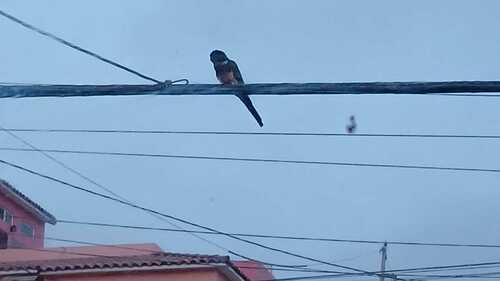 Loro Barranquero
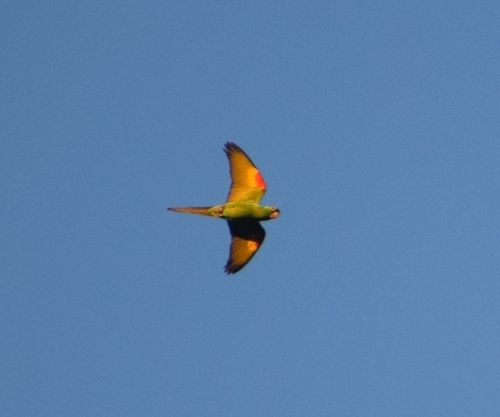 Aratinga Ojiblanca
En breve
La marca de campo más confiable para separar el Loro Barranquero del Aratinga Ojiblanca es la combinación de un anillo ocular blanco desnudo y audaz y una distintiva mancha blanca en el pecho en el Loro Barranquero, frente al plumaje mayormente verde del Aratinga Ojiblanca con manchas rojas dispersas y un anillo ocular desnudo menos conspicuo. En vuelo o en reposo, el Loro Barranquero muestra una cola larga y graduada y una mezcla llamativa de rojo-naranja y amarillo en el vientre y los muslos, mientras que el Aratinga Ojiblanca es más delgado, tiene una cola más corta y carece de los fuertes contrastes de color por debajo. Los juveniles de Aratinga Ojiblanca carecen de gran parte del rojo en la cabeza y las alas, lo que puede causar confusión, pero la marca blanca en el pecho del Loro Barranquero y su construcción más robusta siguen siendo distintivas a todas las edades. Ambas especies tienen piel desnuda alrededor del ojo, pero el resto de sus patrones faciales y de partes inferiores son bastante diferentes si se ven bien.
Consejos de identificación
- Mancha blanca en el pecho (Loro Barranquero): Busque una mancha blanca variable pero a menudo prominente en el pecho, a veces extendiéndose ampliamente, especialmente en la subespecie chilena. El Aratinga Ojiblanca nunca muestra esta marca. Funciona para todas las edades.
- Anillo ocular blanco desnudo: El Loro Barranquero tiene un anillo ocular blanco desnudo y conspicuo y una mancha post-ocular, que destaca a distancia. El Aratinga Ojiblanca también tiene piel desnuda alrededor del ojo, pero es más estrecha y menos obvia, a veces amarillenta. Confiable a todas las edades.
- Color de las partes inferiores: El Loro Barranquero muestra una combinación llamativa de rojo-naranja en el vientre inferior y amarillo en la parte baja de la espalda, muslos y vent. El Aratinga Ojiblanca es verde por debajo, a veces más pálido, sin fuertes contrastes de color.
- Manchas en la cabeza y el cuello: El Aratinga Ojiblanca adulto tiene manchas rojas dispersas en la cabeza y el cuello, y rojo en el pliegue del ala. El Loro Barranquero carece de rojo en la cabeza y tiene una cabeza de color oliva-marrón uniforme.
- Forma y longitud de la cola: La cola del Loro Barranquero es larga, graduada y a menudo parece tener un tinte azul desde arriba. La cola del Aratinga Ojiblanca es más corta, menos graduada y de color oliva por debajo.
- Color del pico: El Loro Barranquero tiene un pico gris (los inmaduros con una mancha de color cuerno en la mandíbula superior), mientras que el pico del Aratinga Ojiblanca es siempre de color cuerno.
- Tamaño y estructura: El Loro Barranquero es mucho más robusto y largo, con un aspecto pesado y de pecho profundo y una cola larga. El Aratinga Ojiblanca es más delgado y compacto.
- Confusión juvenil: Los juveniles de Aratinga Ojiblanca carecen de la mayor parte del rojo en la cabeza y las alas, lo que los hace parecer más simples, pero aún carecen de la mancha blanca en el pecho y el anillo ocular audaz del Loro Barranquero. Los juveniles de Loro Barranquero ya muestran las marcas clave.
- Apariencia en vuelo: En vuelo, la larga cola del Loro Barranquero y los contrastes de color por debajo (amarillo y rojo) son visibles. El Aratinga Ojiblanca en vuelo muestra un cuerpo mayormente verde, con rojo en el pliegue del ala y amarillos en las coberturas de las alas inferiores si se ve bien.
- Hábitat y rango: Si está en Chile o en el sur de Argentina, es mucho más probable que sea un Loro Barranquero. El Aratinga Ojiblanca está ausente en Chile y prefiere hábitats más boscosos o urbanos en otros lugares.
- Comportamiento en bandada: El Loro Barranquero a menudo forrajea en el suelo o se posa en acantilados; el Aratinga Ojiblanca es más arbóreo.
- Dimorfismo sexual: Los machos de Loro Barranquero pueden mostrar un rojo más brillante y extenso en el vientre, pero esto es sutil y no siempre visible. Ambos sexos de Aratinga Ojiblanca se parecen.
- Variación de subespecies: Los Loro Barranqueros chilenos tienen las partes inferiores más brillantes en amarillo y rojo y la mancha blanca en el pecho más extensa, pero todas las subespecies muestran el patrón básico. Las subespecies de Aratinga Ojiblanca pueden variar en tamaño y cantidad de rojo, pero nunca muestran una mancha blanca en el pecho o partes inferiores amarillas fuertes.
- Vistas posadas vs. en vuelo: La mancha blanca en el pecho y los colores de las partes inferiores del Loro Barranquero son visibles tanto posados como en vuelo. Las marcas rojas y amarillas de las alas del Aratinga Ojiblanca son más obvias en vuelo o con las alas extendidas.
- Voz: No es diagnóstica con las notas disponibles; ambos son ruidosos y sociales, pero la separación en campo debe depender del plumaje y la estructura.
Tamaño
El Loro Barranquero es significativamente más grande y pesado que el Aratinga Ojiblanca. Los Loro Barranqueros adultos alcanzan de 39 a 52 cm de longitud y son el loro más grande del Nuevo Mundo, con machos que pesan hasta 340 g (hembras hasta 304 g) [wikipedia]. En contraste, el Aratinga Ojiblanca es más pequeño, de 32 a 35 cm de longitud y promedia 158 g [wikidata], con un peso máximo registrado de 218 g. El Loro Barranquero también tiene una cola mucho más larga y graduada, que es obvia tanto posado como en vuelo. El Aratinga Ojiblanca es más delgado, con una cola proporcionalmente más corta y un aspecto más compacto.
Plumaje
- Juveniles/Inmaduros: Los juveniles de Aratinga Ojiblanca se parecen a los adultos pero tienen poco o nada de rojo en la cabeza y las alas, lo que los hace parecer más verdes en general. Los juveniles de Loro Barranquero se parecen a los adultos pero tienen una mancha de color cuerno en la mandíbula superior y un iris gris pálido, con la marca blanca en el pecho y las partes inferiores de color ya presentes [wikipedia].
- Adultos: El Loro Barranquero es de color oliva-marrón a oliva-verde por encima, con una mancha blanca en el pecho variable pero a menudo prominente, garganta gris-marrón, vientre inferior naranja-rojo y amarillo en la parte baja de la espalda, muslos y vent. El anillo ocular blanco desnudo es audaz. La cola es larga y graduada, de color oliva-verde por encima con un matiz azul. El Aratinga Ojiblanca es mayormente verde, más pálido por debajo, con manchas rojas dispersas en la cabeza y el cuello, rojo en el pliegue del ala y amarillo en las coberturas de las alas inferiores más externas. La piel desnuda alrededor del ojo es blanca a amarillenta, pero no tan ancha u obvia como en el Loro Barranquero. El pico es de color cuerno. Sin una fuerte mancha en el pecho o partes inferiores contrastantes. Variación de subespecies en ambos, pero estas marcas son consistentes.
Comportamiento
El Loro Barranquero se ve a menudo en bandadas ruidosas y compactas, a veces en el suelo o posado en acantilados y bancos donde anida en túneles. Su vuelo es fuerte y directo, con la larga cola arrastrándose detrás. El Aratinga Ojiblanca también es gregario, formando bandadas, pero es más arbóreo y menos probable que se vea en el suelo. Su vuelo es rápido, con una apariencia más compacta debido a la cola más corta. Ambas especies son sociales y vocales, pero el tamaño más grande del Loro Barranquero y su estilo de vuelo más pesado destacan.
Hábitat
El Loro Barranquero es nativo de Argentina y Chile, a menudo encontrado en campos abiertos, estepas y áreas con acantilados o márgenes de ríos para anidar [wikipedia]. Está ausente de la mayor parte de América del Sur tropical. El Aratinga Ojiblanca está ampliamente distribuido por América del Sur, excepto en Chile, ocurriendo en una amplia gama de hábitats desde bordes de bosques y sabanas hasta parques urbanos y plantaciones [wikipedia]. Así, el Loro Barranquero está altamente localizado, mientras que el Aratinga Ojiblanca es mucho más extendido y adaptable.