
Motmot

Curruca Gavilana vs Curruca Zarcerilla

Curruca nisoria frente a Curruca curruca

Juega un quiz con Curruca Gavilana y Curruca Zarcerilla
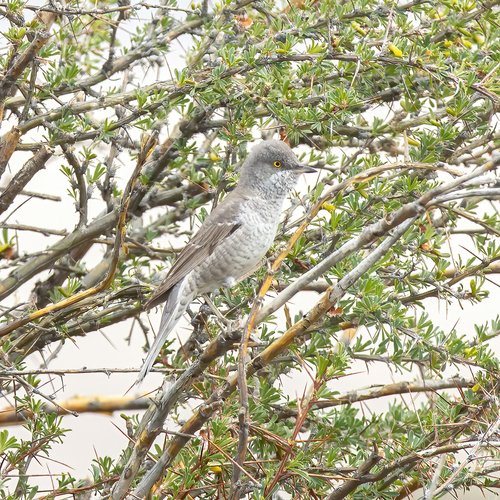
Curruca Gavilana (Curruca nisoria) Curruca Gavilana
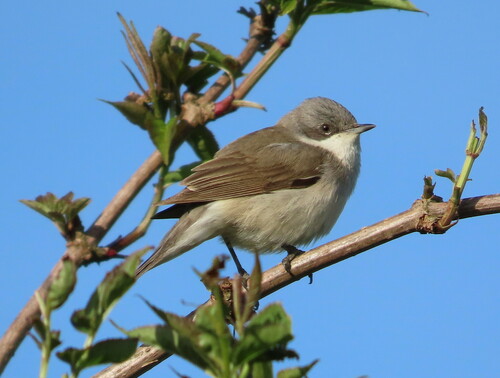
Curruca Zarcerilla (Curruca curruca) Curruca Zarcerilla

Medios

Cargando…

En breve

The most reliable field mark between Barred Warbler and Lesser Whitethroat is size: Barred Warbler is much larger and bulkier, with a heavier bill and more robust jizz, while Lesser Whitethroat is distinctly small and neat. For plumage, adult Barred Warbler males show heavy barring below and white-tipped wing coverts and tail, while Lesser Whitethroat has a plain white throat, grey head with a dark mask, and no barring. Juvenile Barred Warblers can be confusingly plain, but are still larger and may show faint barring on tail coverts and pale wing fringes. In flight or perched, Barred Warbler always appears bigger and heavier, with a stouter bill and more powerful structure. Vocalizations are also quite different, but in autumn, most confusion comes from silent, immature birds.

Consejos de identificación

  1. Size is the quickest separator: Barred Warbler is much larger and bulkier than Lesser Whitethroat. If the bird looks big for a warbler, consider Barred Warbler first.
  2. Bill structure: Barred Warbler has a noticeably heavier, stouter bill; Lesser Whitethroat's bill is fine and delicate. This is visible even at a distance.
  3. Juvenile/first-year confusion: Young Barred Warblers are plain and can resemble Lesser Whitethroat, but look for faint barring on the tail coverts and pale fringes on the wing feathers—features not shown by Lesser Whitethroat. Also, check for overall size and bulk.
  4. Adult male Barred Warbler: Shows heavy barring on the underparts, white tips to wing coverts and tail feathers. Lesser Whitethroat never shows barring or white-tipped coverts.
  5. Adult female Barred Warbler: Paler than males, with lighter barring, but still more robust and larger than any Lesser Whitethroat.
  6. Lesser Whitethroat plumage: Always plain grey above, with a white or whitish throat, grey head, and a dark 'bandit mask' through the eyes. No barring, no white-tipped coverts or tail.
  7. Iris color: Adult Barred Warbler has a yellow iris; immatures have a dark iris. Lesser Whitethroat's iris color is not noted as diagnostic, but this can help with adult Barred Warbler.
  8. Leg color: Barred Warbler has stout, grey-brown legs. Not a strong separator, but may help in close views.
  9. Flight and jizz: Barred Warbler appears powerful and heavy in flight and when perched. Lesser Whitethroat is agile, neat, and quick-moving.
  10. Voice: If singing, Barred Warbler gives a harsh, chattering song with clear notes, while Lesser Whitethroat gives a short, rattling 'tet' or 'che' sequence. In autumn, most birds are silent, so do not rely on this then.
  11. Habitat context: Barred Warbler is much scarcer in western Europe, especially in autumn, and is typically found in open country with bushes or brambles. Lesser Whitethroat is more widespread and common in shrubby habitats.
  12. Sex differences: Lesser Whitethroat sexes are almost identical; Barred Warbler males are more heavily barred than females, but both are larger than Lesser Whitethroat.
  13. Seasonal context: Most Barred Warblers seen in western Europe in autumn are first-year birds, which are plainer and easier to confuse with Lesser Whitethroat. Use size and subtle barring on tail coverts and wing fringes for these birds.
  14. Common pitfalls: Do not rely solely on underpart color or general 'greyish' appearance—focus on size, barring, and structural features.
  15. When in doubt: If the bird is small, neat, plain grey and white with a dark mask, and shows no barring or white-tipped coverts, it is almost certainly a Lesser Whitethroat.

Tamaño

Barred Warbler is the largest Curruca warbler, measuring 15.5–17 cm in length and weighing 22–36 g [wikipedia]. Lesser Whitethroat is significantly smaller, with a more delicate build (smaller than Common Whitethroat, and much smaller than Barred Warbler). In the field, Barred Warbler appears noticeably bulkier and longer, with a stouter bill and heavier jizz, while Lesser Whitethroat is compact and neat.

Plumaje

Juvenile and first-year Barred Warblers are buffy grey-brown above and pale buff below, with very little barring—making them easily confused with other plain warblers, including Lesser Whitethroat. However, even young Barred Warblers may show slight barring on the tail coverts and pale fringes on the wing feathers, which Lesser Whitethroat lacks. Adult Barred Warbler males are dark grey above, with prominent white tips on wing coverts and tail feathers, and are heavily barred below; females are similar but paler with lighter barring. Lesser Whitethroat of all ages is plain grey above, with a white or whitish throat, a grey head with a darker 'bandit mask' through the eyes, and lacks any barring or white-tipped wing coverts. The sexes in Lesser Whitethroat are almost identical. The iris of adult Barred Warbler is yellow, dark in immatures; Lesser Whitethroat's iris color is not specified as diagnostic. In summary, barring (when present), white-tipped wing coverts, and overall bulk point to Barred Warbler, while a plain white throat, dark mask, and small size point to Lesser Whitethroat.

Comportamiento

Barred Warbler tends to appear more robust and powerful in its movements, both when perched and in flight, due to its larger size and heavier bill. Lesser Whitethroat is more agile and dainty, often flicking through bushes with quick, neat movements. Both species are typically found in shrubby habitats, but Barred Warbler may seem more deliberate and less restless than the smaller, more active Lesser Whitethroat.

Hábitat

Both species breed in temperate Europe and western/central Asia, favoring areas with bushes and shrubs. Barred Warbler prefers open country with low shrubs or brambles, often similar to red-backed shrike habitat. Lesser Whitethroat is also found in shrubby areas but is more widespread and common, breeding across much of Europe (except the southwest). Both are strongly migratory, but Barred Warbler is much scarcer in western Europe, especially in autumn passage, where most records are of first-year birds.

Voz

Barred Warbler's song is a pleasant, chattering series of notes, harsher and less melodious than Garden Warbler, and slightly higher pitched, with some resemblance to Common Whitethroat. Lesser Whitethroat's song is a fast, rattling sequence of 'tet' or 'che' calls, quite different from Common Whitethroat and from Barred Warbler. In practice, Lesser Whitethroat's song is shorter, drier, and more mechanical, while Barred Warbler's is longer and more varied. However, most confusion arises in autumn when birds are often silent.

Enviar una descripción mejor

Usa las mismas secciones que la comparación. El texto se publica al momento.

The most reliable field mark between Barred Warbler and Lesser Whitethroat is size: Barred Warbler is much larger and bulkier, with a heavier bill and more robust jizz, while Lesser Whitethroat is distinctly small and neat. For plumage, adult Barred Warbler males show heavy barring below and white-tipped wing coverts and tail, while Lesser Whitethroat has a plain white throat, grey head with a dark mask, and no barring. Juvenile Barred Warblers can be confusingly plain, but are still larger and may show faint barring on tail coverts and pale wing fringes. In flight or perched, Barred Warbler always appears bigger and heavier, with a stouter bill and more powerful structure. Vocalizations are also quite different, but in autumn, most confusion comes from silent, immature birds.

  1. Size is the quickest separator: Barred Warbler is much larger and bulkier than Lesser Whitethroat. If the bird looks big for a warbler, consider Barred Warbler first.
  2. Bill structure: Barred Warbler has a noticeably heavier, stouter bill; Lesser Whitethroat's bill is fine and delicate. This is visible even at a distance.
  3. Juvenile/first-year confusion: Young Barred Warblers are plain and can resemble Lesser Whitethroat, but look for faint barring on the tail coverts and pale fringes on the wing feathers—features not shown by Lesser Whitethroat. Also, check for overall size and bulk.
  4. Adult male Barred Warbler: Shows heavy barring on the underparts, white tips to wing coverts and tail feathers. Lesser Whitethroat never shows barring or white-tipped coverts.
  5. Adult female Barred Warbler: Paler than males, with lighter barring, but still more robust and larger than any Lesser Whitethroat.
  6. Lesser Whitethroat plumage: Always plain grey above, with a white or whitish throat, grey head, and a dark 'bandit mask' through the eyes. No barring, no white-tipped coverts or tail.
  7. Iris color: Adult Barred Warbler has a yellow iris; immatures have a dark iris. Lesser Whitethroat's iris color is not noted as diagnostic, but this can help with adult Barred Warbler.
  8. Leg color: Barred Warbler has stout, grey-brown legs. Not a strong separator, but may help in close views.
  9. Flight and jizz: Barred Warbler appears powerful and heavy in flight and when perched. Lesser Whitethroat is agile, neat, and quick-moving.
  10. Voice: If singing, Barred Warbler gives a harsh, chattering song with clear notes, while Lesser Whitethroat gives a short, rattling 'tet' or 'che' sequence. In autumn, most birds are silent, so do not rely on this then.
  11. Habitat context: Barred Warbler is much scarcer in western Europe, especially in autumn, and is typically found in open country with bushes or brambles. Lesser Whitethroat is more widespread and common in shrubby habitats.
  12. Sex differences: Lesser Whitethroat sexes are almost identical; Barred Warbler males are more heavily barred than females, but both are larger than Lesser Whitethroat.
  13. Seasonal context: Most Barred Warblers seen in western Europe in autumn are first-year birds, which are plainer and easier to confuse with Lesser Whitethroat. Use size and subtle barring on tail coverts and wing fringes for these birds.
  14. Common pitfalls: Do not rely solely on underpart color or general 'greyish' appearance—focus on size, barring, and structural features.
  15. When in doubt: If the bird is small, neat, plain grey and white with a dark mask, and shows no barring or white-tipped coverts, it is almost certainly a Lesser Whitethroat.

Barred Warbler is the largest Curruca warbler, measuring 15.5–17 cm in length and weighing 22–36 g [wikipedia]. Lesser Whitethroat is significantly smaller, with a more delicate build (smaller than Common Whitethroat, and much smaller than Barred Warbler). In the field, Barred Warbler appears noticeably bulkier and longer, with a stouter bill and heavier jizz, while Lesser Whitethroat is compact and neat.

Juvenile and first-year Barred Warblers are buffy grey-brown above and pale buff below, with very little barring—making them easily confused with other plain warblers, including Lesser Whitethroat. However, even young Barred Warblers may show slight barring on the tail coverts and pale fringes on the wing feathers, which Lesser Whitethroat lacks. Adult Barred Warbler males are dark grey above, with prominent white tips on wing coverts and tail feathers, and are heavily barred below; females are similar but paler with lighter barring. Lesser Whitethroat of all ages is plain grey above, with a white or whitish throat, a grey head with a darker 'bandit mask' through the eyes, and lacks any barring or white-tipped wing coverts. The sexes in Lesser Whitethroat are almost identical. The iris of adult Barred Warbler is yellow, dark in immatures; Lesser Whitethroat's iris color is not specified as diagnostic. In summary, barring (when present), white-tipped wing coverts, and overall bulk point to Barred Warbler, while a plain white throat, dark mask, and small size point to Lesser Whitethroat.

Barred Warbler tends to appear more robust and powerful in its movements, both when perched and in flight, due to its larger size and heavier bill. Lesser Whitethroat is more agile and dainty, often flicking through bushes with quick, neat movements. Both species are typically found in shrubby habitats, but Barred Warbler may seem more deliberate and less restless than the smaller, more active Lesser Whitethroat.

Both species breed in temperate Europe and western/central Asia, favoring areas with bushes and shrubs. Barred Warbler prefers open country with low shrubs or brambles, often similar to red-backed shrike habitat. Lesser Whitethroat is also found in shrubby areas but is more widespread and common, breeding across much of Europe (except the southwest). Both are strongly migratory, but Barred Warbler is much scarcer in western Europe, especially in autumn passage, where most records are of first-year birds.

Barred Warbler's song is a pleasant, chattering series of notes, harsher and less melodious than Garden Warbler, and slightly higher pitched, with some resemblance to Common Whitethroat. Lesser Whitethroat's song is a fast, rattling sequence of 'tet' or 'che' calls, quite different from Common Whitethroat and from Barred Warbler. In practice, Lesser Whitethroat's song is shorter, drier, and more mechanical, while Barred Warbler's is longer and more varied. However, most confusion arises in autumn when birds are often silent.

¿Descartar los cambios?

Tienes ediciones sin guardar. Si sales ahora, se perderán.

Curruca Gavilana · Curruca Zarcerilla · Mis aves difíciles