

Golondrina Común vs Golondrina Colilarga
Hirundo rustica frente a Hirundo smithii
Juega un quiz con Golondrina Común y Golondrina Colilarga
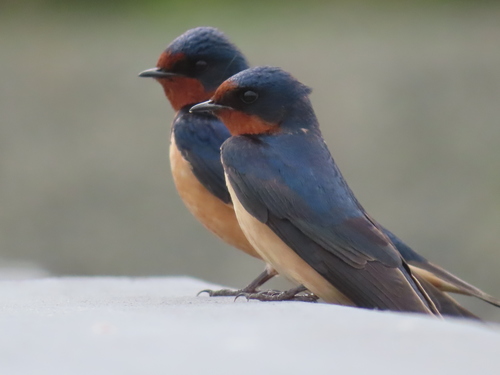 Golondrina Común
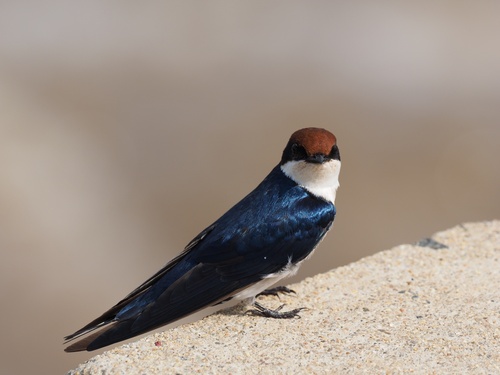 Golondrina Colilarga
En breve
La marca de campo más confiable para separar la Golondrina Común de la Golondrina Colilarga es el color y patrón de la cabeza y las partes inferiores, especialmente en los adultos: la Golondrina Común muestra una frente y garganta rufosas (rojas) con una banda pectoral azul, mientras que la Golondrina Colilarga tiene una gorra castaña brillante y partes inferiores blancas puras. Los juveniles de ambas especies carecen de los largos filamentos o colas, así que enfócate en el color de la cabeza: los juveniles de la Golondrina Común tienen una cara rufosa pálida, mientras que los juveniles de la Golondrina Colilarga tienen una corona marrón apagada. En vuelo, ambas tienen colas largas, pero los 'filamentos' de la Golondrina Colilarga son mucho más finos y filamentosos que los filamentos más anchos y profundamente bifurcados de la Golondrina Común. Ambas especies son azules por encima y blancas por debajo, pero el tono preciso y el patrón de la cabeza son clave. Observa el contexto: la Golondrina Común es muy extendida y a menudo se ve cerca de las personas, mientras que la Golondrina Colilarga está más estrechamente relacionada con el agua, especialmente en África y Asia.
Consejos de identificación
- Color de la cabeza en adultos: La Golondrina Común tiene una frente y garganta rufosas (rojas), separadas de las partes inferiores blancas por una banda pectoral azul. La Golondrina Colilarga tiene una gorra castaña brillante (coro entero), con una clara demarcación de la cara y partes inferiores blancas. Esta es la marca más confiable en aves posadas.
- Forma y estructura de la cola: La cola de la Golondrina Común está profundamente bifurcada con plumas exteriores anchas y similares a cintas (filamentos), y una línea de manchas blancas en la punta. La cola de la Golondrina Colilarga está menos profundamente bifurcada pero tiene dos plumas exteriores extremadamente largas, finas y similares a alambres. En los juveniles, ambas carecen de estas características, así que revisa otras marcas.
- Color de la cabeza juvenil: La Golondrina Común juvenil tiene una cara rufosa pálida y partes inferiores más blancas, mientras que la Golondrina Colilarga juvenil tiene una corona marrón apagada y espalda. La corona marrón es diagnóstica para la Golondrina Colilarga juvenil.
- Banda pectoral: La Golondrina Común (todas las edades excepto algunos juveniles) muestra una banda pectoral azul oscuro que separa la garganta rufosa del vientre blanco. La Golondrina Colilarga carece de cualquier banda pectoral: sus partes inferiores blancas son ininterrumpidas.
- Color de las partes superiores: Ambas son azules por encima, pero la Golondrina Común se describe como 'azul acero', a veces menos brillante en las hembras, mientras que la Golondrina Colilarga es 'azul brillante'. Esto es sutil y se usa mejor con buena luz.
- Color de las partes inferiores: La Golondrina Común tiene partes inferiores de color blanco sucio, a veces con un lavado amarillento en los juveniles. La Golondrina Colilarga es blanca brillante por debajo en los adultos, sin lavado ni banda.
- Manchas en la cola: La Golondrina Común muestra una línea de manchas blancas a lo largo del extremo exterior de la cola superior (visible en vuelo o cuando la cola está extendida). La Golondrina Colilarga carece de estas manchas.
- Diferencias sexuales: En ambas especies, las hembras tienen filamentos/colas más cortas que los machos, pero el patrón de color básico se mantiene. No te bases solo en la longitud de la cola para determinar el sexo o la identificación.
- Vuelo característico: La Golondrina Común a menudo parece más larga y más 'parecida a una golondrina' con su cola profundamente bifurcada, mientras que la Golondrina Colilarga es más pequeña, más compacta, y los filamentos se arrastran detrás más como filamentos. En vistas rápidas de vuelo, busca la forma general de la cola y el color de la cabeza.
- Contexto del hábitat: Si se ve planeando bajo sobre un río o lago en África o Asia, especialmente en parejas o pequeños grupos, es probable que sea una Golondrina Colilarga. La Golondrina Común es más generalista y se puede encontrar en una gama más amplia de hábitats abiertos, a menudo cerca de edificios.
- Voz: La Golondrina Común emite una variedad de llamadas, pero estas no siempre son diagnósticas a menos que las conozcas bien. Las llamadas de la Golondrina Colilarga no se detallan aquí.
- Confusión juvenil: Los juveniles de ambas especies carecen de largos filamentos/colas, así que enfócate en el color de la cabeza (cara rufosa pálida para la Golondrina Común, corona marrón para la Golondrina Colilarga) y la presencia/ausencia de la banda pectoral (el juvenil de la Golondrina Común puede tener una banda tenue o incompleta, la Golondrina Colilarga nunca la tiene).
- Rango geográfico: La Golondrina Común es cosmopolita, mientras que la Golondrina Colilarga está limitada a África y el sur/sureste de Asia. Si estás fuera de estas regiones, es poco probable que veas una Golondrina Colilarga.
- Postura posada: La Golondrina Común a menudo se posa en alambres o ramas abiertas, mostrando su larga cola. La Golondrina Colilarga puede hacer lo mismo, pero los filamentos son mucho más finos y pueden ser difíciles de ver a menos que la cola esté extendida o contraluz.
- Trampas: Las hembras y juveniles de la Golondrina Común pueden parecer apagadas y de cola corta, acercándose a la apariencia de una Golondrina Colilarga, pero nunca mostrarán una gorra castaña completa o partes inferiores blancas puras. Siempre revisa múltiples características si no estás seguro.
Tamaño
La Golondrina Colilarga es ligeramente más pequeña y ligera que la Golondrina Común. La Golondrina Colilarga pesa alrededor de 12.7 gramos [wikidata], mientras que la Golondrina Común es más pesada (16–22 g) y tiene una envergadura ligeramente más larga (32–34.5 cm frente a los 18 cm de longitud de la Golondrina Colilarga, envergadura no especificada) [wikipedia]. Ambas son golondrinas esbeltas, pero la Golondrina Común generalmente parece tener un cuerpo más largo y más sustancial, especialmente con sus largos filamentos.
Plumaje
Los juveniles de la Golondrina Común son marrones por encima con una cara rufosa pálida y partes inferiores más blancas, careciendo de los largos filamentos de los adultos. Los juveniles de la Golondrina Colilarga tienen una corona marrón apagada, espalda y cola, y también carecen de los distintivos filamentos de la cola; su gorra es marrón, no castaña. Los adultos de la Golondrina Común tienen partes superiores azul acero, una frente y garganta rufosas, una banda pectoral azul y partes inferiores blancas sucias. Los adultos de la Golondrina Colilarga son de un azul brillante por encima, blanco puro por debajo, y tienen una gorra castaña brillante (no solo la frente). La cola de la Golondrina Común está profundamente bifurcada con filamentos anchos y una línea de manchas blancas en la punta, mientras que la cola de la Golondrina Colilarga está menos profundamente bifurcada pero tiene dos plumas exteriores muy largas, finas y similares a alambres. Las hembras de la Golondrina Común son más apagadas y tienen filamentos de cola más cortos, pero aún muestran la banda pectoral azul y la cara rufosa. Las hembras de la Golondrina Colilarga son similares a los machos pero con filamentos más cortos. En ambas especies, los aves inmaduras pueden ser confusas, pero el color de la cabeza y la estructura de la cola son clave.
Comportamiento
Ambas especies son insectívoras aéreas, a menudo vistas volando bajo sobre áreas abiertas. La Golondrina Colilarga está especialmente asociada con cuerpos de agua y a menudo se ve planeando bajo sobre ríos o lagos. La Golondrina Común es más generalista, encontrada en campos abiertos, tierras agrícolas y cerca de asentamientos humanos, a veces anidando bajo aleros o puentes. Ambas son voladoras ágiles, pero la Golondrina Colilarga puede parecer aún más delicada y acrobática debido a su tamaño más pequeño y largos filamentos.
Hábitat
La Golondrina Común es extremadamente amplia y adaptable, encontrada en todos los continentes excepto en la Antártida, y es común en campos abiertos, tierras agrícolas y cerca de asentamientos humanos. La Golondrina Colilarga está más restringida a África y el sur/sureste de Asia, y está estrechamente ligada a campos abiertos cerca del agua, como ríos y lagos. Aunque ambas pueden verse cerca de personas, es más probable que la Golondrina Colilarga se encuentre justo en la orilla del agua.
Voz
La Golondrina Común emite una variedad de llamadas, incluyendo un 'witt' o 'witt-witt', y un fuerte 'splee-plink' cuando está emocionada. Las llamadas de alarma incluyen un agudo 'siflitt' para depredadores mamíferos y un 'flitt-flitt' para rapaces. Las vocalizaciones de la Golondrina Colilarga no se detallan en las notas, por lo que las llamadas no son un punto de separación confiable en este contexto.
Golondrina Común · Golondrina Colilarga · Mis aves difíciles