

Orangegrüntaube vs Paddyreiher
Treron phoenicopterus gegen Ardeola grayii
Ein Quiz mit Orangegrüntaube und Paddyreiher spielen
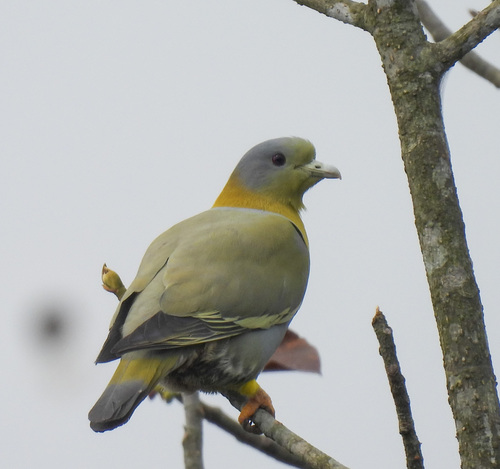 Orangegrüntaube
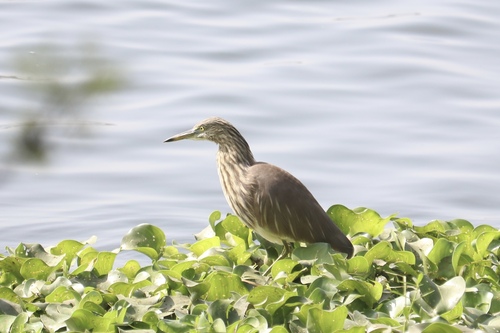 Paddyreiher
Kurz gesagt
The most reliable way to separate Yellow-footed Green-Pigeon from Indian Pond Heron is by their flight appearance: herons show a sudden flash of all-white wings, while green-pigeons remain greenish-yellow throughout. Perched, the pigeon’s bright yellow legs and green/yellow body contrast with the heron’s cryptic brown and streaked plumage. Structurally, the heron is longer-necked and dagger-billed, while the pigeon is compact with a short bill. Both species are common in the Indian subcontinent, but the heron is tied to water, while the pigeon is arboreal. If you see a bird flush from the ground with white wings, it's a heron; if it stays greenish in flight, it's a pigeon.
Bestimmungstipps
- White wing in flight: If the bird flushes and shows all-white wings, it's an Indian Pond Heron (all ages). Green-pigeons never show white in the wing.
- Leg color: Bright yellow or yellow-orange legs and feet are unique to Yellow-footed Green-Pigeon. Herons have dull yellowish legs, rarely reddish in some breeding birds.
- Bill shape: Herons have a thick, dagger-like bill for spearing prey; pigeons have a short, stubby bill suited for fruit.
- Neck length: Herons have a noticeably longer, thicker neck (often retracted in flight); pigeons have a short neck.
- Body posture: Pigeons perch horizontally on branches; herons stand upright, often at water’s edge.
- Plumage color (perched): Pigeons are greenish-yellow with grey and purple tones; herons are brown, buff, and streaked, blending with muddy banks.
- Crown and nape: Pigeons have a bluish-grey crown and nape; herons have a streaked brown head and neck.
- Habitat: Pigeons are in trees, gardens, and groves; herons are at water bodies, paddies, and marshes.
- Flight style: Pigeons fly directly and swiftly between trees; herons fly with slow, deep wingbeats and retracted necks.
- Group size: Pigeons often in flocks; herons usually solitary or in small loose groups.
- Breeding heron plumes: In summer, herons may show long neck feathers, but this does not change the brown body color when perched.
- Flush behavior: Herons allow close approach due to camouflage, then flush suddenly; pigeons are more wary and flush early from trees.
- Size impression: Herons appear bulkier and heavier; pigeons are more compact and rounded.
- Voice: If heard, a harsh croak on flushing is heron; pigeons are generally silent.
- Context: If you see a bird foraging at a muddy water edge, assume heron; if feeding on fruit in a tree, it's a pigeon.
Größe
Indian Pond Heron is heavier (adult mass ~255g [wikidata]) and appears bulkier, with a stocky body, thick neck, and relatively longer legs. Yellow-footed Green-Pigeon is slightly smaller in length (about 33 cm [wikipedia]) but more compact, with a shorter neck and tail, and noticeably shorter legs. In the field, the heron’s upright stance and longer stride are distinctive, while the pigeon sits horizontally and perches in trees.
Gefieder
- In flight (all ages): Indian Pond Heron is instantly transformed by its bright white wings, which contrast sharply with its otherwise brown and streaked body. This white is visible from above and below and is diagnostic for all ages and seasons. Yellow-footed Green-Pigeon, by contrast, is greenish-yellow above and below in flight, lacking any white wing panels or flashes.
- Perched (all ages): The pigeon shows a combination of green, yellow, and grey, with a yellowish-green forehead/throat, bluish-grey crown/nape, and a broad yellow or olive-yellow collar. Its most striking feature is the bright yellow or yellow-orange legs and feet. The heron, when perched, is cryptically colored with buff-brown back, streaked neck and breast, and dull yellowish legs (rarely reddish in some breeding birds).
- Breeding herons: May show longer neck plumes and, rarely, reddish legs, but the body remains brownish when not in flight.
- Juvenile/immature birds: No special age-specific upperwing marks are noted for either species; the white wing of the heron is present from fledging.
Verhalten
Yellow-footed Green-Pigeon is arboreal, usually seen perched in trees, feeding on fruit, and moving in flocks. It rarely comes to the ground except to drink. Indian Pond Heron is solitary or in loose groups, stalking prey at the edges of water bodies, often standing motionless for long periods. When approached, herons flush suddenly, revealing their white wings, and fly with slow, deep wingbeats and retracted necks. Pigeons fly directly between trees with rapid, steady wingbeats and rarely flush from open ground.
Lebensraum
Yellow-footed Green-Pigeon is found in wooded habitats, groves, and gardens, almost always in or near trees, and is not tied to water. Indian Pond Heron is closely associated with wetlands, ponds, rice paddies, and other shallow water bodies, and is rarely seen far from water. If you see the bird in a tree canopy, especially away from water, it's likely a pigeon; if it's at the water's edge or in a paddy, it's almost certainly a heron.
Stimme
Neither species is particularly vocal or diagnostic by voice in the field. Indian Pond Heron is usually silent but may give a harsh croak when flushed or alarmed. No distinctive field call is noted for Yellow-footed Green-Pigeon in these sources.