

Tuihonigfresser vs Langschnabelgerygone
Prosthemadera novaeseelandiae gegen Gerygone albofrontata
Ein Quiz mit Tuihonigfresser und Langschnabelgerygone spielen
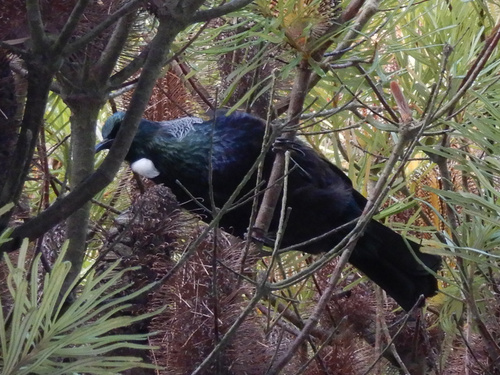 Tuihonigfresser
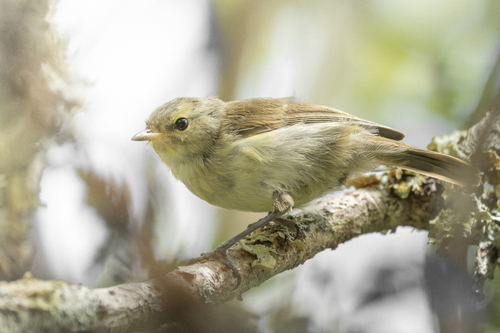 Langschnabelgerygone
Kurz gesagt
The most reliable way to separate Tui from Chatham Islands Gerygone is by overall size and structure: Tui is a much larger, heavier bird with a striking white throat tuft, iridescent dark plumage, and a loud, powerful presence, while Chatham Islands Gerygone is a tiny, slender warbler with plain olive-brown upperparts and, in males, a white forehead and eyebrows. In the field, Tui's bold white throat tuft and metallic sheen stand out even at a distance, while the gerygone's subtle coloration and smaller size are unmistakable up close. Juvenile and female gerygones lack the crisp white facial markings of adult males, but still never show the Tui's dramatic throat tuft or iridescence. Flight style and vocalizations are also very different, with Tui being noisy and conspicuous, and the gerygone delicate and unobtrusive.
Bestimmungstipps
- Size is the fastest check: Tui is a medium-sized bird, vastly larger than the tiny Chatham Islands Gerygone. If the bird is warbler-sized, it cannot be a Tui.
- White throat tuft (poi): Only Tui shows a prominent white tuft at the throat, visible even at a distance. Gerygone never has this feature at any age or sex.
- Iridescent plumage: Tui's plumage is glossy with blue, green, and bronze iridescence in good light, while gerygone is always plain olive-brown above and off-white/yellowish below.
- White facial markings: Adult male Chatham Islands Gerygone has a white forehead, eyebrows, and throat. Females and juveniles are duller, with yellowish face and throat, but never show Tui's lacy white collar or throat tuft.
- Red eyes: Both adult male and female gerygones have red eyes (brown in juveniles), while Tui's eye color is not distinctive in the notes.
- Bill and structure: Tui has a strong, slightly decurved bill suited for nectar feeding, and a robust, upright posture. Gerygone has a fine, straight bill and a delicate, active warbler jizz.
- Flight style: Tui's flight is loud and powerful, with rapid wingbeats and dramatic display flights. Gerygone is much quieter and flits about in a typical warbler manner.
- Aggressive behavior: Tui is often seen chasing other birds from food sources, sometimes even mobbing much larger species. Gerygone defends territory with song and chases, but is never physically aggressive.
- Habitat and range: Tui is found throughout New Zealand (not on the Chatham Islands); Chatham Islands Gerygone is only on the Chathams. If you are on the Chathams, any small warbler is a gerygone; if on the main islands, Tui is the only option of these two.
- Vocalizations: Tui's song is loud, varied, and sometimes harsh, while the gerygone's is delicate and repetitive. If you hear a powerful, complex song, suspect Tui; a soft, intricate warble points to gerygone.
- Perched appearance: Tui often appears all-black at a distance with a white throat tuft; gerygone is never black, always olive-brown and off-white/yellowish.
- Wing and tail pattern: Neither species has a distinctive upperwing or tail pattern in flight that would cause confusion; focus on body color and structure.
- Juvenile confusion: Juvenile gerygones are duller and more yellowish below, but still never show Tui's iridescence or throat tuft.
- Feeding behavior: Tui often feeds on nectar from flax and other flowers, sometimes hanging upside down; gerygone gleans insects from foliage.
- Group size: Tui can be seen alone, in pairs, or in small groups, sometimes gathering at food sources. Gerygone is usually solitary or in pairs, rarely in groups.
Größe
Tui is vastly larger and heavier than Chatham Islands Gerygone. While the gerygone averages about 10 g in body mass and is only about 12 cm long, Tui is a medium-sized bird (much larger than any warbler), with a robust build and a presence that dwarfs the gerygone. The difference in mass and length is immediately obvious in the field: Tui is closer in size to a starling or small crow, while the gerygone is a classic tiny warbler. This size gap is diagnostic at any distance where both birds can be compared.
Gefieder
There are no age-specific upperwing or flight marks in the notes for either species, so focus is on body plumage. Tui appears mostly black at a glance but reveals a multicolored iridescent sheen (blue, green, bronze) in good light, with a distinctive white throat tuft (poi) and a lacy collar of white-shafted feathers on the neck. There may be a small white wing patch visible at rest. Chatham Islands Gerygone, by contrast, has plain olive-brown upperparts and off-white underparts, with pale yellow flanks and undertail. Adult males have a white forehead, eyebrows, throat, and underparts, while females and juveniles are duller, lacking the crisp white, and showing yellowish eyebrows and throat. Both sexes have red eyes (brown in juveniles). The gerygone never shows iridescence or a throat tuft. These differences are reliable at all ages and seasons.
Verhalten
Tui is highly aggressive and territorial, especially around favored food sources, often chasing or mobbing other birds (including much larger species). Their flight is loud and powerful, with rapid flapping due to short, wide wings, and they perform dramatic vertical display flights during the breeding season. Chatham Islands Gerygone is much more delicate in behavior, defending territories mainly through chases and song, but never making physical contact. Gerygones are solitary nesters and much less conspicuous in their movements.
Lebensraum
Tui is widespread across New Zealand (except the Chatham Islands), favoring broadleaf forests but also found in plantations, regrowth, and well-vegetated suburbs. It is common in urban Wellington and elsewhere on the main islands. Chatham Islands Gerygone is endemic to the Chatham Islands and is not found on the New Zealand mainland. Its habitat is restricted to the Chatham group, where it nests in a variety of vegetation types, from open gaps to dense foliage. Thus, location alone is often diagnostic: a small warbler on the Chathams is the gerygone; a large, iridescent bird with a throat tuft on the main islands is a Tui.
Stimme
Tui has a loud, varied, and often harsh song, with notes that can resemble human speech or mechanical noises. Their calls are powerful and carry well. Chatham Islands Gerygone, in contrast, has a delicate, intricate song, typically a series of four-note phrases repeated throughout, reminiscent of the mainland grey warbler but less developed. The gerygone's song is gentle and unobtrusive, very different from the Tui's boisterous vocalizations.
Tuihonigfresser · Langschnabelgerygone · Meine schwierigen Vögel