

Grauhäubchenmeise vs Purpurstärling
Baeolophus bicolor gegen Euphagus cyanocephalus
Ein Quiz mit Grauhäubchenmeise und Purpurstärling spielen
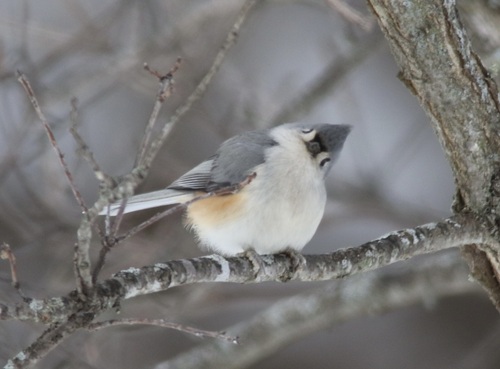 Grauhäubchenmeise
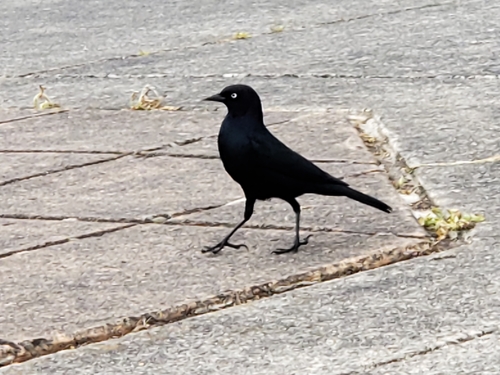 Purpurstärling
Kurz gesagt
The most reliable way to separate Tufted Titmouse from Brewer's Blackbird is by overall structure and plumage: the titmouse is a small, crested, gray-and-white bird with a black forehead and rust flanks, while Brewer's Blackbird is a much larger, long-legged, slim blackbird with a straight bill and (in males) glossy black plumage with iridescent purple and green highlights. Juvenile titmice lack the full black forehead, which can make them look plainer, but they never resemble the brownish or iridescent blackbird. Brewer's Blackbird females are brownish-gray and lack any crest, with a dark eye, while males are glossy black with a striking yellow eye. In flight or perched, the titmouse's compact, short-tailed, and round-headed shape with a crest is unlike the lanky, long-tailed blackbird. These species differ dramatically in size, behavior, and habitat preferences, making confusion rare except at a quick glance or with poor views.
Bestimmungstipps
- Size: Brewer's Blackbird is three times heavier and much longer than Tufted Titmouse; use this when seen near familiar birds or feeders.
- Crest: Tufted Titmouse always shows a pointed gray crest, even in juveniles; Brewer's Blackbird never has a crest.
- Bill Shape: Titmouse has a short, stubby bill suited for seeds; blackbird has a longer, straight, pointed bill for insects and grains.
- Tail Shape: Titmouse has a short, squared tail; blackbird has a longer, straight-sided tail, sometimes slightly rounded.
- Plumage – Adult Male Blackbird: Glossy black with purple head and greenish body, bright yellow eye—never matched by titmouse.
- Plumage – Adult Female Blackbird: Plain brownish-gray, dark eye, no crest, larger and longer-legged than titmouse.
- Plumage – Titmouse: Gray upperparts, white underparts, rusty flanks, black forehead (reduced in juveniles), always with a crest.
- Juvenile Titmouse: May lack black forehead but still shows compact, crested shape and never appears brownish or iridescent.
- Eye Color: Male blackbird has a bright yellow eye; titmouse and female blackbird have dark eyes, but titmouse is much smaller and crested.
- Legs: Blackbird has long, strong legs for walking; titmouse has short legs, usually seen perched or hopping.
- Behavior: Titmouse is arboreal, quick, and often at feeders; blackbird is terrestrial, often in open areas, sometimes in large flocks.
- Habitat: Titmouse in woods or wooded suburbs; blackbird in open fields, parks, or near water.
- Voice: Titmouse gives clear whistles; blackbird gives harsh 'check' calls—songs are not similar.
- Flocking: Titmouse in small mixed flocks, often with chickadees; blackbird in large, often single-species flocks.
- Pitfalls: Only likely confusion is a quick, poor view of a female blackbird (brownish, plain) vs. a juvenile titmouse (gray, crested)—but the crest and size difference are reliable.
Größe
Brewer's Blackbird is much larger and heavier than Tufted Titmouse. The blackbird averages about 62.7 g in body mass [wikidata], while the titmouse is a lightweight at 18–26 g [wikipedia]. In length, the titmouse is 14–16 cm (5.5–6.3 in) with a wingspan of 20–26 cm (7.9–10.2 in), making it a small songbird. The blackbird is a medium-sized icterid, noticeably bulkier and longer-legged than the titmouse. In the field, the size gap is obvious if both are seen near each other or familiar reference birds.
Gefieder
Juvenile and adult Tufted Titmice are gray above with a white front and a distinctive tufted gray crest. Adults show a black forehead (reduced in juveniles), and rusty flanks. No age or season of titmouse shows all-black or iridescent plumage. Brewer's Blackbird adult males are glossy black with a purple head and greenish body sheen, and a bright yellow eye. Females are brownish-gray overall, lacking any crest or strong face pattern, with a dark eye. Juvenile titmice may have a faint or missing black forehead but still show the compact, crested shape and lack the blackbird's iridescence or brownish tones. There are no distinctive upperwing or flight marks in either species that would cause confusion in immature birds; the overall color and shape are always different.
Verhalten
Tufted Titmice are active, often in small flocks, moving quickly through trees and shrubs, frequently visiting feeders, and typically grabbing a seed and flying off to eat it in cover. They are agile and often hang upside down while foraging. Brewer's Blackbirds are more terrestrial, often seen walking on the ground with jerky head movements, foraging in open areas, and forming large flocks, especially outside breeding season. Blackbirds may aggressively mob predators and are conspicuous in open habitats, sometimes following farm equipment. The titmouse is much more arboreal and secretive in its movements.
Lebensraum
Tufted Titmouse prefers deciduous and mixed woodlands, gardens, parks, and shrubby areas, rarely venturing far from trees and often found at feeders in wooded suburbs. Brewer's Blackbird is found in open habitats: fields, parks, urban areas, and near water, often in large flocks. It nests colonially in trees or reeds, sometimes in urban settings. The two species rarely overlap in preferred habitat, with the titmouse sticking to wooded areas and the blackbird to open or edge environments.
Stimme
Tufted Titmouse gives a clear, whistled 'peter-peter-peter' song (with many variations) and a variety of sharp calls. Brewer's Blackbird gives a sharp 'check' call and other harsh, metallic notes, quite unlike the titmouse's whistled song. The vocalizations are not similar and are unlikely to be confused.
Grauhäubchenmeise · Purpurstärling · Meine schwierigen Vögel