

Motmot

Kapgans vs Paradiesgans

Tadorna cana gegen Tadorna variegata

Ein Quiz mit Kapgans und Paradiesgans spielen
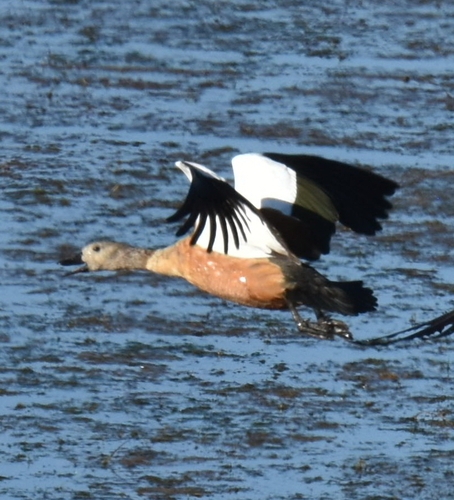
Kapgans (Tadorna cana) Kapgans
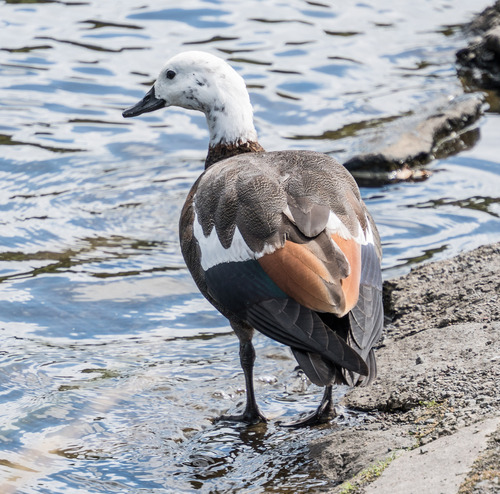
Paradiesgans (Tadorna variegata) Paradiesgans

Medien

Laden…

Kurz gesagt

The most reliable way to separate South African Shelduck from Paradise Shelduck is by head and body color pattern, especially in adult females: Paradise Shelduck females have a strikingly white head with a rich chestnut body, while South African Shelduck females show a variable white face but never a fully white head except in older birds, and their body is more uniformly ruddy. Males differ in head color too: South African Shelduck males have a grey head, Paradise Shelduck males a blue-black head. In flight, both species show similar wing patterns with black, white, and green, but the Paradise Shelduck is slightly larger and bulkier. Juveniles of both species are duller and can be tricky, but Paradise Shelduck young males already show dark heads, while young South African Shelduck females lack extensive white on the head. Both are large, goose-like ducks, so focus on head and body color, especially for perched or swimming birds.

Bestimmungstipps

  1. Adult female head pattern is the single best field mark: Paradise Shelduck females have a pure white head and neck, sharply set off from a chestnut body. South African Shelduck females have a white face but retain black on the crown, nape, and neck sides; only older females may approach a white-headed look, but never as clean or extensive as Paradise.
  2. Male head color: South African Shelduck males have a plain grey head, while Paradise Shelduck males have a blue-black head and neck. This is visible at distance in good light.
  3. Body color: Both species have ruddy to chestnut bodies, but Paradise Shelduck tends to show more contrast between head and body, especially in females.
  4. Juvenile and immature marks: Young Paradise Shelduck males already show a dark head; juvenile females have a white patch at the bill base and gain the white head after the first molt. Young South African Shelduck females lack extensive white on the head, showing only white eye circles.
  5. Wing pattern in flight: Both species show black, white, and green in the wing (white upperwing coverts, green speculum), making them very similar in flight at a distance. Do not rely on wing pattern alone for separation.
  6. Size and structure: Both are large, robust, goose-like ducks with similar proportions. Paradise Shelduck is slightly larger and bulkier, but this is rarely diagnostic without direct comparison.
  7. Bill, legs, and feet: Both have black legs and webbed feet; bill color is not distinctive in the field.
  8. Voice: South African Shelduck males give a deep honk, females a sharper 'hark.' Paradise Shelduck females give high-pitched calls, males call rapidly in threat. Voice is not a reliable separator unless calls are well known.
  9. Habitat and range: Use range as a first filter—South African Shelduck is native to southern Africa, Paradise Shelduck to New Zealand. Vagrancy is rare.
  10. Behavior: Paradise Shelduck shows elaborate threat and distraction displays, but these are not usually diagnostic in brief field views.
  11. Pitfalls: Old female South African Shelducks can develop extensive white on the head, but never as clean or complete as Paradise Shelduck females. Juveniles of both species are duller and can be confusing; focus on head pattern and contrast.
  12. Hybrid warning: South African Shelduck can hybridize with other orange-plumaged shelducks in captivity, but this is not a field issue for these two species.
  13. Perched vs. swimming views: Head and neck color is visible in both situations; always check for the extent and purity of white on the female's head.
  14. Flight views: If only the wing pattern is seen, separation is unreliable; try to see the head or body color if possible.
  15. Sex differences: Both species are sexually dimorphic, but the contrast is greatest in Paradise Shelduck, especially the female's white head.

Größe

Both species are large shelducks with very similar body mass (South African Shelduck: ~1587 g, Paradise Shelduck: ~1550 g) and length (South African Shelduck: 64 cm; Paradise Shelduck: 63–71 cm). Paradise Shelduck is described as the largest Tadorna, with a slightly longer average length and wingspan (up to 71 cm and 90 cm wingspan), but this difference is subtle and not reliable in the field. Both are robust, goose-like ducks with similar proportions.

Gefieder

Adult female Paradise Shelduck is the easiest to identify, with a completely white head and neck contrasting with a chestnut body. South African Shelduck females have a white face but retain a black crown, nape, and neck sides; only older females may approach a white-headed look, but never as clean as Paradise Shelduck. Males are also distinct: South African Shelduck males have a grey head, while Paradise Shelduck males have a blue-black head and neck. Both sexes of both species have ruddy to chestnut bodies, but Paradise Shelduck shows more contrast between head and body, especially in females. In flight, both have black, white, and green in the wings, with white upperwing coverts and green speculum, making them similar at a distance. Juvenile Paradise Shelduck males resemble adults, while young females have a white patch at the bill base and gain the white head after the first molt. Juvenile South African Shelducks are duller, and young females lack the white head except for eye circles. Downy Paradise Shelduck chicks are white with brown crown and stripes, but this is rarely seen in the field.

Verhalten

Both species are territorial and form long-term pairs. Paradise Shelduck shows pronounced threat and distraction displays: males drop their heads low, females stretch out their necks and bodies, and both parents may perform a 'broken wing' distraction display if threatened with young. South African Shelduck behavior is less described in the notes, but both are typical of shelducks—often seen in pairs or small groups, grazing or swimming. Neither species' behavior is likely to be diagnostic in a brief field view.

Lebensraum

South African Shelduck is native to southern Africa, breeding mainly in Namibia and South Africa, and is common in open wetlands and lakes. Paradise Shelduck is endemic to New Zealand, found in a variety of wetland and open country habitats, often far from water. Both species are habitat generalists within their respective ranges, so habitat is only useful for separation in their native regions.

Stimme

South African Shelduck males give a deep honk or 'hoogh' call, while females have a louder, sharper 'hark.' Paradise Shelduck females make high-pitched calls when alarmed, and males call rapidly in threat displays. Both species are noisy, but the notes do not provide enough detail to reliably separate them by voice alone.

Eine bessere Beschreibung senden

Nutze dieselben Abschnitte wie der Vergleich. Dein Text ist sofort veröffentlicht.

The most reliable way to separate South African Shelduck from Paradise Shelduck is by head and body color pattern, especially in adult females: Paradise Shelduck females have a strikingly white head with a rich chestnut body, while South African Shelduck females show a variable white face but never a fully white head except in older birds, and their body is more uniformly ruddy. Males differ in head color too: South African Shelduck males have a grey head, Paradise Shelduck males a blue-black head. In flight, both species show similar wing patterns with black, white, and green, but the Paradise Shelduck is slightly larger and bulkier. Juveniles of both species are duller and can be tricky, but Paradise Shelduck young males already show dark heads, while young South African Shelduck females lack extensive white on the head. Both are large, goose-like ducks, so focus on head and body color, especially for perched or swimming birds.

  1. Adult female head pattern is the single best field mark: Paradise Shelduck females have a pure white head and neck, sharply set off from a chestnut body. South African Shelduck females have a white face but retain black on the crown, nape, and neck sides; only older females may approach a white-headed look, but never as clean or extensive as Paradise.
  2. Male head color: South African Shelduck males have a plain grey head, while Paradise Shelduck males have a blue-black head and neck. This is visible at distance in good light.
  3. Body color: Both species have ruddy to chestnut bodies, but Paradise Shelduck tends to show more contrast between head and body, especially in females.
  4. Juvenile and immature marks: Young Paradise Shelduck males already show a dark head; juvenile females have a white patch at the bill base and gain the white head after the first molt. Young South African Shelduck females lack extensive white on the head, showing only white eye circles.
  5. Wing pattern in flight: Both species show black, white, and green in the wing (white upperwing coverts, green speculum), making them very similar in flight at a distance. Do not rely on wing pattern alone for separation.
  6. Size and structure: Both are large, robust, goose-like ducks with similar proportions. Paradise Shelduck is slightly larger and bulkier, but this is rarely diagnostic without direct comparison.
  7. Bill, legs, and feet: Both have black legs and webbed feet; bill color is not distinctive in the field.
  8. Voice: South African Shelduck males give a deep honk, females a sharper 'hark.' Paradise Shelduck females give high-pitched calls, males call rapidly in threat. Voice is not a reliable separator unless calls are well known.
  9. Habitat and range: Use range as a first filter—South African Shelduck is native to southern Africa, Paradise Shelduck to New Zealand. Vagrancy is rare.
  10. Behavior: Paradise Shelduck shows elaborate threat and distraction displays, but these are not usually diagnostic in brief field views.
  11. Pitfalls: Old female South African Shelducks can develop extensive white on the head, but never as clean or complete as Paradise Shelduck females. Juveniles of both species are duller and can be confusing; focus on head pattern and contrast.
  12. Hybrid warning: South African Shelduck can hybridize with other orange-plumaged shelducks in captivity, but this is not a field issue for these two species.
  13. Perched vs. swimming views: Head and neck color is visible in both situations; always check for the extent and purity of white on the female's head.
  14. Flight views: If only the wing pattern is seen, separation is unreliable; try to see the head or body color if possible.
  15. Sex differences: Both species are sexually dimorphic, but the contrast is greatest in Paradise Shelduck, especially the female's white head.

Both species are large shelducks with very similar body mass (South African Shelduck: ~1587 g, Paradise Shelduck: ~1550 g) and length (South African Shelduck: 64 cm; Paradise Shelduck: 63–71 cm). Paradise Shelduck is described as the largest Tadorna, with a slightly longer average length and wingspan (up to 71 cm and 90 cm wingspan), but this difference is subtle and not reliable in the field. Both are robust, goose-like ducks with similar proportions.

Adult female Paradise Shelduck is the easiest to identify, with a completely white head and neck contrasting with a chestnut body. South African Shelduck females have a white face but retain a black crown, nape, and neck sides; only older females may approach a white-headed look, but never as clean as Paradise Shelduck. Males are also distinct: South African Shelduck males have a grey head, while Paradise Shelduck males have a blue-black head and neck. Both sexes of both species have ruddy to chestnut bodies, but Paradise Shelduck shows more contrast between head and body, especially in females. In flight, both have black, white, and green in the wings, with white upperwing coverts and green speculum, making them similar at a distance. Juvenile Paradise Shelduck males resemble adults, while young females have a white patch at the bill base and gain the white head after the first molt. Juvenile South African Shelducks are duller, and young females lack the white head except for eye circles. Downy Paradise Shelduck chicks are white with brown crown and stripes, but this is rarely seen in the field.

Both species are territorial and form long-term pairs. Paradise Shelduck shows pronounced threat and distraction displays: males drop their heads low, females stretch out their necks and bodies, and both parents may perform a 'broken wing' distraction display if threatened with young. South African Shelduck behavior is less described in the notes, but both are typical of shelducks—often seen in pairs or small groups, grazing or swimming. Neither species' behavior is likely to be diagnostic in a brief field view.

South African Shelduck is native to southern Africa, breeding mainly in Namibia and South Africa, and is common in open wetlands and lakes. Paradise Shelduck is endemic to New Zealand, found in a variety of wetland and open country habitats, often far from water. Both species are habitat generalists within their respective ranges, so habitat is only useful for separation in their native regions.

South African Shelduck males give a deep honk or 'hoogh' call, while females have a louder, sharper 'hark.' Paradise Shelduck females make high-pitched calls when alarmed, and males call rapidly in threat displays. Both species are noisy, but the notes do not provide enough detail to reliably separate them by voice alone.

Änderungen verwerfen?

Du hast ungespeicherte Änderungen. Wenn du jetzt gehst, gehen sie verloren.

Kapgans · Paradiesgans · Meine schwierigen Vögel