

Motmot

Persienwüstenhuhn vs Chukarhuhn

Ammoperdix griseogularis gegen Alectoris chukar

Ein Quiz mit Persienwüstenhuhn und Chukarhuhn spielen
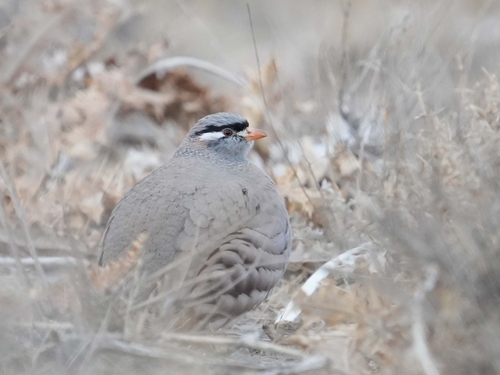
Persienwüstenhuhn (Ammoperdix griseogularis) Persienwüstenhuhn
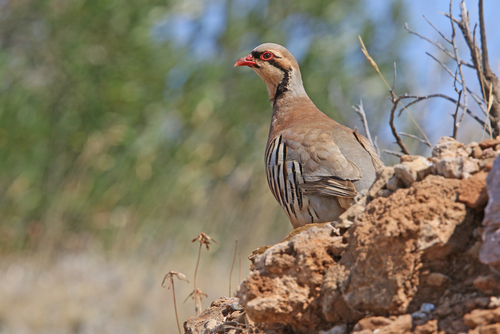
Chukarhuhn (Alectoris chukar) Chukarhuhn

Medien

Laden…

Kurz gesagt

The most reliable field mark between See-see Partridge and Chukar is the head pattern: See-see males show a bold black supercilium and white ear patch, while Chukar has a black band running from the forehead through the eye and down to form a distinct necklace around a white throat. Both species are small, round partridges preferring to run rather than fly, but Chukar is notably heavier and bulkier. In flight or at rest, flank pattern and bill color are also helpful—See-see males have an orange bill and less sharply barred flanks, while Chukar shows a coral red bill and strong black-and-white flank barring. Females of both are duller, but the head and bill differences still apply. Habitat and flocking behavior can help, but are less reliable in overlap zones.

Bestimmungstipps

  1. Head pattern (adults, both sexes): See-see Partridge males have a black supercilium and white ear patch; Chukar has a black band from the forehead through the eye, forming a necklace around a white throat. Females of See-see are duller but still show a pale version of this pattern.
  2. Bill color: See-see Partridge has a vivid orange bill; Chukar's bill is coral red. This is visible at close range or in good light.
  3. Flank pattern: Chukar shows sharply defined black-and-white bars on the flanks; See-see Partridge has less distinct, more muted flank stripes.
  4. Size and structure: Chukar is much heavier and bulkier (607.5g vs. much lighter See-see), with a more rotund body and longer tail. See-see is smaller and more delicate overall.
  5. Leg color: Chukar has red legs; See-see's leg color is not specified but is not noted as diagnostic.
  6. Group size: Outside the breeding season, Chukar often forms larger coveys (10–50 birds); See-see is usually in pairs or very small groups, though larger flocks can occur.
  7. Habitat preference: See-see prefers flatter, open, stony ground with little vegetation, often near water; Chukar is more likely on rocky hillsides and can tolerate steeper, more varied terrain.
  8. Flight behavior: Both species prefer to run, but Chukar may fly further and appears bulkier in flight; See-see is more reluctant to fly and typically only covers short distances.
  9. Voice: Chukar's call is loud, repeated, and distinctive ('chuck-chuck-chukar-chukar'); See-see gives a softer, whistled 'hwit-hwit-hwit'.
  10. Sex differences: Chukar sexes are similar, but females are slightly smaller and lack a spur; See-see females are duller but still show the key head pattern.
  11. Tail and wing shape: Both have rounded wings, but Chukar's tail has 14 feathers and is relatively longer, though this is subtle in the field.
  12. Contextual clues: In overlap zones, rely on head pattern and bill color rather than habitat or group size, as both can be variable.
  13. Juvenile/immature plumage: No specific flight or upperwing pattern differences are described for immatures, so focus on structural and head/bill marks for all ages.
  14. Confusion risk: Beware of dull female See-see Partridge, which can appear similar to Chukar at a distance; check for the absence of the black necklace and the presence of a pale supercilium and ear patch.
  15. When in doubt: Prioritize head pattern (supercilium/ear patch vs. black necklace), bill color, and flank barring as your main field checks, especially in mixed or ambiguous flocks.

Größe

Chukar is substantially larger and heavier than See-see Partridge. Chukar averages about 607.5g in body mass [wikidata], making it a much bulkier bird in the field. See-see Partridge is a small partridge, noticeably more petite and less rotund than Chukar, though precise mass is not given. When seen together or with experience, Chukar's size and more robust build are apparent, especially in flight or when perched side-by-side.

Gefieder

No specific age-dependent upperwing or flight pattern differences are described for immatures or juveniles in either species in the sources. For adults, the head and face pattern is the most diagnostic: See-see Partridge males have a striking black supercilium, white ear patch, and orange bill, with contrasting but less sharply marked flank stripes. Females are duller but retain a pale version of the male's pattern. Chukar has a bold black band running from the forehead, through the eye, and down to form a necklace around a white throat, with well-marked black-and-white bars on the flanks, a coral red bill, and red legs. Both sexes of Chukar are similar, but females are slightly smaller and lack a spur. Chukar's back is light brown, breast grey, and belly buff, with a rufous tinge to the flanks. See-see Partridge is overall paler and less contrasting, especially on the head and flanks. Bill color is a quick check: orange in See-see, coral red in Chukar.

Verhalten

Both species prefer to run when disturbed and only fly short distances on rounded wings. See-see Partridge is usually seen in pairs or very small groups (2–4), though larger flocks can occur. Chukar forms larger coveys in the non-breeding season, often 10 or more, sometimes up to 50 birds, and is more likely to be seen in larger groups outside the breeding season. Both species descend to valleys in winter and are generally sedentary, but Chukar may travel farther for water. In flight, Chukar is bulkier and may fly further than See-see, which is more reluctant to take wing.

Lebensraum

See-see Partridge prefers dry, stony foothills with sparse or no vegetation, often on flatter ground and near water, avoiding narrow ravines, crags, or thick tree cover. It is found in the Middle East and southern Central Asia, typically up to 2,000 m elevation. Chukar is also an upland bird, favoring rocky hillsides and open country, but is more widespread in the Palearctic and can occur in similar habitats. Both avoid dense forest, but See-see is more strictly tied to open, flat, or gently rolling stony terrain, while Chukar can be found on steeper slopes and is more tolerant of varied terrain.

Stimme

See-see Partridge gives a whistled 'hwit-hwit-hwit', which is softer and less raucous than Chukar. Chukar's call is a loud, repeated 'chuck-chuck-chukar-chukar', often given in series and easily heard at a distance. Chukar is much noisier, especially in mornings and evenings, and its rallying calls can elicit responses from other birds. See-see is generally quieter and less likely to call persistently.

Eine bessere Beschreibung senden

Nutze dieselben Abschnitte wie der Vergleich. Dein Text ist sofort veröffentlicht.

The most reliable field mark between See-see Partridge and Chukar is the head pattern: See-see males show a bold black supercilium and white ear patch, while Chukar has a black band running from the forehead through the eye and down to form a distinct necklace around a white throat. Both species are small, round partridges preferring to run rather than fly, but Chukar is notably heavier and bulkier. In flight or at rest, flank pattern and bill color are also helpful—See-see males have an orange bill and less sharply barred flanks, while Chukar shows a coral red bill and strong black-and-white flank barring. Females of both are duller, but the head and bill differences still apply. Habitat and flocking behavior can help, but are less reliable in overlap zones.

  1. Head pattern (adults, both sexes): See-see Partridge males have a black supercilium and white ear patch; Chukar has a black band from the forehead through the eye, forming a necklace around a white throat. Females of See-see are duller but still show a pale version of this pattern.
  2. Bill color: See-see Partridge has a vivid orange bill; Chukar's bill is coral red. This is visible at close range or in good light.
  3. Flank pattern: Chukar shows sharply defined black-and-white bars on the flanks; See-see Partridge has less distinct, more muted flank stripes.
  4. Size and structure: Chukar is much heavier and bulkier (607.5g vs. much lighter See-see), with a more rotund body and longer tail. See-see is smaller and more delicate overall.
  5. Leg color: Chukar has red legs; See-see's leg color is not specified but is not noted as diagnostic.
  6. Group size: Outside the breeding season, Chukar often forms larger coveys (10–50 birds); See-see is usually in pairs or very small groups, though larger flocks can occur.
  7. Habitat preference: See-see prefers flatter, open, stony ground with little vegetation, often near water; Chukar is more likely on rocky hillsides and can tolerate steeper, more varied terrain.
  8. Flight behavior: Both species prefer to run, but Chukar may fly further and appears bulkier in flight; See-see is more reluctant to fly and typically only covers short distances.
  9. Voice: Chukar's call is loud, repeated, and distinctive ('chuck-chuck-chukar-chukar'); See-see gives a softer, whistled 'hwit-hwit-hwit'.
  10. Sex differences: Chukar sexes are similar, but females are slightly smaller and lack a spur; See-see females are duller but still show the key head pattern.
  11. Tail and wing shape: Both have rounded wings, but Chukar's tail has 14 feathers and is relatively longer, though this is subtle in the field.
  12. Contextual clues: In overlap zones, rely on head pattern and bill color rather than habitat or group size, as both can be variable.
  13. Juvenile/immature plumage: No specific flight or upperwing pattern differences are described for immatures, so focus on structural and head/bill marks for all ages.
  14. Confusion risk: Beware of dull female See-see Partridge, which can appear similar to Chukar at a distance; check for the absence of the black necklace and the presence of a pale supercilium and ear patch.
  15. When in doubt: Prioritize head pattern (supercilium/ear patch vs. black necklace), bill color, and flank barring as your main field checks, especially in mixed or ambiguous flocks.

Chukar is substantially larger and heavier than See-see Partridge. Chukar averages about 607.5g in body mass [wikidata], making it a much bulkier bird in the field. See-see Partridge is a small partridge, noticeably more petite and less rotund than Chukar, though precise mass is not given. When seen together or with experience, Chukar's size and more robust build are apparent, especially in flight or when perched side-by-side.

No specific age-dependent upperwing or flight pattern differences are described for immatures or juveniles in either species in the sources. For adults, the head and face pattern is the most diagnostic: See-see Partridge males have a striking black supercilium, white ear patch, and orange bill, with contrasting but less sharply marked flank stripes. Females are duller but retain a pale version of the male's pattern. Chukar has a bold black band running from the forehead, through the eye, and down to form a necklace around a white throat, with well-marked black-and-white bars on the flanks, a coral red bill, and red legs. Both sexes of Chukar are similar, but females are slightly smaller and lack a spur. Chukar's back is light brown, breast grey, and belly buff, with a rufous tinge to the flanks. See-see Partridge is overall paler and less contrasting, especially on the head and flanks. Bill color is a quick check: orange in See-see, coral red in Chukar.

Both species prefer to run when disturbed and only fly short distances on rounded wings. See-see Partridge is usually seen in pairs or very small groups (2–4), though larger flocks can occur. Chukar forms larger coveys in the non-breeding season, often 10 or more, sometimes up to 50 birds, and is more likely to be seen in larger groups outside the breeding season. Both species descend to valleys in winter and are generally sedentary, but Chukar may travel farther for water. In flight, Chukar is bulkier and may fly further than See-see, which is more reluctant to take wing.

See-see Partridge prefers dry, stony foothills with sparse or no vegetation, often on flatter ground and near water, avoiding narrow ravines, crags, or thick tree cover. It is found in the Middle East and southern Central Asia, typically up to 2,000 m elevation. Chukar is also an upland bird, favoring rocky hillsides and open country, but is more widespread in the Palearctic and can occur in similar habitats. Both avoid dense forest, but See-see is more strictly tied to open, flat, or gently rolling stony terrain, while Chukar can be found on steeper slopes and is more tolerant of varied terrain.

See-see Partridge gives a whistled 'hwit-hwit-hwit', which is softer and less raucous than Chukar. Chukar's call is a loud, repeated 'chuck-chuck-chukar-chukar', often given in series and easily heard at a distance. Chukar is much noisier, especially in mornings and evenings, and its rallying calls can elicit responses from other birds. See-see is generally quieter and less likely to call persistently.

Änderungen verwerfen?

Du hast ungespeicherte Änderungen. Wenn du jetzt gehst, gehen sie verloren.

Persienwüstenhuhn · Chukarhuhn · Meine schwierigen Vögel