

Motmot

Rötelpelikan vs Schwarzmilan

Pelecanus rufescens gegen Milvus migrans

Ein Quiz mit Rötelpelikan und Schwarzmilan spielen
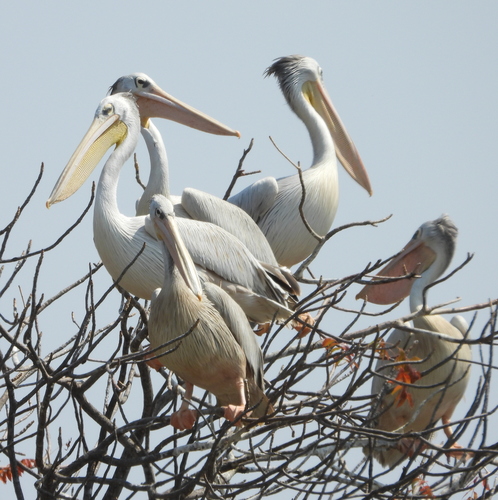
Rötelpelikan (Pelecanus rufescens) Rötelpelikan
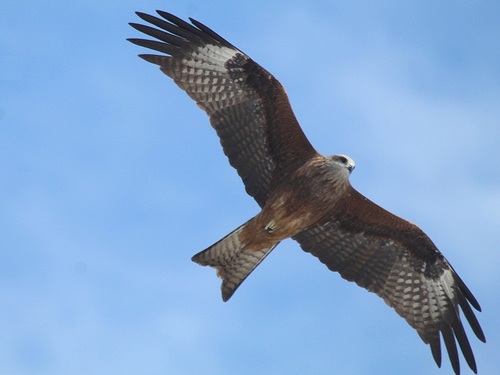
Schwarzmilan (Milvus migrans) Schwarzmilan

Medien

Laden…

Kurz gesagt

The most reliable field mark between Pink-backed Pelican and Black Kite is overall structure: the pelican is a massive, heavy-bodied waterbird with a long, thick bill and broad wings, while the kite is a much smaller, slender raptor with pointed wings and a shallowly forked tail. In flight, pelicans show pale greyish-white plumage with a pinkish tinge on the back, whereas kites are dark brown overall with paler heads and a distinctive dark, shallowly forked tail. Juvenile and adult plumages of both are similar to their respective adults, so age-related confusion is minimal. If seen perched, the pelican’s huge bill and upright stance are unmistakable compared to the kite’s hooked beak and raptor posture. Habitat is also a strong clue: pelicans are almost always near water, while kites are often soaring over open country or urban areas.

Bestimmungstipps

  1. Size and structure: The pelican is enormous, with a long neck and huge bill; the kite is much smaller, slender, and raptor-like. This is the single most reliable difference at any distance.
  2. Bill shape: Pelican has a massive, straight, yellow-topped bill with a large pouch; kite has a short, hooked, black bill with a yellow cere. Bill shape is diagnostic even in poor light.
  3. Tail shape: Kite has a shallowly forked, dark tail visible in flight; pelican’s tail is short and square, barely noticeable.
  4. Wing shape and flight: Pelican’s wings are broad and rounded, with slow, deep wingbeats; kite’s wings are narrower, more pointed, and flight is agile and buoyant.
  5. Plumage color: Pelican is pale grey and white with a pinkish back (never deep pink); kite is dark brown overall with paler head and neck, and dark flight feathers.
  6. Head and neck: Pelican’s long neck is extended in flight; kite’s neck is short and usually held in a slight S-shape.
  7. Leg color: Kite has yellow legs and black claws; pelican’s legs are pale and not as prominent.
  8. Perched posture: Pelican perches upright, often in trees or on the ground near water; kite perches more horizontally, often on poles or trees in open country.
  9. Habitat: Pelican is almost always near water; kite can be found far from water, including over cities and farmland.
  10. Behavior: Pelican often seen swimming or flying in groups; kite is usually seen soaring or circling, sometimes in loose groups but rarely over water.
  11. Vocalization: Kite gives a loud, whistling call; pelican is nearly always silent.
  12. Breeding plumes: Only pelican develops long head plumes in breeding season; kite’s plumage does not change seasonally.
  13. Juvenile confusion: Juvenile pelican and kite look like smaller versions of adults; no age-specific wing pattern causes confusion between these two.
  14. Bill color: Pelican’s bill is yellowish on top, greyish pouch; kite’s bill is black with yellow cere.
  15. Context: If you see a huge bird gliding over a lake or perched in a tree above water, it is almost certainly a pelican; if it is soaring over dry land, especially with a forked tail and shrill call, it is a kite.

Größe

Pink-backed Pelican is vastly larger: body mass averages around 5445 g, with a length of 125–155 cm and a wingspan of 2.15–2.9 m. Black Kite is much smaller, averaging 828 g, with a wingspan of about 150 cm. Even at a distance, the pelican’s bulk, long neck, and enormous bill are obvious, while the kite is a typical medium-sized raptor, much lighter and more agile in flight.

Gefieder

There are no age-specific upperwing patterns in either species that are likely to cause confusion: both juveniles and adults resemble their respective adult plumages. Pink-backed Pelican is grey and white with a subtle pinkish wash on the back (never bright pink), and has a yellow-topped bill with a greyish pouch. In breeding adults, long feather plumes appear on the head. Black Kite is dark brown overall, with paler head and neck, dark patch behind the eye, and black outer flight feathers. The body is streaked with dark shafts, and the tail is shallowly forked and dark. The kite’s bill is black with a yellow cere, and the legs are yellow. In flight, the pelican’s wings are broad and pale; the kite’s are narrower, with dark crossbars and a more pointed shape. No plumage stage of either species closely resembles the other.

Verhalten

Pink-backed Pelican is typically seen swimming, loafing, or flying in groups over water, often fishing cooperatively. It is heavy and labored in flight, with slow, deep wingbeats and a tendency to soar on thermals. Black Kite is agile, often seen soaring, gliding, or circling high over land, sometimes in groups, but rarely over water. It is much more maneuverable, with quick changes of direction and a buoyant, effortless flight style. Perched, pelicans are upright and massive, while kites perch more horizontally like other raptors.

Lebensraum

Pink-backed Pelican is restricted to wetlands: swamps, shallow lakes, slow rivers, and occasionally estuaries or lagoons, but almost never far from water. It prefers quiet, undisturbed backwaters and often nests or roosts in trees near water. Black Kite is far more versatile, found over open country, farmland, urban areas, and sometimes near water, but not dependent on aquatic habitats. Seeing a large bird over open water strongly favors pelican; over dry land or cities, kite is far more likely.

Stimme

Pink-backed Pelican is generally silent, especially in flight; any vocalizations are low and guttural, rarely heard by birders. Black Kite, by contrast, gives a distinctive shrill whistle followed by a rapid whinnying call, especially when soaring or near the nest. Hearing a loud, whistling call points strongly to kite.

Eine bessere Beschreibung senden

Nutze dieselben Abschnitte wie der Vergleich. Dein Text ist sofort veröffentlicht.

The most reliable field mark between Pink-backed Pelican and Black Kite is overall structure: the pelican is a massive, heavy-bodied waterbird with a long, thick bill and broad wings, while the kite is a much smaller, slender raptor with pointed wings and a shallowly forked tail. In flight, pelicans show pale greyish-white plumage with a pinkish tinge on the back, whereas kites are dark brown overall with paler heads and a distinctive dark, shallowly forked tail. Juvenile and adult plumages of both are similar to their respective adults, so age-related confusion is minimal. If seen perched, the pelican’s huge bill and upright stance are unmistakable compared to the kite’s hooked beak and raptor posture. Habitat is also a strong clue: pelicans are almost always near water, while kites are often soaring over open country or urban areas.

  1. Size and structure: The pelican is enormous, with a long neck and huge bill; the kite is much smaller, slender, and raptor-like. This is the single most reliable difference at any distance.
  2. Bill shape: Pelican has a massive, straight, yellow-topped bill with a large pouch; kite has a short, hooked, black bill with a yellow cere. Bill shape is diagnostic even in poor light.
  3. Tail shape: Kite has a shallowly forked, dark tail visible in flight; pelican’s tail is short and square, barely noticeable.
  4. Wing shape and flight: Pelican’s wings are broad and rounded, with slow, deep wingbeats; kite’s wings are narrower, more pointed, and flight is agile and buoyant.
  5. Plumage color: Pelican is pale grey and white with a pinkish back (never deep pink); kite is dark brown overall with paler head and neck, and dark flight feathers.
  6. Head and neck: Pelican’s long neck is extended in flight; kite’s neck is short and usually held in a slight S-shape.
  7. Leg color: Kite has yellow legs and black claws; pelican’s legs are pale and not as prominent.
  8. Perched posture: Pelican perches upright, often in trees or on the ground near water; kite perches more horizontally, often on poles or trees in open country.
  9. Habitat: Pelican is almost always near water; kite can be found far from water, including over cities and farmland.
  10. Behavior: Pelican often seen swimming or flying in groups; kite is usually seen soaring or circling, sometimes in loose groups but rarely over water.
  11. Vocalization: Kite gives a loud, whistling call; pelican is nearly always silent.
  12. Breeding plumes: Only pelican develops long head plumes in breeding season; kite’s plumage does not change seasonally.
  13. Juvenile confusion: Juvenile pelican and kite look like smaller versions of adults; no age-specific wing pattern causes confusion between these two.
  14. Bill color: Pelican’s bill is yellowish on top, greyish pouch; kite’s bill is black with yellow cere.
  15. Context: If you see a huge bird gliding over a lake or perched in a tree above water, it is almost certainly a pelican; if it is soaring over dry land, especially with a forked tail and shrill call, it is a kite.

Pink-backed Pelican is vastly larger: body mass averages around 5445 g, with a length of 125–155 cm and a wingspan of 2.15–2.9 m. Black Kite is much smaller, averaging 828 g, with a wingspan of about 150 cm. Even at a distance, the pelican’s bulk, long neck, and enormous bill are obvious, while the kite is a typical medium-sized raptor, much lighter and more agile in flight.

There are no age-specific upperwing patterns in either species that are likely to cause confusion: both juveniles and adults resemble their respective adult plumages. Pink-backed Pelican is grey and white with a subtle pinkish wash on the back (never bright pink), and has a yellow-topped bill with a greyish pouch. In breeding adults, long feather plumes appear on the head. Black Kite is dark brown overall, with paler head and neck, dark patch behind the eye, and black outer flight feathers. The body is streaked with dark shafts, and the tail is shallowly forked and dark. The kite’s bill is black with a yellow cere, and the legs are yellow. In flight, the pelican’s wings are broad and pale; the kite’s are narrower, with dark crossbars and a more pointed shape. No plumage stage of either species closely resembles the other.

Pink-backed Pelican is typically seen swimming, loafing, or flying in groups over water, often fishing cooperatively. It is heavy and labored in flight, with slow, deep wingbeats and a tendency to soar on thermals. Black Kite is agile, often seen soaring, gliding, or circling high over land, sometimes in groups, but rarely over water. It is much more maneuverable, with quick changes of direction and a buoyant, effortless flight style. Perched, pelicans are upright and massive, while kites perch more horizontally like other raptors.

Pink-backed Pelican is restricted to wetlands: swamps, shallow lakes, slow rivers, and occasionally estuaries or lagoons, but almost never far from water. It prefers quiet, undisturbed backwaters and often nests or roosts in trees near water. Black Kite is far more versatile, found over open country, farmland, urban areas, and sometimes near water, but not dependent on aquatic habitats. Seeing a large bird over open water strongly favors pelican; over dry land or cities, kite is far more likely.

Pink-backed Pelican is generally silent, especially in flight; any vocalizations are low and guttural, rarely heard by birders. Black Kite, by contrast, gives a distinctive shrill whistle followed by a rapid whinnying call, especially when soaring or near the nest. Hearing a loud, whistling call points strongly to kite.

Änderungen verwerfen?

Du hast ungespeicherte Änderungen. Wenn du jetzt gehst, gehen sie verloren.

Rötelpelikan · Schwarzmilan · Meine schwierigen Vögel