

Riefenschnabelani vs Streifenkuckuck
Crotophaga sulcirostris gegen Tapera naevia
Ein Quiz mit Riefenschnabelani und Streifenkuckuck spielen
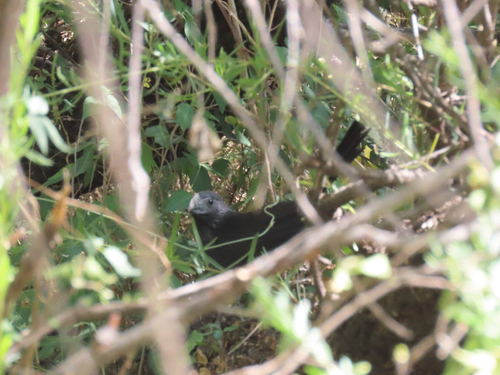 Riefenschnabelani
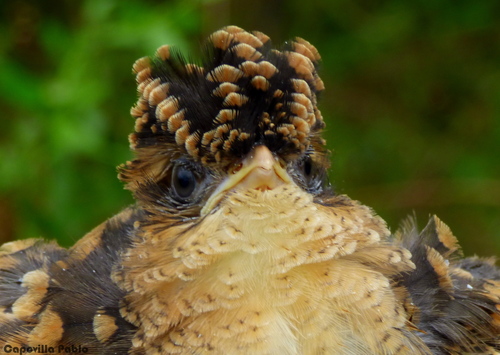 Streifenkuckuck
Kurz gesagt
The most reliable field mark for separating Groove-billed Ani from Striped Cuckoo is the ani’s entirely glossy black plumage and massive, deeply grooved bill, versus the cuckoo’s streaked brown-and-buff upperparts, pale supercilium, and distinctive chestnut-black crest. Immature Striped Cuckoos are even more rufous and spotted, never all-black. In flight or perched, the ani’s long, floppy tail and communal, conspicuous behavior contrast sharply with the cuckoo’s solitary, secretive habits and more graduated tail. If you see a large, black, parrot-billed bird in a group, it’s the ani; if you spot a streaky, cryptic cuckoo with a raised crest, it’s the Striped Cuckoo.
Bestimmungstipps
- All-black plumage: Groove-billed Ani is glossy black all over at all ages; Striped Cuckoo is never all-black, always streaked brown and buff above with pale underparts.
- Bill shape and grooves: Ani has a massive, high-arched bill with obvious lengthwise grooves; Striped Cuckoo’s bill is slender, slightly decurved, and lacks grooves. Even from a distance, the ani’s bill looks parrot-like.
- Crest: Striped Cuckoo has a chestnut and black crest, often raised; Groove-billed Ani lacks any crest.
- Facial pattern: Striped Cuckoo shows a pale supercilium (eyebrow) and a streaked face; ani’s face is plain black.
- Tail shape and length: Both have long tails, but ani’s is exceptionally long, broad, and floppy, almost as long as its body; cuckoo’s tail is long but more graduated and less massive.
- Immature plumage: Young Striped Cuckoos are even more rufous and spotted above, never black; Groove-billed Ani immatures are still all-black.
- Group vs solitary: Ani is almost always in groups, often several birds together in the open; Striped Cuckoo is solitary and shy.
- Perched behavior: Ani perches openly, often flicking its tail; cuckoo tends to stay hidden except when singing.
- Flight style: Ani alternates quick, choppy flaps with short glides, often in loose groups; cuckoo makes short, low flights between cover, usually alone.
- Habitat context: Ani favors open pastures, savannas, and orchards; cuckoo prefers bushy thickets, mangrove edges, and dense cover.
- Vocalizations: Listen for the Striped Cuckoo’s clear, whistled two- or three-note call; ani’s calls are different and often given by a group.
- Size and bulk: Ani is larger and heavier, with a bulkier body and longer wingspan; cuckoo is smaller and lighter.
- Seasonal movement: Ani may retreat from the northern edge of its range in winter; cuckoo is resident throughout its range.
- Pitfalls: Some Smooth-billed Anis can show grooves on the bill, but Striped Cuckoo never has a massive, grooved bill or all-black plumage.
- Quick check: If you see a large, all-black, group-living bird with a huge bill, it’s an ani. If you see a solitary, streaky, crested bird with a pale eyebrow, it’s a Striped Cuckoo.
Größe
Groove-billed Ani is noticeably larger and heavier, with a body mass around 74.5 g and a length of about 34 cm. Striped Cuckoo is smaller and lighter, at about 27 cm and 40 g. The ani also has a longer wingspan (41–46 cm) and a bulkier build. In the field, the ani appears more robust and elongated, especially due to its proportionally very long tail.
Gefieder
No age or season gives Striped Cuckoo a truly all-black look: adults are streaked brown and buff above, with a pale eyebrow and a chestnut-black crest; underparts are off-white. Immatures are even more rufous and spotted above, with buffy marks on the back and wings. Groove-billed Ani, by contrast, is entirely black at all ages, including the wings, tail, and underparts, with a glossy sheen. In flight, ani shows a uniform dark wing and tail, while Striped Cuckoo shows a more patterned, streaked appearance above and a paler underside. The ani’s bill is always large and grooved; the cuckoo’s is slender and lacks grooves. The ani’s tail is very long and broad, while the cuckoo’s is long but more graduated and less massive.
Verhalten
Groove-billed Ani is highly social, often seen in noisy groups, perching conspicuously in open areas, and moving together with jerky, choppy flights. They often sit out in the open, flicking their long tails. Striped Cuckoo is solitary and much shyer, usually staying hidden in bushes or low trees, rarely perching in the open except when singing. The cuckoo is more likely to be seen skulking or making short, low flights between cover.
Lebensraum
Both species favor open country with scattered trees or shrubs, but Groove-billed Ani is more likely in pastures, savannas, and orchards, often in groups. Striped Cuckoo also uses open areas but prefers edges of mangroves, bushy thickets, and is more often found in dense cover. The ani’s tendency to perch in the open contrasts with the cuckoo’s preference for staying hidden.
Stimme
Groove-billed Ani and Striped Cuckoo are best separated by voice where their ranges overlap. The ani’s calls are not described in detail here, but are known to be distinctive and different from the cuckoo’s. Striped Cuckoo gives a whistled, two- or three-note call (wu-weee or wu-wu-wee), which is often imitated by birders to attract it. If you hear a clear, whistled call from cover, suspect Striped Cuckoo; if the calls are more varied and from a group, suspect ani.
Riefenschnabelani · Streifenkuckuck · Meine schwierigen Vögel