

Motmot

Savannenlerche vs Rotdünenlerche

Calendulauda africanoides gegen Calendulauda erythrochlamys

Ein Quiz mit Savannenlerche und Rotdünenlerche spielen
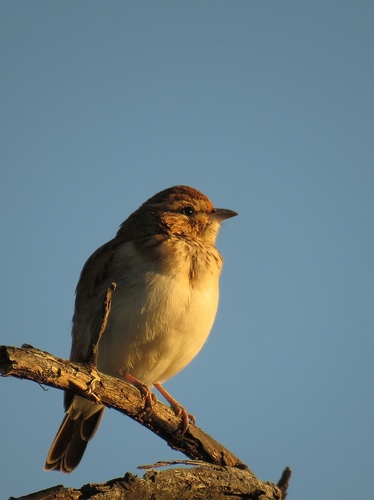
Savannenlerche (Calendulauda africanoides) Savannenlerche
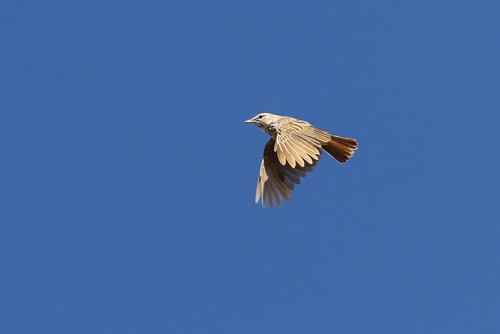
Rotdünenlerche (Calendulauda erythrochlamys) Rotdünenlerche

Medien

Laden…

Kurz gesagt

The most reliable way to separate Fawn-coloured Lark from Dune Lark in the field is by range and habitat: Dune Lark is strictly endemic to Namibia’s dry grasslands and dunes, while Fawn-coloured Lark is found more broadly across south-central Africa. If you’re in Namibia’s arid west, especially in sandy or dune habitats, you’re almost certainly looking at Dune Lark. Both species are similar in size and general appearance, and there are no detailed plumage or age-specific wing pattern differences documented in the available sources. In practice, context and location are your best tools for separation, as subtle plumage or structural marks are not supported by the current references.

Bestimmungstipps

  1. Location is key: If you are in Namibia, especially in the dry western regions or dune habitats, you are almost certainly seeing Dune Lark. Fawn-coloured Lark does not occur in Namibia’s western deserts.
  2. Broader range for Fawn-coloured Lark: If you are outside Namibia, particularly in south-central African countries, the lark you see is much more likely to be Fawn-coloured Lark.
  3. Habitat context: Dune Lark is closely tied to sandy, arid, dune-dominated grasslands. Fawn-coloured Lark is found in a wider range of open, arid habitats but is not as strictly associated with dunes.
  4. No reliable plumage differences: Both species are sandy-brown and lack distinctive field marks in the available literature. Do not rely on subtle plumage tones or patterns for separation.
  5. No documented age-specific wing patterns: There are no published differences in juvenile or immature wing or tail patterns between these species.
  6. Similar size and structure: Both are medium-sized larks with no significant difference in bill length, tail shape, or overall structure based on current data.
  7. Behavior is not diagnostic: Both species forage on the ground and show typical lark behavior. No unique display or foraging style is described for either.
  8. Vocalizations undocumented: There are no published differences in song or calls in the available sources. Do not attempt to separate these species by voice.
  9. Sexes similar: No sexual dimorphism is described for either species; males and females look alike.
  10. Season not a factor: No seasonal plumage or migratory differences are noted; both are resident in their respective ranges year-round.
  11. Pitfall – ignoring range: The most common mistake is overlooking the strict Namibian range of Dune Lark. Always check your location first.
  12. Pitfall – over-interpreting subtle color: Do not try to separate these species by slight differences in fawn or sandy tones; these are not reliable and are not supported by the literature.
  13. Pitfall – assuming overlap: There is no documented range overlap; if you are in Namibia’s dunes, Dune Lark is the only Calendulauda present.
  14. Use eBird and local guides: For confirmation, consult local checklists or eBird for expected species in your area.
  15. If in doubt, prioritize habitat and range: When all else fails, your best clue is where you are and the habitat you are in.

Größe

Fawn-coloured Lark has a documented average body mass of 23.0 g [wikidata]. There is no published mass for Dune Lark in the available sources, but both are medium-sized larks and appear similar in overall size and structure when seen in the field. No reliable size difference can be used for separation.

Gefieder

There are no detailed descriptions of age-specific or adult plumage differences between Fawn-coloured Lark and Dune Lark in the available sources. Both are described as typical 'fawn' or sandy-brown larks, blending well with their arid habitats. No distinctive juvenile or immature upperwing patterns, tail markings, or seasonal plumage differences are documented for either species. Thus, plumage is not a reliable field mark for separating these two species.

Verhalten

Behavioral differences are not described in the available sources. Both species are typical larks, likely to be seen foraging on the ground in open, arid habitats. No unique flight style, display, or foraging behavior is documented that would reliably separate them in the field.

Lebensraum

Habitat is the most diagnostic feature. Dune Lark is strictly endemic to Namibia and is found only in subtropical or tropical dry lowland grassland, especially in sandy or dune-rich areas [wikipedia]. Fawn-coloured Lark, in contrast, is found more broadly across south-central Africa and is not restricted to dunes or Namibia. If you encounter a Calendulauda lark in Namibia’s arid west, especially in dune or sandy grassland, it is almost certainly Dune Lark. Elsewhere in south-central Africa, Fawn-coloured Lark is the expected species.

Eine bessere Beschreibung senden

Nutze dieselben Abschnitte wie der Vergleich. Dein Text ist sofort veröffentlicht.

The most reliable way to separate Fawn-coloured Lark from Dune Lark in the field is by range and habitat: Dune Lark is strictly endemic to Namibia’s dry grasslands and dunes, while Fawn-coloured Lark is found more broadly across south-central Africa. If you’re in Namibia’s arid west, especially in sandy or dune habitats, you’re almost certainly looking at Dune Lark. Both species are similar in size and general appearance, and there are no detailed plumage or age-specific wing pattern differences documented in the available sources. In practice, context and location are your best tools for separation, as subtle plumage or structural marks are not supported by the current references.

  1. Location is key: If you are in Namibia, especially in the dry western regions or dune habitats, you are almost certainly seeing Dune Lark. Fawn-coloured Lark does not occur in Namibia’s western deserts.
  2. Broader range for Fawn-coloured Lark: If you are outside Namibia, particularly in south-central African countries, the lark you see is much more likely to be Fawn-coloured Lark.
  3. Habitat context: Dune Lark is closely tied to sandy, arid, dune-dominated grasslands. Fawn-coloured Lark is found in a wider range of open, arid habitats but is not as strictly associated with dunes.
  4. No reliable plumage differences: Both species are sandy-brown and lack distinctive field marks in the available literature. Do not rely on subtle plumage tones or patterns for separation.
  5. No documented age-specific wing patterns: There are no published differences in juvenile or immature wing or tail patterns between these species.
  6. Similar size and structure: Both are medium-sized larks with no significant difference in bill length, tail shape, or overall structure based on current data.
  7. Behavior is not diagnostic: Both species forage on the ground and show typical lark behavior. No unique display or foraging style is described for either.
  8. Vocalizations undocumented: There are no published differences in song or calls in the available sources. Do not attempt to separate these species by voice.
  9. Sexes similar: No sexual dimorphism is described for either species; males and females look alike.
  10. Season not a factor: No seasonal plumage or migratory differences are noted; both are resident in their respective ranges year-round.
  11. Pitfall – ignoring range: The most common mistake is overlooking the strict Namibian range of Dune Lark. Always check your location first.
  12. Pitfall – over-interpreting subtle color: Do not try to separate these species by slight differences in fawn or sandy tones; these are not reliable and are not supported by the literature.
  13. Pitfall – assuming overlap: There is no documented range overlap; if you are in Namibia’s dunes, Dune Lark is the only Calendulauda present.
  14. Use eBird and local guides: For confirmation, consult local checklists or eBird for expected species in your area.
  15. If in doubt, prioritize habitat and range: When all else fails, your best clue is where you are and the habitat you are in.

Fawn-coloured Lark has a documented average body mass of 23.0 g [wikidata]. There is no published mass for Dune Lark in the available sources, but both are medium-sized larks and appear similar in overall size and structure when seen in the field. No reliable size difference can be used for separation.

There are no detailed descriptions of age-specific or adult plumage differences between Fawn-coloured Lark and Dune Lark in the available sources. Both are described as typical 'fawn' or sandy-brown larks, blending well with their arid habitats. No distinctive juvenile or immature upperwing patterns, tail markings, or seasonal plumage differences are documented for either species. Thus, plumage is not a reliable field mark for separating these two species.

Behavioral differences are not described in the available sources. Both species are typical larks, likely to be seen foraging on the ground in open, arid habitats. No unique flight style, display, or foraging behavior is documented that would reliably separate them in the field.

Habitat is the most diagnostic feature. Dune Lark is strictly endemic to Namibia and is found only in subtropical or tropical dry lowland grassland, especially in sandy or dune-rich areas [wikipedia]. Fawn-coloured Lark, in contrast, is found more broadly across south-central Africa and is not restricted to dunes or Namibia. If you encounter a Calendulauda lark in Namibia’s arid west, especially in dune or sandy grassland, it is almost certainly Dune Lark. Elsewhere in south-central Africa, Fawn-coloured Lark is the expected species.

Änderungen verwerfen?

Du hast ungespeicherte Änderungen. Wenn du jetzt gehst, gehen sie verloren.

Savannenlerche · Rotdünenlerche · Meine schwierigen Vögel