

Löffler vs Rotgesichtlöffler
Platalea leucorodia gegen Platalea alba
Ein Quiz mit Löffler und Rotgesichtlöffler spielen
 Löffler
 Rotgesichtlöffler
Kurz gesagt
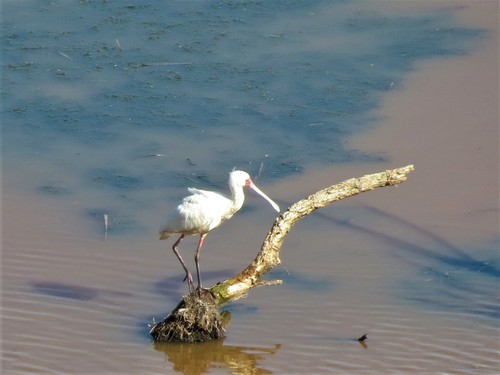
Das zuverlässigste Feldmerkmal zwischen Löffler und Rotgesichtlöffler ist das Vorhandensein eines Hahns und gelben Brustflecks bei adulten Löfflern im Brutkleid, im Gegensatz zum unbefiederten, rein weißen Rotgesichtlöffler. Auch die Farbe des Schnabels und der Beine sind entscheidend: Löffler hat einen schwarzen Schnabel mit einer gelben Spitze und dunklen Beinen, während der Rotgesichtlöffler bei adulten Brutvögeln einen langen grauen Schnabel und ein auffälliges rotes Gesicht sowie rote Beine zeigt. Unreife Vögel können knifflig sein, aber beachten Sie, dass juvenile Löffler schwarze Spitzen an den Handschwingen im Flug zeigen, und beide Arten haben bei jungen Vögeln helle Schnäbel. In allen Altersstufen zeigt der Rotgesichtlöffler niemals einen Hahn oder einen gelben Brustfleck, und seine rote Gesichtshaut ist bei reifen Vögeln einzigartig unter den beiden.
Bestimmungstipps
- Crest presence (adults, breeding): Löffler shows a prominent crest in breeding plumage; Rotgesichtlöffler never has a crest at any age or season.
- Yellow breast patch (adults, breeding): Löffler develops a yellowish breast patch in breeding season, absent in Rotgesichtlöffler.
- Bill color (adults): Löffler has a black bill with a yellow tip; Rotgesichtlöffler's bill is long, grey, and lacks yellow.
- Leg color (adults): Löffler has dark (blackish) legs; Rotgesichtlöffler has bright red legs in breeding adults.
- Facial skin (adults): Rotgesichtlöffler shows a red face in breeding adults, never present in Löffler.
- Juvenile/immature bill color: Both species have pale bills when young, but Rotgesichtlöffler's is described as yellow, while Löffler's is pale (not specified as yellow).
- Juvenile/immature wing pattern: Löffler immatures show black tips to the primary flight feathers, visible in flight—a key mark. Rotgesichtlöffler juveniles do not show black in the wings.
- Non-breeding adult confusion: Outside breeding season, Löffler loses crest and breast patch, but retains black bill with yellow tip and dark legs. Rotgesichtlöffler remains uncrested and white, but red face and legs are less pronounced in immatures.
- Overall color: Both are white, but only Rotgesichtlöffler shows red bare parts (face, legs) in breeding adults.
- Flight silhouette: Both fly with necks outstretched; silhouette is not a reliable separator.
- Habitat context: In Africa, especially in winter, check carefully as both may occur. Löffler is more likely in Eurasia, Rotgesichtlöffler in sub-Saharan Africa and Madagascar.
- Colony association: Rotgesichtlöffler usually does not nest with storks or herons, but this is not a reliable field mark for individuals.
- Voice: Both are mostly silent; do not use voice for separation.
- Sex/age confusion: Both sexes are similar; focus on age-related marks (crest, bill, wing pattern) for separation.
- When in doubt: For immatures, prioritize bill color and (for Eurasian) black primary tips in flight; for adults, check for crest, breast patch, and red bare parts.
Größe
Beide Arten sind große, langbeinige Watvögel mit ähnlicher Gesamtstruktur und Größe, und die Größe allein ist kein zuverlässiges Feldmerkmal im Feld. Messungen werden in den Quellen nicht angegeben, aber beide werden als große Löffler mit langen Beinen und spatelförmigen Schnäbeln beschrieben. Verlassen Sie sich nicht auf Größe oder Proportionen zur Trennung.
Gefieder
-
Juvenile und unreife Vögel: Unreife Löffler haben einen hellen Schnabel und zeigen schwarze Spitzen an den primären Flugfedern im Flug, ein Merkmal, das für den Rotgesichtlöffler nicht beschrieben wird. Junge Rotgesichtlöffler haben kein rotes Gesicht und einen gelben Schnabel, aber es wird kein Schwarz in den Flügeln erwähnt.
-
Erwachsene Brutkleidung: Erwachsene Löffler entwickeln einen ausgeprägten Hahn und einen gelben Brustfleck, mit einem schwarzen Schnabel, der gelbspitzig ist, und dunklen Beinen. Erwachsene Rotgesichtlöffler im Brutkleid sind rein weiß, zeigen aber niemals einen Hahn oder Brustfleck; stattdessen haben sie ein rotes Gesicht und rote Beine sowie einen langen grauen Schnabel.
-
Nicht brutende Erwachsene: Der Löffler verliert den Hahn und den gelben Brustfleck außerhalb der Brutzeit, behält aber die dunklen Beine und den schwarzen Schnabel mit gelber Spitze. Der Rotgesichtlöffler bleibt unbefiedert und weiß, aber das rote Gesicht und die Beine sind bei unreifen Vögeln weniger ausgeprägt.
-
In allen Altersstufen: Der Rotgesichtlöffler zeigt niemals einen Hahn oder einen gelben Brustfleck, und der Löffler hat niemals ein rotes Gesicht oder Beine.
Verhalten
Beide Arten ernähren sich, indem sie ihre spatelförmigen Schnäbel seitlich im flachen Wasser hin und her schwenken und aquatische Beute schnappen. Beide fliegen mit ausgestrecktem Hals (im Gegensatz zu Reihern). Der Rotgesichtlöffler ist bekannt dafür, dass er leicht durch unterschiedliche Wassertiefen geht, dank seiner langen Beine und dünnen, spitzen Zehen. Es wird keine wesentlichen Verhaltensunterschiede beim Nahrungserwerb oder Flugstil zwischen den beiden erwähnt.
Lebensraum
Beide Arten bewohnen sumpfige Feuchtgebiete mit flachem Wasser. Löffler brütet in Europa, Asien und Teilen Afrikas, während der Rotgesichtlöffler in Afrika und Madagaskar weit verbreitet ist. Der Rotgesichtlöffler nistet typischerweise in Bäumen oder Schilfgürteln und teilt normalerweise keine Kolonien mit Störchen oder Reihern. Löffler-Kolonien befinden sich oft auf Inseln oder in Bäumen/Büschen, um Bodenräubern zu entkommen. In Überlappungsgebieten (z. B. Winter in Afrika) ist besondere Aufmerksamkeit auf das Gefieder erforderlich.
Stimme
Beide Arten sind größtenteils still. Der Löffler wird als allgemein leise beschrieben, mit gelegentlichem Schnabelknacken, tiefem Grunzen und Trompeten in Kolonien. Es werden keine auffälligen stimmlichen Unterschiede für den Rotgesichtlöffler erwähnt.