

Motmot

Feldlerche vs Gartenbaumläufer

Alauda arvensis gegen Certhia brachydactyla

Ein Quiz mit Feldlerche und Gartenbaumläufer spielen
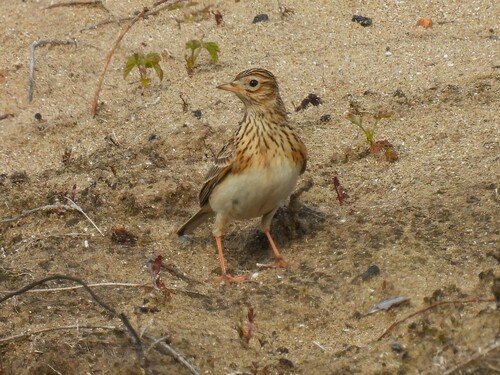
Feldlerche (Alauda arvensis) Feldlerche
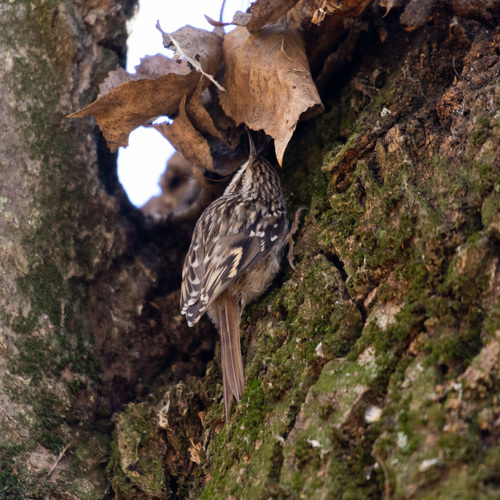
Gartenbaumläufer (Certhia brachydactyla) Gartenbaumläufer

Medien

Laden…

Kurz gesagt

The most reliable way to separate Eurasian Skylark from Short-toed Treecreeper is by overall structure and behavior: Skylark is a robust, ground-dwelling songbird with a short crest and broad wings, often seen in open fields or hovering high while singing, while Short-toed Treecreeper is a tiny, slim woodland bird that creeps up tree trunks using its stiff tail for support. In flight, Skylark shows a short tail and broad wings with white edges on the tail and rear wing, especially visible from behind; Treecreeper, by contrast, is rarely seen in open flight and never shows such patterning. Plumage is brown and streaky in both, but Skylark is bulkier and paler below, while Treecreeper is more intricately patterned above and always has a long, decurved bill. If you see a bird climbing a tree trunk, it is never a Skylark. If you see a bird hovering high over a field, it is never a Treecreeper.

Bestimmungstipps

  1. Behavior is the fastest separator: Skylark is never seen climbing tree trunks; Treecreeper is almost never seen on the ground or in open flight.
  2. Flight display: If you see a bird hovering high in the air while singing, it is a Skylark—Treecreeper never does this.
  3. Perched posture: Skylark stands upright on the ground or low vegetation, often with a slight crest visible; Treecreeper is always pressed against a tree trunk, using its stiff tail for support.
  4. Bill shape: Skylark has a short, straight bill; Treecreeper has a long, slender, and strongly decurved bill, obvious even at a distance.
  5. Tail structure: Skylark's tail is short and square-tipped, with white edges visible in flight from behind; Treecreeper's tail is long, pointed, and stiff, used as a prop against bark.
  6. Upperparts: Both are brown and streaky above, but Treecreeper is more intricately patterned with black, buff, and white, and has a rufous rump; Skylark is more uniform and lacks a rufous rump.
  7. Underparts: Skylark is pale below, sometimes with faint streaking on the breast; Treecreeper is dingy whitish below, with the throat the whitest part and sometimes a buff belly in juveniles.
  8. Supercilium: Treecreeper has a weak, off-white supercilium; Skylark's facial pattern is plainer, with no strong eyebrow.
  9. Crest: Skylark has a short, blunt crest that can be raised or lowered; Treecreeper lacks any crest.
  10. Wing pattern in flight: Skylark shows white edges to the tail and rear wing, visible when flying away; Treecreeper does not show any white in the wings or tail in flight.
  11. Size: Skylark is much larger and bulkier than Treecreeper; if the bird looks tiny and mouse-like, it is a Treecreeper.
  12. Habitat: Skylark is found in open fields and grasslands; Treecreeper is restricted to woodland with mature trees.
  13. Song: Skylark's song is long, continuous, and delivered in flight; Treecreeper's song is short, even, and given from trunks.
  14. Juvenile confusion: Juvenile Treecreepers are paler below but still show the same structure and tree-climbing behavior; Skylark juveniles resemble adults in structure and behavior.
  15. Pitfalls: Both are brown and streaky, but structure, behavior, and habitat are always reliable—do not rely on plumage alone in poor views.

Größe

Eurasian Skylark is much larger, measuring 18–19 cm in length, while Short-toed Treecreeper is only about 12.5 cm long. The Treecreeper is also much lighter (body mass around 8.4 g) and more delicate, with a slim, elongated appearance. Skylark is robust and chunky, with a noticeably larger body and head. In the field, Skylark will appear almost twice the size of a Treecreeper, and is much bulkier overall.

Gefieder

No age-specific upperwing or flight marks are described for either species that would cause confusion in immature birds. Adult Skylark is mainly brown above and pale below, with a short, blunt crest that can be raised or lowered. In flight, it shows a short tail and broad wings, with white edging to the tail and rear wing—these white edges are visible when the bird is flying away but not when approaching. Treecreeper, of all ages, is intricately patterned brown above with black, buff, and white, a rufous rump, and dingy whitish underparts (juveniles may have a buff belly). The supercilium is weak and off-white, and the throat is the whitest part. The bill is always long and decurved, and the tail is stiff and pointed. Skylark lacks any rufous rump, has a much shorter bill, and never creeps up trees. Juvenile Treecreepers are paler below but still show the same structure and tree-climbing behavior.

Verhalten

Skylark is a ground-dweller, often seen walking or running in open fields and farmland. Its most distinctive behavior is the male's display flight: hovering high in the sky while singing for minutes at a time. It rarely perches in trees. Treecreeper is almost always seen climbing up tree trunks in woodlands, using its stiff tail for support and moving in short, mouse-like hops. It is rarely seen on the ground and never hovers or sings in flight. If you see a bird creeping up a trunk, it is a Treecreeper; if you see a bird hovering or walking in open grass, it is a Skylark.

Lebensraum

Skylark prefers open habitats—farmland, heath, grassland, and fields—where it can forage on the ground and display in the air. It avoids dense woodland. Treecreeper is a woodland specialist, found in forests with mature trees (especially deciduous), and is rarely seen away from trunks or large branches. If you are in a dense stand of trees and see a bird climbing bark, it is a Treecreeper; if you are in open country, it is a Skylark.

Stimme

Skylark is famous for its long, bubbling, unbroken song, delivered in hovering flight high above the ground. The song can last several minutes and is a clear, continuous warble. Treecreeper's vocalizations are much quieter and less conspicuous: a repeated shrill 'tyt...tyt tyt-tyt' call and a short, even song sequence. Treecreeper does not sing in flight and is generally much less vocal and less obvious than Skylark. If you hear a long, high, continuous song from above, it is Skylark; Treecreeper's calls are subtle and given from trunks.

Eine bessere Beschreibung senden

Nutze dieselben Abschnitte wie der Vergleich. Dein Text ist sofort veröffentlicht.

The most reliable way to separate Eurasian Skylark from Short-toed Treecreeper is by overall structure and behavior: Skylark is a robust, ground-dwelling songbird with a short crest and broad wings, often seen in open fields or hovering high while singing, while Short-toed Treecreeper is a tiny, slim woodland bird that creeps up tree trunks using its stiff tail for support. In flight, Skylark shows a short tail and broad wings with white edges on the tail and rear wing, especially visible from behind; Treecreeper, by contrast, is rarely seen in open flight and never shows such patterning. Plumage is brown and streaky in both, but Skylark is bulkier and paler below, while Treecreeper is more intricately patterned above and always has a long, decurved bill. If you see a bird climbing a tree trunk, it is never a Skylark. If you see a bird hovering high over a field, it is never a Treecreeper.

  1. Behavior is the fastest separator: Skylark is never seen climbing tree trunks; Treecreeper is almost never seen on the ground or in open flight.
  2. Flight display: If you see a bird hovering high in the air while singing, it is a Skylark—Treecreeper never does this.
  3. Perched posture: Skylark stands upright on the ground or low vegetation, often with a slight crest visible; Treecreeper is always pressed against a tree trunk, using its stiff tail for support.
  4. Bill shape: Skylark has a short, straight bill; Treecreeper has a long, slender, and strongly decurved bill, obvious even at a distance.
  5. Tail structure: Skylark's tail is short and square-tipped, with white edges visible in flight from behind; Treecreeper's tail is long, pointed, and stiff, used as a prop against bark.
  6. Upperparts: Both are brown and streaky above, but Treecreeper is more intricately patterned with black, buff, and white, and has a rufous rump; Skylark is more uniform and lacks a rufous rump.
  7. Underparts: Skylark is pale below, sometimes with faint streaking on the breast; Treecreeper is dingy whitish below, with the throat the whitest part and sometimes a buff belly in juveniles.
  8. Supercilium: Treecreeper has a weak, off-white supercilium; Skylark's facial pattern is plainer, with no strong eyebrow.
  9. Crest: Skylark has a short, blunt crest that can be raised or lowered; Treecreeper lacks any crest.
  10. Wing pattern in flight: Skylark shows white edges to the tail and rear wing, visible when flying away; Treecreeper does not show any white in the wings or tail in flight.
  11. Size: Skylark is much larger and bulkier than Treecreeper; if the bird looks tiny and mouse-like, it is a Treecreeper.
  12. Habitat: Skylark is found in open fields and grasslands; Treecreeper is restricted to woodland with mature trees.
  13. Song: Skylark's song is long, continuous, and delivered in flight; Treecreeper's song is short, even, and given from trunks.
  14. Juvenile confusion: Juvenile Treecreepers are paler below but still show the same structure and tree-climbing behavior; Skylark juveniles resemble adults in structure and behavior.
  15. Pitfalls: Both are brown and streaky, but structure, behavior, and habitat are always reliable—do not rely on plumage alone in poor views.

Eurasian Skylark is much larger, measuring 18–19 cm in length, while Short-toed Treecreeper is only about 12.5 cm long. The Treecreeper is also much lighter (body mass around 8.4 g) and more delicate, with a slim, elongated appearance. Skylark is robust and chunky, with a noticeably larger body and head. In the field, Skylark will appear almost twice the size of a Treecreeper, and is much bulkier overall.

No age-specific upperwing or flight marks are described for either species that would cause confusion in immature birds. Adult Skylark is mainly brown above and pale below, with a short, blunt crest that can be raised or lowered. In flight, it shows a short tail and broad wings, with white edging to the tail and rear wing—these white edges are visible when the bird is flying away but not when approaching. Treecreeper, of all ages, is intricately patterned brown above with black, buff, and white, a rufous rump, and dingy whitish underparts (juveniles may have a buff belly). The supercilium is weak and off-white, and the throat is the whitest part. The bill is always long and decurved, and the tail is stiff and pointed. Skylark lacks any rufous rump, has a much shorter bill, and never creeps up trees. Juvenile Treecreepers are paler below but still show the same structure and tree-climbing behavior.

Skylark is a ground-dweller, often seen walking or running in open fields and farmland. Its most distinctive behavior is the male's display flight: hovering high in the sky while singing for minutes at a time. It rarely perches in trees. Treecreeper is almost always seen climbing up tree trunks in woodlands, using its stiff tail for support and moving in short, mouse-like hops. It is rarely seen on the ground and never hovers or sings in flight. If you see a bird creeping up a trunk, it is a Treecreeper; if you see a bird hovering or walking in open grass, it is a Skylark.

Skylark prefers open habitats—farmland, heath, grassland, and fields—where it can forage on the ground and display in the air. It avoids dense woodland. Treecreeper is a woodland specialist, found in forests with mature trees (especially deciduous), and is rarely seen away from trunks or large branches. If you are in a dense stand of trees and see a bird climbing bark, it is a Treecreeper; if you are in open country, it is a Skylark.

Skylark is famous for its long, bubbling, unbroken song, delivered in hovering flight high above the ground. The song can last several minutes and is a clear, continuous warble. Treecreeper's vocalizations are much quieter and less conspicuous: a repeated shrill 'tyt...tyt tyt-tyt' call and a short, even song sequence. Treecreeper does not sing in flight and is generally much less vocal and less obvious than Skylark. If you hear a long, high, continuous song from above, it is Skylark; Treecreeper's calls are subtle and given from trunks.

Änderungen verwerfen?

Du hast ungespeicherte Änderungen. Wenn du jetzt gehst, gehen sie verloren.

Feldlerche · Gartenbaumläufer · Meine schwierigen Vögel