

Motmot

Nachtschwalbe vs Kleiber

Caprimulgus europaeus gegen Sitta europaea

Ein Quiz mit Nachtschwalbe und Kleiber spielen
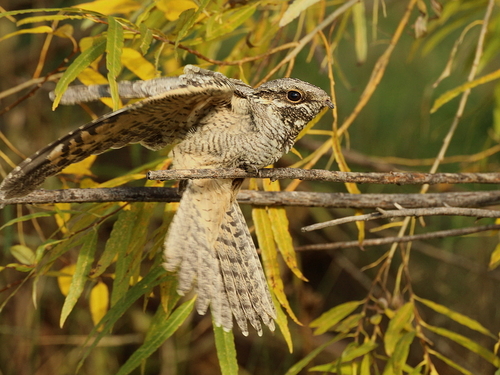
Nachtschwalbe (Caprimulgus europaeus) Nachtschwalbe
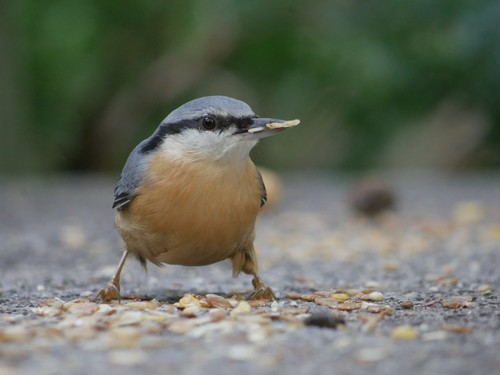
Kleiber (Sitta europaea) Kleiber

Medien

Laden…

Kurz gesagt

The most reliable field mark is overall shape and flight style: Eurasian Nightjar is a long-winged, cryptically patterned nocturnal bird with a buoyant, moth-like flight, while Eurasian Nuthatch is a small, short-tailed, blue-grey bird with a pointed head and rapid, direct flight. Nightjar males in flight show bold white patches on the wings and tail (absent in females and juveniles), while Nuthatch never shows such markings. Nightjars are active at dusk and night, often seen flying low or perched along branches, whereas Nuthatches are diurnal, creeping along tree trunks and branches, often headfirst. Plumage, structure, and behavior together make confusion rare except in poor light or fleeting glimpses.

Bestimmungstipps

  1. Flight pattern and shape: Nightjar in flight is long-winged, with pointed wings and a buoyant, moth-like glide; Nuthatch is compact, with round wings and a fast, direct, bounding flight. This is diagnostic even at a distance.
  2. Wing and tail markings (age/sex): Adult male Nightjars show bold white patches on the primaries and outer tail feathers in flight; females and juveniles lack these, but still never show Nuthatch's blue-grey upperparts. Nuthatch never shows any white wing or tail flashes.
  3. Plumage (all ages): Nightjar is cryptically patterned grey-brown with streaks and bars, a pale hindneck collar, and a white moustachial line. Nuthatch is blue-grey above, with a black eyestripe, white throat, and orange-buff or whitish underparts. No overlap in plumage pattern.
  4. Underparts: Nightjar has barred and spotted underparts; Nuthatch is clean below, with orange or buff flanks and belly, sometimes mottled, but never barred.
  5. Bill shape and size: Nightjar has a tiny, weak bill with a wide gape (often hard to see); Nuthatch has a long, strong, pointed bill, prominent even at a distance.
  6. Tail: Nightjar's tail is relatively long and pointed; Nuthatch's tail is short and square, never used for support.
  7. Perched posture: Nightjar perches lengthwise along branches or on the ground, motionless and blending in; Nuthatch clings to trunks and branches, often headfirst, rarely motionless for long.
  8. Activity period: Nightjar is active at dusk and night; Nuthatch is strictly diurnal.
  9. Habitat use: Nightjar favors open ground, clearings, and low perches; Nuthatch is almost always on tree trunks or branches in mature woodland.
  10. Voice: Nightjar's song is a long, mechanical churr, ventriloquial and sustained; Nuthatch gives short, loud 'dwip' calls and other sharp notes.
  11. Size: Nightjar is much larger and longer-winged (see measurements), but size can be hard to judge without direct comparison.
  12. Sex and age pitfalls: Female and juvenile Nightjars lack the male's white wing/tail flashes, but still show cryptic, streaked plumage unlike any Nuthatch. Juvenile Nuthatch is duller but still blue-grey above.
  13. Confusion risk: Mix-ups are most likely in poor light or when seeing a Nightjar at rest, but the cryptic, streaked pattern and posture are unlike any Nuthatch. In flight, Nuthatch's compact, short-tailed shape is distinctive.
  14. Moult timing: Nightjar adults and immatures moult after breeding, but this does not create confusion with Nuthatch, whose moult is similarly post-breeding but does not affect key field marks.
  15. Context: If seen by day, especially creeping on a trunk, it's a Nuthatch; if flying at dusk or night, or roosting on the ground, it's a Nightjar.

Größe

Eurasian Nightjar is much larger, with a length of 24.5–28 cm and wingspan of 52–59 cm, compared to the Eurasian Nuthatch's 14 cm length and 22.5–27 cm wingspan. Nightjar is also heavier (male 51–101 g, female 67–95 g) versus Nuthatch's 17–28 g [wikipedia][wikidata]. In the field, Nightjar appears long and slim with long, pointed wings and a relatively long tail, while Nuthatch is compact, short-tailed, and round-winged.

Gefieder

Juvenile and immature Nightjars resemble adult females, lacking the male's white wing and tail flashes. All ages of Nightjar show cryptic grey-brown upperparts with streaking and a pale buff hindneck collar, blending into bark or leaf litter. In flight, adult males show bold white patches on three primaries and white tips to the outer tail feathers; females and juveniles lack these white areas. Nuthatch of all ages is blue-grey above with a black eyestripe, white throat, and orange-buff flanks and belly (variable by subspecies/sex). Juvenile Nuthatches are duller and paler, but still blue-grey above and never show Nightjar's cryptic pattern or white wing flashes. Nuthatch's underparts are clean and unbarred, contrasting with Nightjar's barred and spotted underparts. Nuthatch never shows the Nightjar's pale hindneck collar or white moustachial line.

Verhalten

Nightjar is crepuscular/nocturnal, most often seen flying at dusk or night, sometimes perched lengthwise along branches or on the ground, motionless and camouflaged. Its flight is buoyant, silent, and moth-like, with glides and flutters. Nuthatch is strictly diurnal, foraging by creeping headfirst down tree trunks and branches, using its strong feet and bill to probe bark. Its flight is fast and direct, with short bursts and closed wings between beats. Nuthatch rarely perches in the open for long, and never adopts the Nightjar's cryptic, motionless posture.

Lebensraum

Nightjar favors open woodlands, heath, and clearings, often roosting on the ground or low branches, and is rarely seen in dense forest during the day. Nuthatch is a woodland specialist, found in mature forests, parks, and gardens with large trees, and is almost always seen on trunks or branches rather than on the ground or in open areas. Their habitats may overlap in broadleaf woodlands, but their microhabitat use and activity periods differ sharply.

Stimme

Nightjar males sing a long, mechanical churring trill at dusk and dawn, sometimes ending with a bubbling trill and wing-clapping. Both sexes give a short 'cuick' call in flight and various sharp or hissing alarm calls. Nuthatch is highly vocal by day, giving repeated loud 'dwip' calls and other sharp notes. Nightjar's song is ventriloquial and can be confused with mole cricket, but Nuthatch's calls are much shorter, more abrupt, and never churring.

Eine bessere Beschreibung senden

Nutze dieselben Abschnitte wie der Vergleich. Dein Text ist sofort veröffentlicht.

The most reliable field mark is overall shape and flight style: Eurasian Nightjar is a long-winged, cryptically patterned nocturnal bird with a buoyant, moth-like flight, while Eurasian Nuthatch is a small, short-tailed, blue-grey bird with a pointed head and rapid, direct flight. Nightjar males in flight show bold white patches on the wings and tail (absent in females and juveniles), while Nuthatch never shows such markings. Nightjars are active at dusk and night, often seen flying low or perched along branches, whereas Nuthatches are diurnal, creeping along tree trunks and branches, often headfirst. Plumage, structure, and behavior together make confusion rare except in poor light or fleeting glimpses.

  1. Flight pattern and shape: Nightjar in flight is long-winged, with pointed wings and a buoyant, moth-like glide; Nuthatch is compact, with round wings and a fast, direct, bounding flight. This is diagnostic even at a distance.
  2. Wing and tail markings (age/sex): Adult male Nightjars show bold white patches on the primaries and outer tail feathers in flight; females and juveniles lack these, but still never show Nuthatch's blue-grey upperparts. Nuthatch never shows any white wing or tail flashes.
  3. Plumage (all ages): Nightjar is cryptically patterned grey-brown with streaks and bars, a pale hindneck collar, and a white moustachial line. Nuthatch is blue-grey above, with a black eyestripe, white throat, and orange-buff or whitish underparts. No overlap in plumage pattern.
  4. Underparts: Nightjar has barred and spotted underparts; Nuthatch is clean below, with orange or buff flanks and belly, sometimes mottled, but never barred.
  5. Bill shape and size: Nightjar has a tiny, weak bill with a wide gape (often hard to see); Nuthatch has a long, strong, pointed bill, prominent even at a distance.
  6. Tail: Nightjar's tail is relatively long and pointed; Nuthatch's tail is short and square, never used for support.
  7. Perched posture: Nightjar perches lengthwise along branches or on the ground, motionless and blending in; Nuthatch clings to trunks and branches, often headfirst, rarely motionless for long.
  8. Activity period: Nightjar is active at dusk and night; Nuthatch is strictly diurnal.
  9. Habitat use: Nightjar favors open ground, clearings, and low perches; Nuthatch is almost always on tree trunks or branches in mature woodland.
  10. Voice: Nightjar's song is a long, mechanical churr, ventriloquial and sustained; Nuthatch gives short, loud 'dwip' calls and other sharp notes.
  11. Size: Nightjar is much larger and longer-winged (see measurements), but size can be hard to judge without direct comparison.
  12. Sex and age pitfalls: Female and juvenile Nightjars lack the male's white wing/tail flashes, but still show cryptic, streaked plumage unlike any Nuthatch. Juvenile Nuthatch is duller but still blue-grey above.
  13. Confusion risk: Mix-ups are most likely in poor light or when seeing a Nightjar at rest, but the cryptic, streaked pattern and posture are unlike any Nuthatch. In flight, Nuthatch's compact, short-tailed shape is distinctive.
  14. Moult timing: Nightjar adults and immatures moult after breeding, but this does not create confusion with Nuthatch, whose moult is similarly post-breeding but does not affect key field marks.
  15. Context: If seen by day, especially creeping on a trunk, it's a Nuthatch; if flying at dusk or night, or roosting on the ground, it's a Nightjar.

Eurasian Nightjar is much larger, with a length of 24.5–28 cm and wingspan of 52–59 cm, compared to the Eurasian Nuthatch's 14 cm length and 22.5–27 cm wingspan. Nightjar is also heavier (male 51–101 g, female 67–95 g) versus Nuthatch's 17–28 g [wikipedia][wikidata]. In the field, Nightjar appears long and slim with long, pointed wings and a relatively long tail, while Nuthatch is compact, short-tailed, and round-winged.

Juvenile and immature Nightjars resemble adult females, lacking the male's white wing and tail flashes. All ages of Nightjar show cryptic grey-brown upperparts with streaking and a pale buff hindneck collar, blending into bark or leaf litter. In flight, adult males show bold white patches on three primaries and white tips to the outer tail feathers; females and juveniles lack these white areas. Nuthatch of all ages is blue-grey above with a black eyestripe, white throat, and orange-buff flanks and belly (variable by subspecies/sex). Juvenile Nuthatches are duller and paler, but still blue-grey above and never show Nightjar's cryptic pattern or white wing flashes. Nuthatch's underparts are clean and unbarred, contrasting with Nightjar's barred and spotted underparts. Nuthatch never shows the Nightjar's pale hindneck collar or white moustachial line.

Nightjar is crepuscular/nocturnal, most often seen flying at dusk or night, sometimes perched lengthwise along branches or on the ground, motionless and camouflaged. Its flight is buoyant, silent, and moth-like, with glides and flutters. Nuthatch is strictly diurnal, foraging by creeping headfirst down tree trunks and branches, using its strong feet and bill to probe bark. Its flight is fast and direct, with short bursts and closed wings between beats. Nuthatch rarely perches in the open for long, and never adopts the Nightjar's cryptic, motionless posture.

Nightjar favors open woodlands, heath, and clearings, often roosting on the ground or low branches, and is rarely seen in dense forest during the day. Nuthatch is a woodland specialist, found in mature forests, parks, and gardens with large trees, and is almost always seen on trunks or branches rather than on the ground or in open areas. Their habitats may overlap in broadleaf woodlands, but their microhabitat use and activity periods differ sharply.

Nightjar males sing a long, mechanical churring trill at dusk and dawn, sometimes ending with a bubbling trill and wing-clapping. Both sexes give a short 'cuick' call in flight and various sharp or hissing alarm calls. Nuthatch is highly vocal by day, giving repeated loud 'dwip' calls and other sharp notes. Nightjar's song is ventriloquial and can be confused with mole cricket, but Nuthatch's calls are much shorter, more abrupt, and never churring.

Änderungen verwerfen?

Du hast ungespeicherte Änderungen. Wenn du jetzt gehst, gehen sie verloren.

Nachtschwalbe · Kleiber · Meine schwierigen Vögel