

Wiedehopf vs Wendehals
Upupa epops gegen Jynx torquilla
Ein Quiz mit Wiedehopf und Wendehals spielen
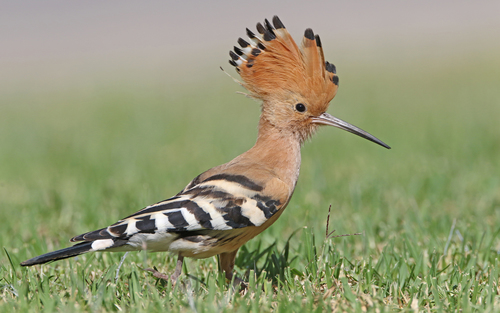 Wiedehopf
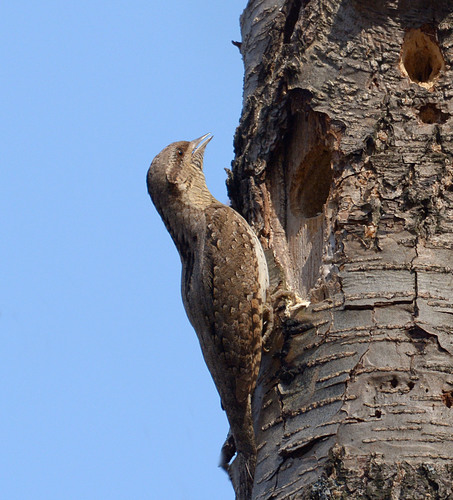 Wendehals
Kurz gesagt
The most reliable field mark to separate Common Hoopoe from Eurasian Wryneck is the striking black-and-white wing and tail pattern of the Hoopoe, visible in all ages and especially obvious in flight, along with its cinnamon body and tall, erectile crest. In contrast, the Wryneck is cryptically patterned in mottled browns and greys, lacking any bold wing or tail markings, and has a slender, thrush-like shape with no crest. Hoopoes show a distinctive undulating, butterfly-like flight, while Wrynecks fly more directly and perch upright with a subtle, elongated posture. Bill shape is also key: Hoopoes have a long, slender, strongly downcurved bill, while Wrynecks have a straight, pointed bill. Voice and habitat can help, but the visual differences are usually decisive.
Bestimmungstipps
- Wing and tail pattern in flight (all ages): Hoopoe shows bold black-and-white barring on the wings and a broad white band across a black tail, visible both perched and especially in flight. Wryneck's wings and tail are plain brownish-grey with subtle, irregular barring and no white or black patches.
- Crest (all ages): Hoopoe has a tall, erectile crest with black tips, often raised when excited or alarmed. Wryneck completely lacks a crest; its head is smoothly rounded.
- Bill shape: Hoopoe's bill is long, slender, and strongly downcurved, adapted for probing. Wryneck's bill is straight, slender, and pointed, with a broad base but no curve.
- Body shape and posture: Hoopoe is robust, with a broad body and large, rounded wings. Wryneck is slim, elongated, and thrush-like, with a more delicate appearance and upright posture when perched.
- Plumage color: Hoopoe is rich cinnamon or orange-buff overall, with contrasting black-and-white wings and tail. Wryneck is cryptically patterned in mottled browns, greys, and rufous, blending into tree bark or bare ground.
- Juvenile plumage: Juvenile Hoopoes look like adults, maintaining the bold color and pattern. Juvenile Wrynecks are similar to adults but duller, with less contrast in the barring and spotting.
- Flight style: Hoopoe's flight is undulating and butterfly-like, with broad wings half-closing at the end of each beat. Wryneck flies more directly and less erratically, with rounded, plain wings.
- Head and neck behavior: Wryneck may twist its head in a snake-like manner or feign death when disturbed, a behavior never seen in Hoopoe.
- Foraging behavior: Both species forage on the ground, but Hoopoe is more likely to be seen probing with its long bill, while Wryneck often feeds near ant nests and may cling to vertical surfaces.
- Voice: Listen for Hoopoe's soft 'oop-oop-oop' call versus Wryneck's harsh, repeated 'quee-quee-quee-quee.' The difference is usually clear if the bird is vocalizing.
- Habitat context: In old orchards or areas with many ant nests, Wryneck is more likely, especially if the bird is cryptic and silent. In open grassland, parks, or cultivated fields, especially if the bird is obvious and boldly marked, Hoopoe is more probable.
- Perched silhouette: Hoopoe often perches upright with crest raised and bill angled downward. Wryneck perches more horizontally, head held high, and blends into the background.
- Tail pattern: Hoopoe's tail is black with a broad white band; Wryneck's tail is grey-brown with faint, irregular bands, lacking any bold white or black.
- Legs and feet: Wryneck's zygodactyl feet (two toes forward, two back) allow it to cling to bark or vertical surfaces, but this is rarely visible in the field.
- Potential pitfalls: A distant, silent Hoopoe with crest lowered and wings folded may appear less distinctive, but the bill, wing pattern, and overall color still separate it from Wryneck. Wryneck's cryptic plumage can be mistaken for a lark or pipit, but never shows the bold pattern or crest of Hoopoe.
Größe
Common Hoopoe is noticeably larger and heavier than Eurasian Wryneck. Hoopoe measures 25–32 cm in length with a 44–48 cm wingspan and weighs 46–89 g (no AVONET value, but this is from [wikipedia]), while Eurasian Wryneck is smaller at 16–18 cm long and weighs around 37 g (AVONET/Wikidata). In the field, Hoopoe looks bulkier with broader wings and a more robust body, whereas Wryneck appears slim and elongated, closer in jizz to a thrush or small woodpecker.
Gefieder
Juvenile and adult Common Hoopoes of all ages are highly distinctive, with rich cinnamon or orange-buff upperparts, a tall erectile crest tipped with black, and bold black-and-white barring on the wings and tail. This pattern is obvious both perched and in flight, with the broad white band across the black tail especially diagnostic. Eurasian Wryneck, both adult and juvenile, is cryptically marked: upperparts are intricately barred and mottled in pale brown, rufous, and blackish tones with no bold white or black patches. The tail is grey-brown with faint, irregular bands, and the underparts are creamy white with brown arrowhead spots. Wryneck's plumage is overall much duller and more camouflaged, lacking any obvious patches or crests. Juvenile Wrynecks are similar to adults but with even duller, less contrasting patterning. In flight, Hoopoe's black-and-white wings and undulating flight are unmistakable, while Wryneck shows plain, rounded brown wings and a less showy flight profile.
Verhalten
Common Hoopoe often feeds on the ground with its long bill, probing for insects, and is frequently seen raising and lowering its crest. Its flight is undulating and butterfly-like, with broad, rounded wings. When perched, Hoopoe is upright and shows off its crest, especially when alarmed or displaying. Eurasian Wryneck also forages on the ground, especially in areas with ant nests, but its movements are more subtle and it often clings to vertical surfaces, sometimes using its zygodactyl feet. Wrynecks are famous for their snake-like head twisting and contortions when disturbed, and may freeze or feign death. In flight, Wryneck is more direct and less undulating than Hoopoe, with a less conspicuous wing pattern.
Lebensraum
Both species can occur in open woodlands, orchards, and farmland, but Eurasian Wryneck is more closely tied to areas with old orchards and abundant ant nests, often favoring habitats with bare ground for foraging. Hoopoe is more generalist, found in a variety of open habitats including grasslands, parks, and cultivated fields, and is less dependent on specific tree types. During migration, both may be seen in a wider range of open country, but Wryneck tends to be more secretive and less obvious than the boldly patterned Hoopoe.
Stimme
Common Hoopoe gives a soft, trisyllabic 'oop-oop-oop' call, sometimes two or four notes, which is low-pitched and carries well. This call is quite unlike the Eurasian Wryneck's voice, which is a series of repeated, harsh, shrill 'quee-quee-quee-quee' notes, reminiscent of a small woodpecker or falcon. Wryneck also gives staccato 'tuck' alarm calls and hisses when disturbed. Hoopoe may also croak or hiss when alarmed, but its main call is instantly recognizable and very different from Wryneck's.