

Seidenschwanz vs Heckenbraunelle
Bombycilla garrulus gegen Prunella modularis
Ein Quiz mit Seidenschwanz und Heckenbraunelle spielen
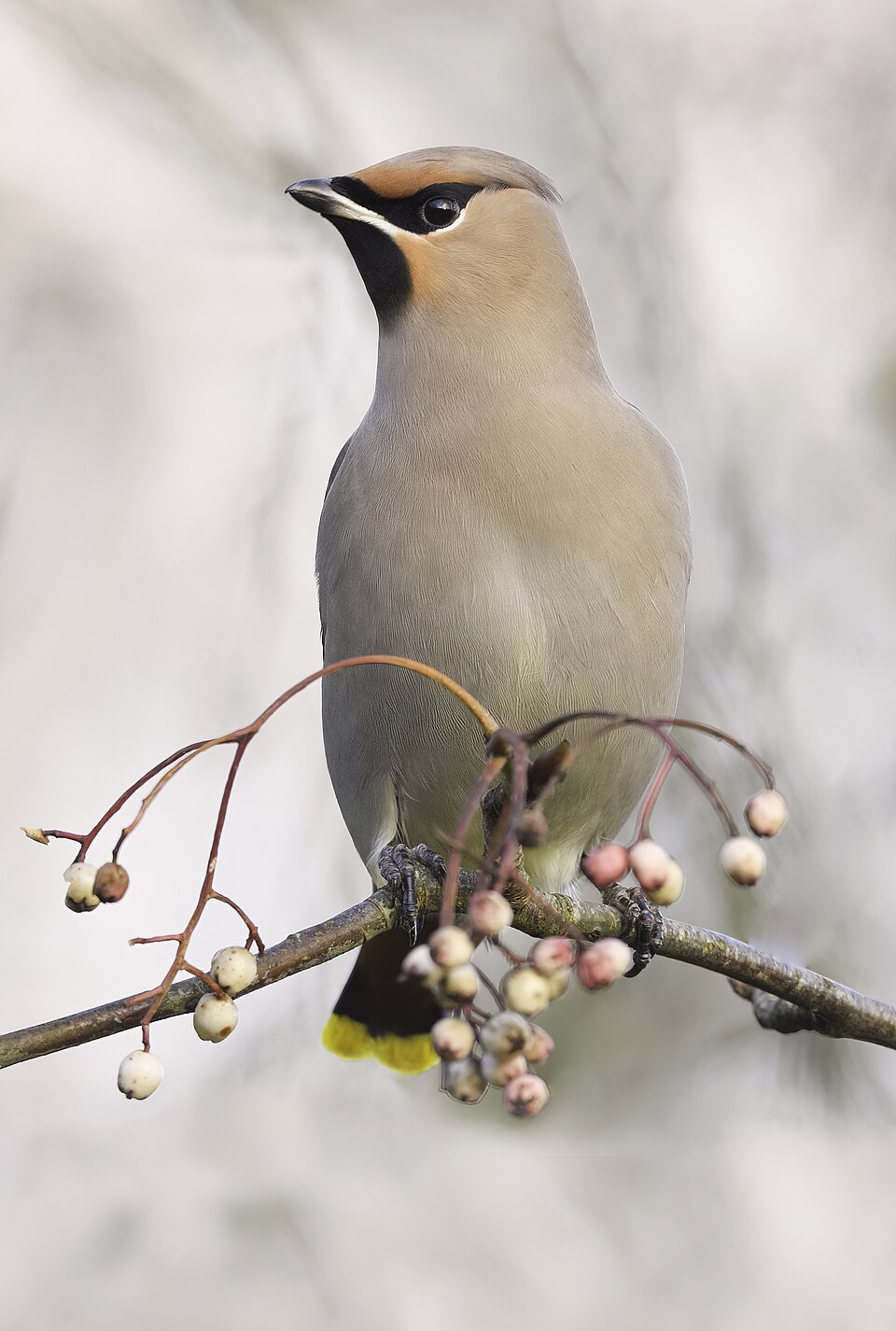 Seidenschwanz
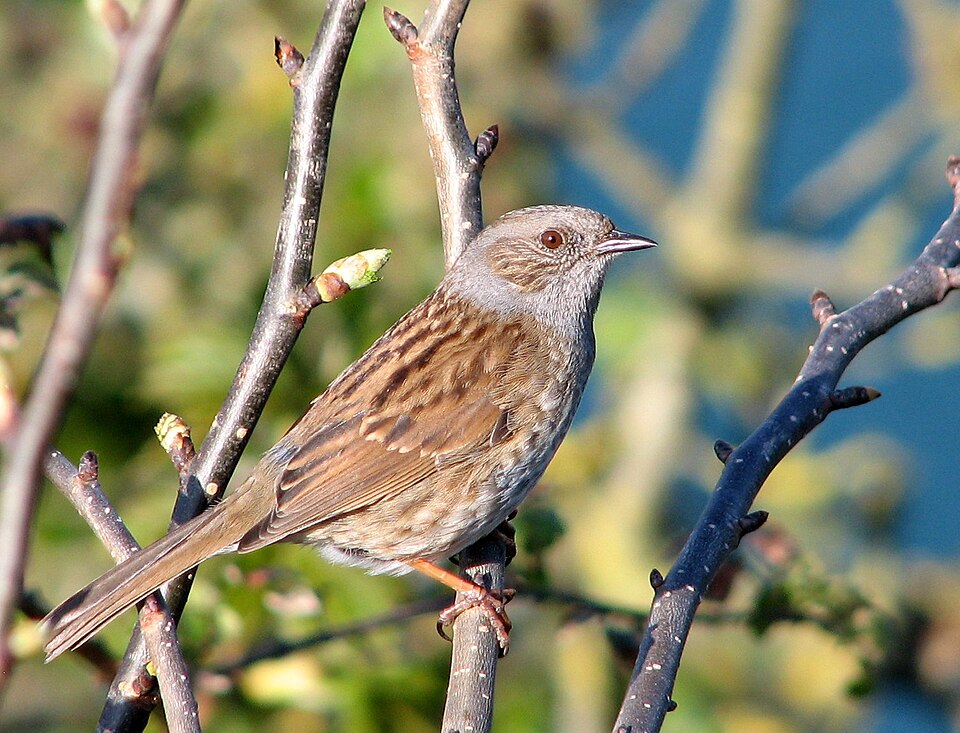 Heckenbraunelle
Kurz gesagt
The most reliable separation is the wing and tail pattern: Bohemian Waxwing (all ages) shows bold white and yellow markings on the wings and a bright yellow tail tip, while Dunnock lacks any such wing or tail coloration, appearing plain brown and grey. Juvenile and first-winter Bohemian Waxwings have less vivid wing markings but still show pale edges and some red tips, features never present on Dunnock. Structurally, Waxwing is a starling-sized, short-tailed, crested bird with a black face mask; Dunnock is smaller, slimmer, with a fine bill and no crest or mask. In flight, Waxwing flocks are fast and direct, while Dunnock is more fluttery and often flicks its wings when perched. Habitat and context also help: Waxwings are irruptive winter visitors in flocks, often in open trees or berry bushes, while Dunnocks are solitary or in pairs, skulking low in dense vegetation.
Bestimmungstipps
- Wing and tail pattern (all ages): Bohemian Waxwing always shows some combination of yellow and white on the wings and a bright yellow tail tip; Dunnock never shows any such markings—its wings and tail are plain brown and grey.
- Juvenile/first-winter Waxwing: Look for pale or white leading edges on the primaries, absence of white 'tick marks,' and a few red wax tips on the secondaries. Even in duller plumage, these features are unique and absent in Dunnock juveniles, which are streaky and brown with no color patches.
- Crest and face mask: Waxwing has a prominent pointed crest and a black mask through the eye, with a sharply defined black throat (less so in females/immatures). Dunnock has no crest or mask—its head is dull grey (adult) or brown (juvenile).
- Bill shape: Waxwing has a short, broad bill suited for berries; Dunnock has a fine, pointed bill for insect feeding. This is visible at close range or in good light.
- Body shape and size: Waxwing is starling-sized, chunky, and short-tailed; Dunnock is much smaller, slimmer, and longer-tailed in proportion. Use nearby birds for scale when possible.
- Plumage color: Waxwing is buff-grey with chestnut and cinnamon tones and a striking pattern; Dunnock is overall drab brown and grey, with streaked upperparts and brownish underparts.
- Red wax tips: Adult Waxwings have 5–8 red waxy tips on the wing secondaries (fewer in females and immatures). These are absent in Dunnock.
- Sex differences: Waxwing males have broader yellow tail tips and more red wax tips than females, but both sexes are always more colorful than Dunnock. Dunnock sexes are identical.
- Wing flicking: Dunnock frequently flicks its wings when perched or agitated—a behavior not seen in Waxwing.
- Flight style: Waxwing flocks fly fast and directly, often high and between trees; Dunnock flies low, with a weak, fluttery flight, usually only short distances.
- Perching behavior: Waxwing perches high and conspicuously in trees, often in groups; Dunnock stays low, in cover, and is rarely seen out in the open for long.
- Habitat context: Waxwing is found in open areas with berry trees, especially in winter and often in flocks; Dunnock is in dense undergrowth, gardens, and hedges, usually alone or in pairs.
- Vocalization: If heard, Dunnock's sharp 'tseep' and tinkling song are distinctive; Waxwing's calls are not described here but are not similar.
- Seasonal context: Waxwing is a winter visitor in much of its range, often appearing suddenly in numbers; Dunnock is resident year-round in most of its range.
- Common pitfalls: A dull, juvenile Waxwing may appear less colorful, but will still show pale wing edges and some red tips—never present in Dunnock. Dunnock's streaky juvenile plumage should not be confused with Waxwing's smooth, soft feathering and unique face pattern.
Größe
Bohemian Waxwing is significantly larger: 19–23 cm in length and about 55 g in weight, with a 32–35.5 cm wingspan [wikipedia]. Dunnock is much smaller, 13–14.5 cm long, and robin-sized [wikipedia]. Waxwing is short-tailed and chunky, while Dunnock is slim, with a proportionally longer, thinner tail. This size gap is obvious in direct comparison or with experience, but can be misjudged at distance or in isolation.
Gefieder
-
Juvenile/First-winter: Juvenile Bohemian Waxwing is duller than adults, with streaky, whiter underparts, a smaller black mask, and no black throat. First-winter birds lack the adult's bold yellow and white wing markings: their primaries have pale or white leading edges and no white 'tick mark' on the trailing edge, and they have fewer red wax tips on the secondaries. Dunnock juveniles are browner overall, with a streaked, fluffy appearance and lack any wing or tail color patches; their head is brown, not grey, and there is no mask or crest.
-
Adult: Adult Bohemian Waxwing is buff-grey with a prominent crest, black mask and throat, chestnut lower belly, and cinnamon around the mask. The wings have black flight feathers with a bright yellow stripe and white 'fishhook' marks, plus red waxy tips on the secondaries. The tail is tipped bright yellow. Dunnock adults are drab: brown back streaked blackish, dull grey head, brownish underparts, and no wing or tail markings. Both sexes look similar in both species, but only Waxwing shows the bold face and wing patterns.
-
Sex differences: In Waxwing, males have a broader yellow tail tip and more red wax tips than females, but both sexes are still much more colorful than Dunnock. Dunnock sexes are alike.
Verhalten
Bohemian Waxwings are often seen in large, noisy flocks, especially in winter, feeding high in trees or flying fast and directly between berry-laden trees. They clamber through branches but rarely come to the ground. Dunnocks are solitary or in pairs, usually low to the ground, skulking in dense cover, and frequently flick their wings when perched—a behavior not seen in Waxwings. Dunnocks also exhibit territorial disputes with rapid wing-flicking ('shufflewing'), while Waxwings are more social and less territorial in winter.
Lebensraum
Bohemian Waxwing breeds in northern forests (Palearctic and North America) and is seen in winter in open woodlands, parks, and gardens with berry trees, often in flocks. Dunnock is found throughout temperate Europe and Asia, in gardens, hedgerows, woodland edges, and dense undergrowth. Waxwings are usually in open, visible spots when feeding, while Dunnocks prefer to stay low and hidden in thick vegetation.
Stimme
Dunnock gives a persistent, shrill 'tseep' call and a rapid, thin, tinkling warble as its song—sounds that can betray its presence despite its drabness. Bohemian Waxwing's vocalizations are not described in the provided notes, so voice is not a primary separator here, but Dunnock's calls are distinctive if heard.