

Japanmöwe vs Herring Gull
Larus crassirostris gegen Larus argentatus
Ein Quiz mit Japanmöwe und Herring Gull spielen
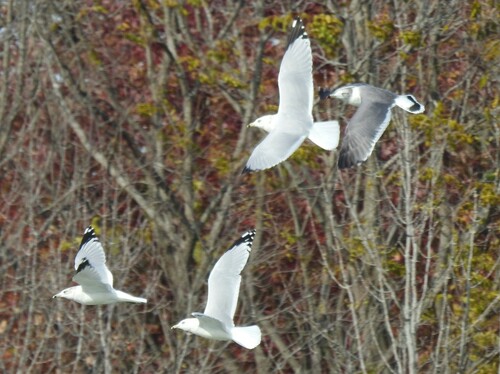 Japanmöwe
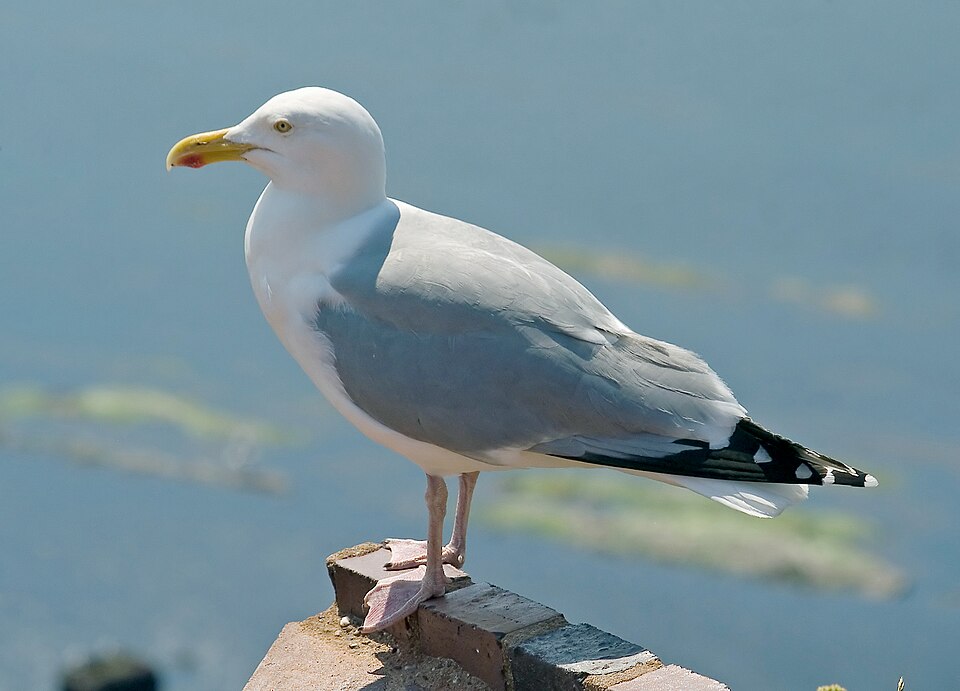 Herring Gull
Kurz gesagt
The most reliable field mark between Black-tailed Gull and Herring Gull is the tail and leg color in adults: Black-tailed Gull shows a distinctive black tail band and yellow legs, while Herring Gull has a white tail and pink (rarely yellowish) legs. Immature birds can be confusing, but Herring Gull juveniles are overall browner with a dark bill and eyes, while Black-tailed Gull immatures are less well described but lack the deep brown tones and have a more contrasting tail pattern. Bill tip color is also useful: Black-tailed Gull has a red and black spot at the bill tip, while Herring Gull has only a red spot. Structure and size differ, with Herring Gull being noticeably larger and bulkier. In flight, check for the black tail band (Black-tailed) versus all-white tail (Herring), and leg color if visible when perched.
Bestimmungstipps
- Tail pattern in flight (all ages): Black-tailed Gull always shows a black tail band, even in immatures. Herring Gull has a white tail at all ages, with no black band.
- Leg color (adults): Black-tailed Gull has yellow legs; Herring Gull has pink legs (rarely yellowish in some Baltic birds). This is most reliable on perched birds.
- Bill tip pattern (adults): Black-tailed Gull has a yellow bill with both a red and a black spot near the tip. Herring Gull has a yellow bill with only a red spot.
- Overall size and structure: Herring Gull is much larger and bulkier, with a heavier bill and deeper chest. Black-tailed Gull is more slender and medium-sized.
- Juvenile/immature plumage: Herring Gull juveniles are brown overall with heavy streaking, a dark bill, and dark eyes. Black-tailed Gull immatures are less brown and show more contrast, especially the black tail band.
- Wingtips (adults): Herring Gull adults have black wingtips with white 'mirrors.' Black-tailed Gull's wingtips are less well described but lack the same large white mirrors.
- Eye color (adults): Herring Gull has a pale eye with a yellow orbital ring; Black-tailed Gull's eye color is not specified but is not noted as a field mark.
- Head streaking (non-breeding adults): Herring Gull shows brown streaks on the head and neck in non-breeding season; Black-tailed Gull is not described as having this feature.
- Voice: Listen for a cat-like 'mew' call for Black-tailed Gull; Herring Gull's call is a typical loud gull laugh.
- Habitat and range: In East Asia, Black-tailed Gull is expected; in Europe, Herring Gull is the default. Vagrants are rare but possible.
- Behavior at colonies: Black-tailed Gull can be extremely tame and approachable at breeding colonies in Japan.
- Bill size: Herring Gull has a noticeably heavier and longer bill than Black-tailed Gull.
- Sex differences: Both species have identical plumage between sexes, but males are larger.
- Seasonal context: Both species take four years to reach adult plumage, so check for age-related marks if the bird is not fully adult.
- Potential pitfalls: Do not rely on back color alone, as both have pale grey backs in adults. Leg color and tail pattern are more reliable.
Größe
Herring Gull is substantially larger and heavier than Black-tailed Gull. Herring Gull males reach up to 66 cm in length and over 1,000 g in weight, with a wingspan up to 155 cm, while Black-tailed Gull is medium-sized at about 46 cm and 556.5 g, with a wingspan of 126–128 cm. Even female Herring Gulls are larger than Black-tailed Gulls. In the field, Herring Gull appears bulkier and longer-winged, with a heavier bill and deeper chest, while Black-tailed Gull is more slender and lightly built.
Gefieder
- Juvenile/First-winter: Herring Gull juveniles are mostly brown with heavy streaking, a dark bill, and dark eyes. Their upperwings are also brown and lack strong contrast. Black-tailed Gull immatures are less well detailed, but do not show the same deep brown overall tone; look for a more contrasting black tail band even in young birds, which Herring Gull lacks.
- Second/Third-winter: Herring Gull second-winter birds start to show a greyer back, whiter head, and less streaking, but still have brown in the wings and a dark bill. Black-tailed Gull takes four years to reach adult plumage, but the black tail band remains a key feature throughout immaturity.
- Adult: Black-tailed Gull adults have a pale grey back, white underparts, yellow legs, and a black tail band. Herring Gull adults have a pale grey back, white underparts, pink legs (rarely yellowish), and a white tail. Both have yellow bills with a red spot, but Black-tailed Gull's bill tip also shows a black spot. Herring Gull's wingtips are black with white 'mirrors'; Black-tailed Gull's wingtips are less well described but do not have the same pattern.
Verhalten
Both species are opportunistic feeders and often scavenge or follow fishing boats. Black-tailed Gull is noted for being very tame at breeding colonies in Japan, often forming dense, approachable colonies. Herring Gull is also bold around humans, especially in urban or coastal settings, but is generally more solitary outside the breeding season. Both steal food from other birds and are aggressive at times, but these behaviors are not reliably diagnostic between the two.
Lebensraum
Black-tailed Gull is native to East Asian shorelines, breeding on rocky coasts and islands, especially in Japan and Korea. Herring Gull breeds around northern and western Europe, often on cliffs, islands, and increasingly in urban areas. In their core ranges, they do not overlap, but vagrants can occur. If seen in East Asia, Black-tailed Gull is expected; in Europe, Herring Gull is the default. Both can be found near fishing activity and human settlements.
Stimme
Black-tailed Gull is famous for its cat-like 'mew' call, which is distinctive and gives rise to its Japanese and Korean names. Herring Gull has a more typical loud, laughing gull call, lacking the cat-like quality. If you hear a mewing, cat-like call, it is Black-tailed Gull; otherwise, voice is not reliably diagnostic unless the call is clearly heard.