

Motmot

Yellowhammer vs Ortolan Bunting

Emberiza citrinella versus Emberiza hortulana

Play a quiz with Yellowhammer and Ortolan Bunting
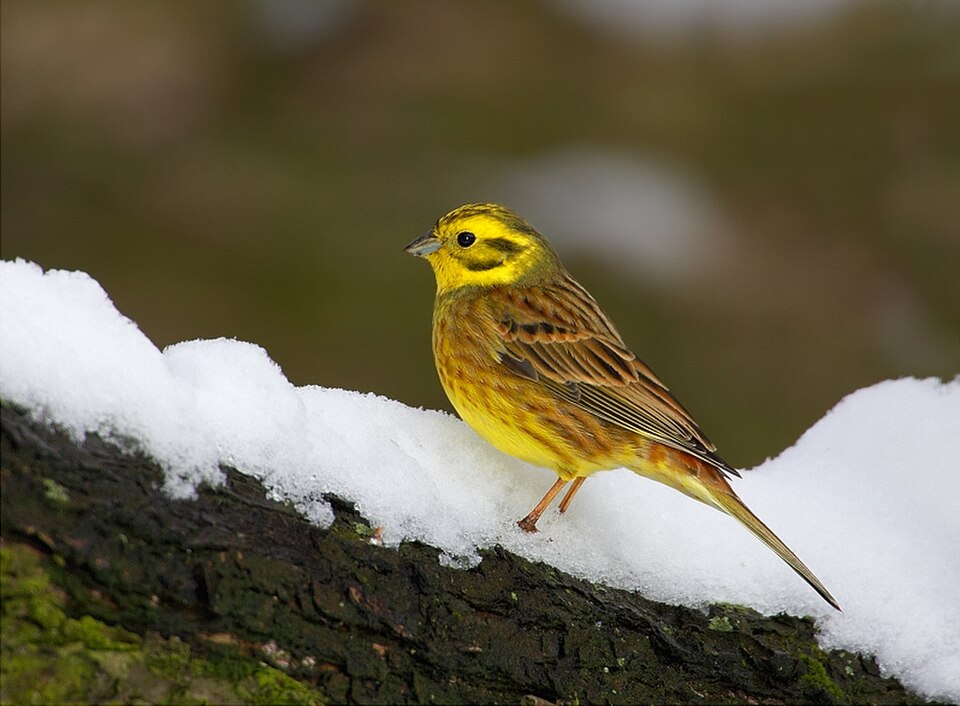
Yellowhammer (Emberiza citrinella) Yellowhammer
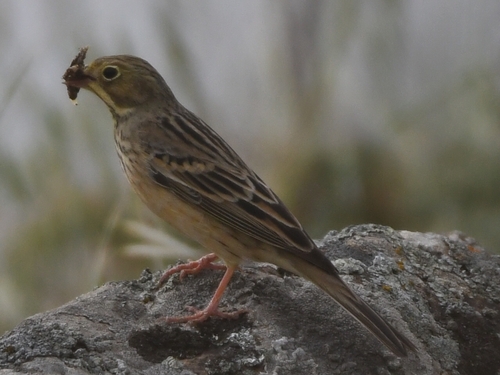
Ortolan Bunting (Emberiza hortulana) Ortolan Bunting

Media

Loading…

In short

The most reliable field mark to separate Yellowhammer from Ortolan Bunting is the head and underparts color: adult male Yellowhammers show a bright yellow head and underparts, while Ortolan Buntings have a greenish-grey head and lack any strong yellow. Females and juveniles are trickier, but Yellowhammers always show at least some yellowish tint, especially on the underparts, and a rufous rump, while Ortolans are duller and more uniformly brownish with a grey-green head. In flight and at rest, look for the Yellowhammer’s white outer tail feathers and chestnut rump, both absent in Ortolan. Size and structure are nearly identical, so focus on plumage and head color, especially in duller birds.

Identification tips

  1. Adult male Yellowhammer: Look for a bright yellow head and underparts, with a heavily streaked brown back and chestnut rump. Ortolan males never show this much yellow, instead having a greenish-grey head and duller underparts.
  2. Female and juvenile Yellowhammer: Always show at least a yellowish tinge to the plumage, especially on the underparts, and a paler rufous or chestnut rump. The head is more streaked and less bright, but still not as uniform as Ortolan.
  3. Ortolan Bunting (all ages/sexes): Head is always greenish-grey, never yellow, and the underparts are dull brownish or greyish, lacking any yellow wash. The rump is not rufous but blends with the back.
  4. Tail pattern in flight: Yellowhammer shows white outer tail feathers, easily visible when the bird flies away or fans its tail. Ortolan’s tail is uniformly brown with no white.
  5. Rump color: Yellowhammer has a chestnut or rufous rump, especially obvious in flight or when the bird flicks its tail. Ortolan’s rump is not contrasting and matches the back.
  6. Head pattern: Even in dull birds, Yellowhammer’s face and supercilium may show some yellow or at least a warmer tone, while Ortolan’s head is always cold grey-green.
  7. Upperparts streaking: Female and juvenile Yellowhammers are more heavily streaked on the crown, breast, and flanks; Ortolan is less streaked and more uniform overall.
  8. Seasonal variation: Outside the breeding season, Yellowhammer plumage is duller due to dark feather fringes, but some yellow is always present. Ortolan does not acquire yellow at any season.
  9. Habitat and range: In western Europe, especially in the UK, Yellowhammer is common year-round, while Ortolan is a rare migrant. In open fields during migration, check for Ortolan, but expect Yellowhammer in hedgerows and woodland edges.
  10. Song: Both species have similar songs; do not rely on voice alone for separation.
  11. Bill and structure: Both are similar in shape and size; bill color and shape are not reliable in the field.
  12. Pitfalls with hybrids: Male Yellowhammer x Pine Bunting hybrids can show white faces and some yellow, but Ortolan never shows white in the face or strong yellow anywhere.
  13. Juvenile confusion: Juvenile Yellowhammers are dull but always with a yellowish tinge and paler rump; Ortolan juveniles are uniformly brown and lack yellow.
  14. Context clues: If you see a bunting with any yellow in the plumage, especially on the head or underparts, it is not an Ortolan.
  15. White in tail: If you see white in the tail in flight, it is a Yellowhammer, not an Ortolan.

Size

Both species are very similar in size: Yellowhammer measures 16–16.5 cm in length with a 23–29.5 cm wingspan, and Ortolan Bunting is 16–17 cm long with a 23–29 cm wingspan. Weight is also comparable, with Yellowhammer at 20–36.5 g. In the field, neither species is noticeably larger or bulkier than the other, so size alone is not a reliable separator.

Plumage

Juvenile and female Yellowhammers can be confused with Ortolan Buntings, but there are consistent differences. Juvenile Yellowhammers are duller than adults but still show a yellowish tinge to the plumage and a paler rufous rump. Ortolan juveniles and females lack any yellow, instead showing a more uniform brown and a grey-brown or greenish-grey head. In all ages, Yellowhammer has white outer tail feathers and a chestnut or rufous rump, while Ortolan’s tail is more uniformly brown and the rump does not contrast. Adult male Yellowhammers are unmistakable with their bright yellow head and underparts; Ortolan males have a greenish-grey head and lack strong yellow anywhere. Female and juvenile Yellowhammers are more streaked, especially on the crown, breast, and flanks, but always with some yellowish wash. Ortolan is always duller, with a more uniform and less streaked appearance, and the head is never yellow.

Behaviour

Both species are typical buntings in their habits: they forage on or near the ground, often in open country or field edges. Yellowhammers are more likely to be seen singing from a prominent perch well into summer, while Ortolans are less conspicuous and more secretive, especially outside the breeding season. Both feed their young in the nest and are monogamous. Display behaviors are not distinctive enough for separation.

Habitat

Yellowhammer is widespread and resident across much of Europe, favoring hedgerows, woodland edges, and open farmland. Ortolan Bunting prefers open fields, especially cornfields and similar habitats, and is more migratory, being only a scarce vagrant in the British Isles. If you are in western Europe outside migration periods, Yellowhammer is far more likely. Ortolan is rare and declining, especially in western Europe, and most likely to be encountered during migration.

Voice

Both species have similar songs, with Ortolan’s song resembling that of Yellowhammer. The notes do not provide enough detail to reliably separate the two by voice in the field.

Submit a better description

Use the same sections as the comparison. Your text is published immediately.

The most reliable field mark to separate Yellowhammer from Ortolan Bunting is the head and underparts color: adult male Yellowhammers show a bright yellow head and underparts, while Ortolan Buntings have a greenish-grey head and lack any strong yellow. Females and juveniles are trickier, but Yellowhammers always show at least some yellowish tint, especially on the underparts, and a rufous rump, while Ortolans are duller and more uniformly brownish with a grey-green head. In flight and at rest, look for the Yellowhammer’s white outer tail feathers and chestnut rump, both absent in Ortolan. Size and structure are nearly identical, so focus on plumage and head color, especially in duller birds.

  1. Adult male Yellowhammer: Look for a bright yellow head and underparts, with a heavily streaked brown back and chestnut rump. Ortolan males never show this much yellow, instead having a greenish-grey head and duller underparts.
  2. Female and juvenile Yellowhammer: Always show at least a yellowish tinge to the plumage, especially on the underparts, and a paler rufous or chestnut rump. The head is more streaked and less bright, but still not as uniform as Ortolan.
  3. Ortolan Bunting (all ages/sexes): Head is always greenish-grey, never yellow, and the underparts are dull brownish or greyish, lacking any yellow wash. The rump is not rufous but blends with the back.
  4. Tail pattern in flight: Yellowhammer shows white outer tail feathers, easily visible when the bird flies away or fans its tail. Ortolan’s tail is uniformly brown with no white.
  5. Rump color: Yellowhammer has a chestnut or rufous rump, especially obvious in flight or when the bird flicks its tail. Ortolan’s rump is not contrasting and matches the back.
  6. Head pattern: Even in dull birds, Yellowhammer’s face and supercilium may show some yellow or at least a warmer tone, while Ortolan’s head is always cold grey-green.
  7. Upperparts streaking: Female and juvenile Yellowhammers are more heavily streaked on the crown, breast, and flanks; Ortolan is less streaked and more uniform overall.
  8. Seasonal variation: Outside the breeding season, Yellowhammer plumage is duller due to dark feather fringes, but some yellow is always present. Ortolan does not acquire yellow at any season.
  9. Habitat and range: In western Europe, especially in the UK, Yellowhammer is common year-round, while Ortolan is a rare migrant. In open fields during migration, check for Ortolan, but expect Yellowhammer in hedgerows and woodland edges.
  10. Song: Both species have similar songs; do not rely on voice alone for separation.
  11. Bill and structure: Both are similar in shape and size; bill color and shape are not reliable in the field.
  12. Pitfalls with hybrids: Male Yellowhammer x Pine Bunting hybrids can show white faces and some yellow, but Ortolan never shows white in the face or strong yellow anywhere.
  13. Juvenile confusion: Juvenile Yellowhammers are dull but always with a yellowish tinge and paler rump; Ortolan juveniles are uniformly brown and lack yellow.
  14. Context clues: If you see a bunting with any yellow in the plumage, especially on the head or underparts, it is not an Ortolan.
  15. White in tail: If you see white in the tail in flight, it is a Yellowhammer, not an Ortolan.

Both species are very similar in size: Yellowhammer measures 16–16.5 cm in length with a 23–29.5 cm wingspan, and Ortolan Bunting is 16–17 cm long with a 23–29 cm wingspan. Weight is also comparable, with Yellowhammer at 20–36.5 g. In the field, neither species is noticeably larger or bulkier than the other, so size alone is not a reliable separator.

Juvenile and female Yellowhammers can be confused with Ortolan Buntings, but there are consistent differences. Juvenile Yellowhammers are duller than adults but still show a yellowish tinge to the plumage and a paler rufous rump. Ortolan juveniles and females lack any yellow, instead showing a more uniform brown and a grey-brown or greenish-grey head. In all ages, Yellowhammer has white outer tail feathers and a chestnut or rufous rump, while Ortolan’s tail is more uniformly brown and the rump does not contrast. Adult male Yellowhammers are unmistakable with their bright yellow head and underparts; Ortolan males have a greenish-grey head and lack strong yellow anywhere. Female and juvenile Yellowhammers are more streaked, especially on the crown, breast, and flanks, but always with some yellowish wash. Ortolan is always duller, with a more uniform and less streaked appearance, and the head is never yellow.

Both species are typical buntings in their habits: they forage on or near the ground, often in open country or field edges. Yellowhammers are more likely to be seen singing from a prominent perch well into summer, while Ortolans are less conspicuous and more secretive, especially outside the breeding season. Both feed their young in the nest and are monogamous. Display behaviors are not distinctive enough for separation.

Yellowhammer is widespread and resident across much of Europe, favoring hedgerows, woodland edges, and open farmland. Ortolan Bunting prefers open fields, especially cornfields and similar habitats, and is more migratory, being only a scarce vagrant in the British Isles. If you are in western Europe outside migration periods, Yellowhammer is far more likely. Ortolan is rare and declining, especially in western Europe, and most likely to be encountered during migration.

Both species have similar songs, with Ortolan’s song resembling that of Yellowhammer. The notes do not provide enough detail to reliably separate the two by voice in the field.

Discard your changes?

You have unsaved edits. If you leave now, those changes will be lost.

Yellowhammer · Ortolan Bunting · My Tricky Birds