

Yellow-streaked Greenbul vs Grey-olive Greenbul
Phyllastrephus flavostriatus versus Phyllastrephus cerviniventris
Play a quiz with Yellow-streaked Greenbul and Grey-olive Greenbul
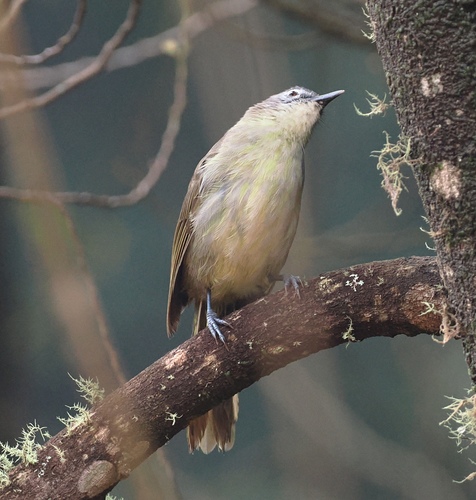 Yellow-streaked Greenbul
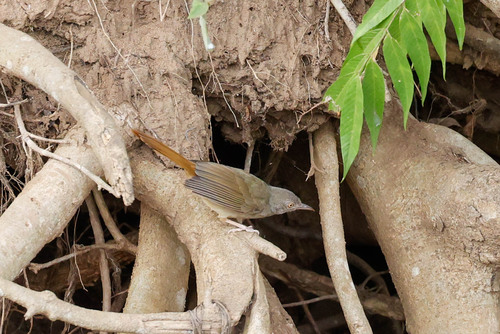 Grey-olive Greenbul
In short
The most reliable way to separate Yellow-streaked Greenbul from Grey-olive Greenbul is by focusing on plumage details, especially any yellow streaking or contrast on the underparts and face, as well as subtle differences in habitat preference. Both species are similar in structure and occur in overlapping regions of eastern Africa, but Yellow-streaked Greenbul is typically found in wetter, more forested habitats, while Grey-olive Greenbul favors drier forests and shrubland. In the absence of distinctive juvenile or wing pattern marks in the available notes, observers should pay close attention to subtle plumage cues and local habitat context. Size differences are minimal and not likely to be helpful in the field.
Identification tips
- Look for yellow streaking: Yellow-streaked Greenbul may show yellowish streaks on the underparts or face, especially in good light. This is the most direct plumage clue; absence of streaking suggests Grey-olive Greenbul.
- Assess overall coloration: Grey-olive Greenbul is generally more uniform grey-olive, lacking obvious yellow streaks or bright contrast. If the bird appears plain and evenly colored, Grey-olive is more likely.
- Check habitat carefully: Birds in wetter, denser, or montane forests are more likely to be Yellow-streaked Greenbul. Those in drier forests or shrubland, especially in south-central Africa, are more likely Grey-olive Greenbul. Use this as a supporting clue, not a sole identifier.
- Ignore size and structure: Both species are similar in build and size, and no reliable differences are described in the sources. Do not use size as a primary separator.
- No wing pattern shortcuts: There are no documented age-specific wing or flight pattern differences between these two species, so do not rely on upperwing or tail pattern in flight.
- Be cautious in low light: Both species can look plain or washed out in poor viewing conditions. Always try to get a good look at the underparts and face for subtle yellow streaks.
- Juvenile/immature birds: No special marks are described for young birds, so the same field marks apply regardless of age.
- Listen for context, not calls: No vocal differences are provided in the sources, so do not use song or call for separation based on current information.
- Range overlap: Both species occur in eastern Africa, so do not assume one or the other based solely on region. Use habitat and plumage together.
- Document with photos: If uncertain, try to photograph the bird, especially the underparts and face, to check for subtle streaking or coloration later.
- Consult local checklists: In some areas, one species may be much more common than the other. Use eBird or local guides as a supporting clue, but not as a substitute for field marks.
- Beware of lighting effects: Strong sunlight or deep shade can exaggerate or hide yellow tones. Move around the bird if possible to check for true plumage color.
- Group foraging: Both species may join mixed-species flocks, so do not use flock composition as a separator.
- Seasonal movement: No notes on seasonal plumage or movement are given, so assume field marks are stable year-round.
- If in doubt, note all features: When identification is uncertain, record all observed details and habitat to consult references or experts later.
Size
Yellow-streaked Greenbul averages about 33 grams in body mass [wikidata], while no specific mass is given for Grey-olive Greenbul, but both are medium-sized bulbuls and likely overlap in size. Structural differences are not highlighted in the sources, so size alone should not be relied upon for separation.
Plumage
No age-specific or wing pattern marks are documented in the available sources for either species, so focus must be on overall plumage. Yellow-streaked Greenbul is named for its yellow streaking, which may be visible on the underparts or face, especially in good light. Grey-olive Greenbul, as the name suggests, is generally more uniform grey-olive without obvious streaking. Both species may appear rather plain in poor light, but careful observation of any yellowish streaks or wash is key. There are no notes on seasonal or sex-based plumage variation, nor on distinctive juvenile or immature wing patterns.
Behaviour
No diagnostic behavioral differences are noted between these two species in the available sources. Both are typical bulbuls, likely to be active and foraging in dense foliage, and behavior is not a reliable separator here.
Habitat
Yellow-streaked Greenbul is most often found in subtropical or tropical moist lowland and montane forests of eastern and south-eastern Africa [wikipedia]. In contrast, Grey-olive Greenbul is present in eastern and south-central Africa, but prefers subtropical or tropical dry forests, moist lowland forests, and moist shrubland [wikipedia]. If you encounter a Phyllastrephus in a wetter, more closed forest, lean toward Yellow-streaked; in drier, more open forest or shrubland, Grey-olive is more likely. However, both can occur in moist lowland forests, so habitat is helpful but not always definitive.
Yellow-streaked Greenbul · Grey-olive Greenbul · My Tricky Birds