

Motmot

Willet vs Semipalmated Sandpiper

Tringa semipalmata versus Calidris pusilla

Play a quiz with Willet and Semipalmated Sandpiper
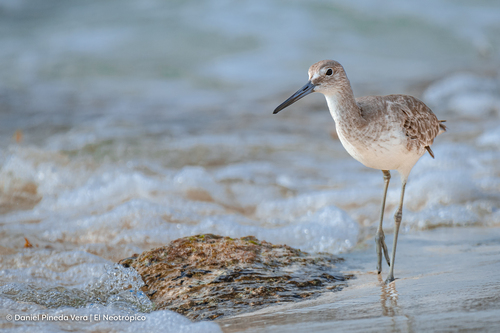
Willet (Tringa semipalmata) Willet
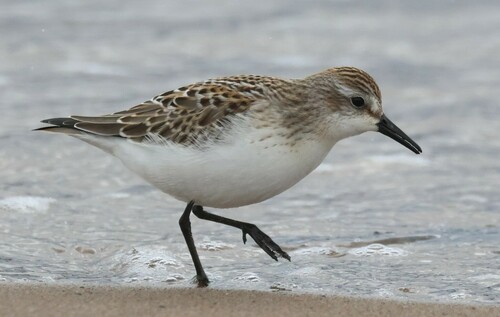
Semipalmated Sandpiper (Calidris pusilla) Semipalmated Sandpiper

Media

Loading…

In short

The most reliable way to separate Willet from Semipalmated Sandpiper is by size and structure: Willet is a much larger, robust shorebird with a heavy, straight bill and gray legs, while Semipalmated Sandpiper is tiny, compact, and has a short, stubby dark bill with black legs. In flight, Willet shows a bold black-and-white wing pattern with a broad white band and white rump, unlike the plain upperwing of Semipalmated Sandpiper. Even at a distance, Willet's bulk and striking wing pattern are unmistakable, while Semipalmated Sandpiper blends in as a small, dark-backed 'peep.' Confusion is most likely with distant or fast-moving birds, but structural and flight marks are consistently diagnostic.

Identification tips

  1. Size is the first check: Willet is several times larger than Semipalmated Sandpiper. If the bird is sparrow-sized, rule out Willet. If it is pigeon- or crow-sized, rule out Semipalmated Sandpiper. This holds for all ages and seasons.
  2. Flight wing pattern (all ages): Willet shows a broad white wing band and white rump with black primaries/coverts in flight—unique and bold. Semipalmated Sandpiper has plain dark upperwings with no white band or rump.
  3. Bill structure: Willet has a straight, heavy, relatively short bill for its size; Semipalmated Sandpiper has a short, stubby, straight dark bill, proportionally much smaller and finer.
  4. Leg color: Willet has gray legs; Semipalmated Sandpiper has black legs. This is visible at close range but can be hard to judge in poor light or muddy conditions.
  5. Body shape and jizz: Willet is robust, long-legged, and stands tall; Semipalmated Sandpiper is compact, short-legged, and crouched.
  6. Perched plumage: Willet is gray above, white below, with a white area above the lores and a narrow whitish eye ring (spectacled look). Semipalmated Sandpiper is dark gray-brown above, white below, with a plain face and no spectacles.
  7. Breeding plumage: Willet shows brown barring above; Semipalmated Sandpiper has a more uniform, slightly streaked head and neck.
  8. Non-breeding plumage: Willet becomes plainer but remains pale gray and large; Semipalmated Sandpiper is always small and dark-backed.
  9. Flock behavior: Semipalmated Sandpipers are almost always in tight flocks, especially on migration. Willets are usually alone or in loose groups.
  10. Foraging style: Willet walks steadily, often wading deep; Semipalmated Sandpiper picks quickly at the surface, rarely wading above the ankles.
  11. Habitat context: Willet is more likely in saltmarsh, open beach, or larger mudflats; Semipalmated Sandpiper prefers exposed mud or sand, especially at migration stopovers.
  12. Relative abundance: Semipalmated Sandpiper can be extremely numerous at migration sites, while Willet is usually present in small numbers.
  13. Voice (not diagnostic here): Not covered in the provided notes, but Willet's loud, ringing call is distinctive if heard.
  14. Sex/age confusion: Both species have similar plumage in both sexes; size and structure remain reliable across all ages and sexes.
  15. Pitfalls: Distant or backlit views can make size and color hard to judge—use flocking, flight pattern, and bill/leg color as secondary checks.

Size

Willet is dramatically larger than Semipalmated Sandpiper. Willet averages around 287 g in mass and measures 31–41 cm (12–16 in) in length, making it the largest Tringa 'shank.' In contrast, Semipalmated Sandpiper is one of the smallest shorebirds, at only 15–18 cm (6–7 in) long and weighing 18–51.5 g. Even without direct comparison, Willet's size is closer to a godwit or small gull, while Semipalmated Sandpiper is sparrow-sized. This size gap is obvious in mixed flocks or when both species are present.

Plumage

In flight (all ages), Willet shows a bold black-and-white upperwing pattern: black primary coverts and primaries sharply contrast with a broad white wing band and white secondaries, plus a white rump and gray tail band. This pattern is visible in both adults and immatures and is unique among North American shorebirds of similar structure. Semipalmated Sandpiper, by contrast, has plain dark gray-brown upperwings with no bold wing band or rump pattern; its upperparts are uniformly dark with only subtle pale fringes in juveniles. Perched, Willet is gray above with a white belly, a white area above the lores, and a narrow whitish eye ring, while Semipalmated Sandpiper is dark gray-brown above, white below, and lacks facial spectacles. In breeding plumage, Willet shows brown barring above, while Semipalmated Sandpiper has a more uniform, slightly streaked head and neck. Non-breeding Willets are plainer but still much larger and paler than any 'peep.'

Behaviour

Willet is often solitary or in loose groups, walking steadily and probing or stalking prey, sometimes wading up to its belly. It is vigilant and may perch on rocks or posts. Semipalmated Sandpiper is highly gregarious, especially on migration, forming dense flocks of hundreds or thousands, and forages by picking at the mud surface, rarely wading deep. Willet's movements are heavier and more deliberate, while Semipalmated Sandpiper is quick, agile, and often feeds in tight synchrony with others.

Habitat

Willet favors larger, open shorelines—saltmarsh edges, mudflats, and beaches—where it is often the largest shorebird present. Semipalmated Sandpiper prefers muddy or sandy flats, especially during migration, and is most often seen in massive flocks at key stopover sites. While both may overlap on coastal mudflats, Willet is more likely in saltmarsh or open beach, and Semipalmated Sandpiper is tied to exposed mud or sand, often far from cover.

Submit a better description

Use the same sections as the comparison. Your text is published immediately.

The most reliable way to separate Willet from Semipalmated Sandpiper is by size and structure: Willet is a much larger, robust shorebird with a heavy, straight bill and gray legs, while Semipalmated Sandpiper is tiny, compact, and has a short, stubby dark bill with black legs. In flight, Willet shows a bold black-and-white wing pattern with a broad white band and white rump, unlike the plain upperwing of Semipalmated Sandpiper. Even at a distance, Willet's bulk and striking wing pattern are unmistakable, while Semipalmated Sandpiper blends in as a small, dark-backed 'peep.' Confusion is most likely with distant or fast-moving birds, but structural and flight marks are consistently diagnostic.

  1. Size is the first check: Willet is several times larger than Semipalmated Sandpiper. If the bird is sparrow-sized, rule out Willet. If it is pigeon- or crow-sized, rule out Semipalmated Sandpiper. This holds for all ages and seasons.
  2. Flight wing pattern (all ages): Willet shows a broad white wing band and white rump with black primaries/coverts in flight—unique and bold. Semipalmated Sandpiper has plain dark upperwings with no white band or rump.
  3. Bill structure: Willet has a straight, heavy, relatively short bill for its size; Semipalmated Sandpiper has a short, stubby, straight dark bill, proportionally much smaller and finer.
  4. Leg color: Willet has gray legs; Semipalmated Sandpiper has black legs. This is visible at close range but can be hard to judge in poor light or muddy conditions.
  5. Body shape and jizz: Willet is robust, long-legged, and stands tall; Semipalmated Sandpiper is compact, short-legged, and crouched.
  6. Perched plumage: Willet is gray above, white below, with a white area above the lores and a narrow whitish eye ring (spectacled look). Semipalmated Sandpiper is dark gray-brown above, white below, with a plain face and no spectacles.
  7. Breeding plumage: Willet shows brown barring above; Semipalmated Sandpiper has a more uniform, slightly streaked head and neck.
  8. Non-breeding plumage: Willet becomes plainer but remains pale gray and large; Semipalmated Sandpiper is always small and dark-backed.
  9. Flock behavior: Semipalmated Sandpipers are almost always in tight flocks, especially on migration. Willets are usually alone or in loose groups.
  10. Foraging style: Willet walks steadily, often wading deep; Semipalmated Sandpiper picks quickly at the surface, rarely wading above the ankles.
  11. Habitat context: Willet is more likely in saltmarsh, open beach, or larger mudflats; Semipalmated Sandpiper prefers exposed mud or sand, especially at migration stopovers.
  12. Relative abundance: Semipalmated Sandpiper can be extremely numerous at migration sites, while Willet is usually present in small numbers.
  13. Voice (not diagnostic here): Not covered in the provided notes, but Willet's loud, ringing call is distinctive if heard.
  14. Sex/age confusion: Both species have similar plumage in both sexes; size and structure remain reliable across all ages and sexes.
  15. Pitfalls: Distant or backlit views can make size and color hard to judge—use flocking, flight pattern, and bill/leg color as secondary checks.

Willet is dramatically larger than Semipalmated Sandpiper. Willet averages around 287 g in mass and measures 31–41 cm (12–16 in) in length, making it the largest Tringa 'shank.' In contrast, Semipalmated Sandpiper is one of the smallest shorebirds, at only 15–18 cm (6–7 in) long and weighing 18–51.5 g. Even without direct comparison, Willet's size is closer to a godwit or small gull, while Semipalmated Sandpiper is sparrow-sized. This size gap is obvious in mixed flocks or when both species are present.

In flight (all ages), Willet shows a bold black-and-white upperwing pattern: black primary coverts and primaries sharply contrast with a broad white wing band and white secondaries, plus a white rump and gray tail band. This pattern is visible in both adults and immatures and is unique among North American shorebirds of similar structure. Semipalmated Sandpiper, by contrast, has plain dark gray-brown upperwings with no bold wing band or rump pattern; its upperparts are uniformly dark with only subtle pale fringes in juveniles. Perched, Willet is gray above with a white belly, a white area above the lores, and a narrow whitish eye ring, while Semipalmated Sandpiper is dark gray-brown above, white below, and lacks facial spectacles. In breeding plumage, Willet shows brown barring above, while Semipalmated Sandpiper has a more uniform, slightly streaked head and neck. Non-breeding Willets are plainer but still much larger and paler than any 'peep.'

Willet is often solitary or in loose groups, walking steadily and probing or stalking prey, sometimes wading up to its belly. It is vigilant and may perch on rocks or posts. Semipalmated Sandpiper is highly gregarious, especially on migration, forming dense flocks of hundreds or thousands, and forages by picking at the mud surface, rarely wading deep. Willet's movements are heavier and more deliberate, while Semipalmated Sandpiper is quick, agile, and often feeds in tight synchrony with others.

Willet favors larger, open shorelines—saltmarsh edges, mudflats, and beaches—where it is often the largest shorebird present. Semipalmated Sandpiper prefers muddy or sandy flats, especially during migration, and is most often seen in massive flocks at key stopover sites. While both may overlap on coastal mudflats, Willet is more likely in saltmarsh or open beach, and Semipalmated Sandpiper is tied to exposed mud or sand, often far from cover.

Discard your changes?

You have unsaved edits. If you leave now, those changes will be lost.

Willet · Semipalmated Sandpiper · My Tricky Birds