

White-throated Sparrow vs Savannah Sparrow
Zonotrichia albicollis versus Passerculus sandwichensis
Play a quiz with White-throated Sparrow and Savannah Sparrow
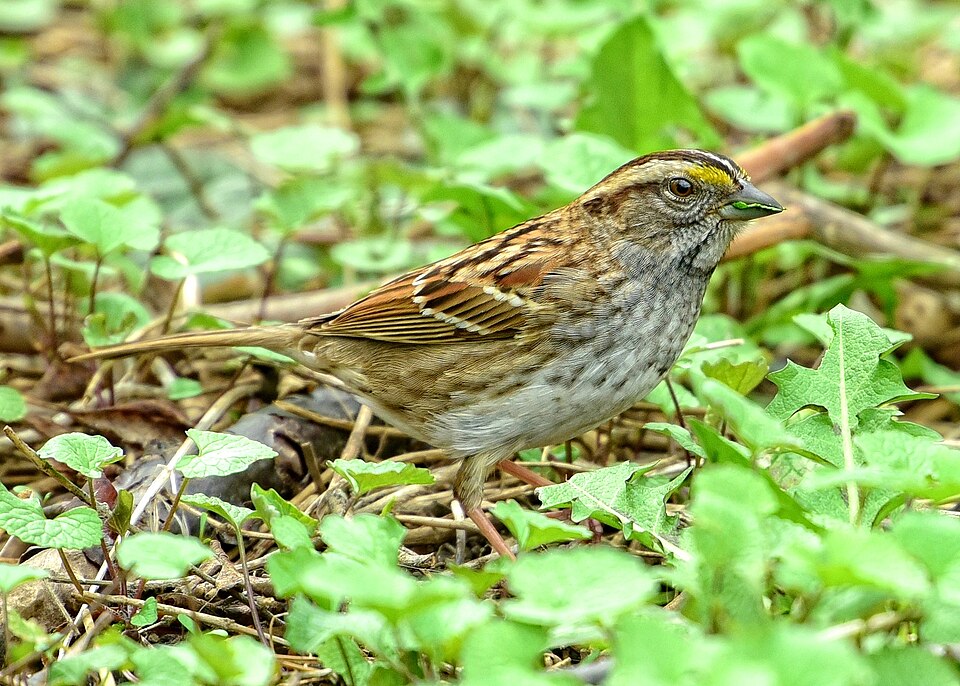 White-throated Sparrow
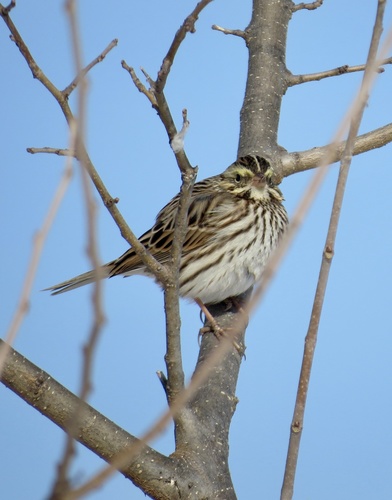 Savannah Sparrow
In short
The most reliable field mark to separate White-throated Sparrow from Savannah Sparrow is the bold white throat patch bordered by dark lateral stripes and the bright yellow lores on the White-throated Sparrow, which are never present on Savannah Sparrow. Savannah Sparrows show a more uniformly streaked breast and flanks, a less contrasting face, and only subtle or absent yellow near the lores. Both species can show white in the supercilium and throat, but the White-throated's throat is much more sharply defined. Structure also helps: White-throated is bulkier with a thicker bill, while Savannah is slimmer and shorter-tailed. In flight or at a distance, focus on the head pattern and throat contrast; in perched views, check for the yellow lores and the crispness of the throat patch.
Identification tips
- White throat patch (all ages/seasons): White-throated Sparrow always shows a crisp, white throat patch, often bordered by dark lateral stripes. Savannah Sparrow's throat is white but less sharply defined, blending into the breast streaking.
- Yellow lores (all ages): White-throated has bright yellow lores between the eye and bill, a key field mark. Savannah may show a faint yellow wash near the lores, but it is much duller and often absent.
- Head stripes and supercilium (adult White-throated): White-throated shows bold crown stripes (either white or tan morph), with a strong, contrasting supercilium. Savannah's crown and supercilium are paler and less sharply marked, with more blending into the face.
- Facial contrast: White-throated's face is sharply patterned with gray auriculars and a strong eye line; Savannah's face is softer, with brown cheeks and less contrast.
- Bill shape: White-throated has a thicker, grayer bill, while Savannah's is finer and more delicate, with a dark upper mandible and horn-colored lower mandible.
- Wing bars: White-throated shows two distinct white wing bars; Savannah's wing bars are present but less conspicuous, and the overall wing pattern is less crisp.
- Breast and flank streaking: Savannah Sparrow has fine, even brown or blackish streaks across the breast and flanks, often forming a central breast spot. White-throated has streaks on the breast and flanks but these are less dense and the belly is usually paler.
- Back color: Both are streaked brown above, but Savannah is more uniformly streaked and can appear paler or darker depending on subspecies; White-throated may show rufous tones in the wings.
- Size and shape: White-throated is larger, bulkier, and more robust, with a thicker neck and stouter bill. Savannah is smaller, slimmer, and shorter-tailed.
- Leg color: Both have horn-colored legs, not a strong separator.
- Habitat context: In open grasslands, fields, or saltmarshes, expect Savannah; in brushy woods, thickets, or forest edge, expect White-throated.
- Perched vs. ground foraging: Savannah often perches on grass stems or fenceposts; White-throated prefers foraging on the ground under cover.
- Flock structure: White-throateds may form loose flocks, especially in winter; Savannahs are more often solitary or in small groups.
- Seasonal confusion: Both species migrate and can overlap in range, especially in the southern U.S. in winter. Use head and throat pattern as primary separation at all seasons.
- Beware of dull or worn birds: Savannah Sparrows can sometimes show faint yellow near the lores, but never as bright or extensive as White-throated. Always check for the sharpness of the throat patch and the boldness of the head stripes.
Size
White-throated Sparrow is noticeably larger and heavier, with an average mass of about 25 g compared to Savannah Sparrow's 19.5 g. White-throated measures 15–19 cm in length with a wingspan around 23 cm, while Savannah is smaller at 11–17 cm long and a wingspan of 18–25 cm. In the field, White-throated often appears bulkier and more robust, with a thicker neck and a stouter bill, while Savannah is more slender and delicate overall. Tail length is also slightly longer in White-throated, but this is subtle compared to the difference in body bulk.
Plumage
-
Juvenile/immature wing pattern: No distinctive age-specific upperwing marks are described for either species that would allow for separation in flight based on juvenal or first-winter plumage. Both have streaked backs and wings, but White-throated shows two distinct white wing bars, while Savannah's wing bars are less conspicuous and the flight feathers are edged pale but not as crisply marked.
-
Adult plumage: White-throated Sparrow (both color morphs) always shows a clean white throat patch, bordered by dark lateral stripes, and bright yellow lores. The crown is boldly striped (either white or tan, depending on morph), with a strong supercilium and a gray face. Savannah Sparrow has a streaked brown back, white underparts with fine brown or blackish streaks on breast and flanks, and a less sharply defined white throat. The supercilium is pale but less bold, and any yellow near the lores is faint and often restricted to a small wash. Savannah's cheeks are brown, and the face pattern is more muted overall. Both have dark eyes and horn-colored legs, but the White-throated's bill is grayer and stouter.
Behaviour
White-throated Sparrows tend to forage on or near the ground, often scratching in leaf litter under shrubs or at forest edges. They can appear more deliberate and robust in movement. Savannah Sparrows are more likely to be seen in open areas, walking or running through grass, and often flush with a short, fluttery flight. In migration and winter, White-throateds may form loose flocks, while Savannahs are often solitary or in small groups. Both species are generally wary, but Savannahs are more likely to perch up on fenceposts or grass stems to survey their surroundings.
Habitat
White-throated Sparrow prefers woodland edges, thickets, and brushy areas, especially in northern forests during breeding and in shrubby or wooded habitats in winter. Savannah Sparrow is strongly associated with open grasslands, fields, saltmarshes, and meadows, rarely venturing into dense woods. If you find a sparrow in tall grass or open pasture, Savannah is much more likely; if it is in a brushy, wooded edge or under dense shrubs, White-throated is favored.
Voice
No direct comparison of song or call is provided in the notes. Both species have distinctive songs, but these are not described here and should not be relied on for separation based on this information.