
White-throated Robin vs Thrush Nightingale
Irania gutturalis versus Luscinia luscinia
Play a quiz with White-throated Robin and Thrush Nightingale
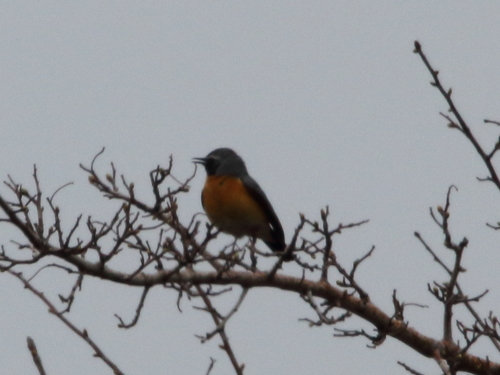 White-throated Robin
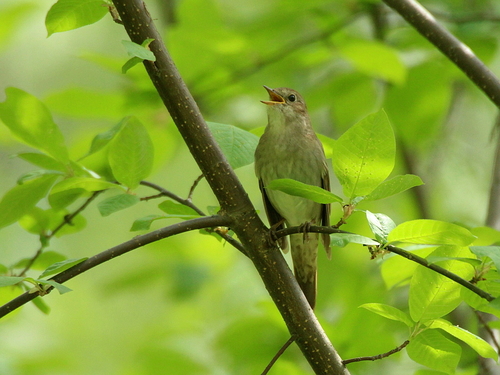 Thrush Nightingale
In short
The most reliable field mark to separate White-throated Robin from Thrush Nightingale is the presence of a bold white throat patch and supercilium on adult male White-throated Robin, contrasting sharply with its dark face and bright orange underparts—features never shown by Thrush Nightingale of any age or sex. Female and immature White-throated Robins are plainer but still show hints of orange on the flanks and a dark tail, while Thrush Nightingales are uniformly dark brown above and mottled below, lacking any orange or strong contrast. Both species are similar in size and can be found in overlapping migration ranges, but their structure, tail color, and face patterns are key in the field. Immature birds may be confusing, but careful attention to throat, underpart color, and tail tone will usually resolve the identification.
Identification tips
- White throat patch (adult male White-throated Robin): Look for a crisp white throat and supercilium sharply set off against a black face—never shown by Thrush Nightingale.
- Orange underparts (male White-throated Robin): Bright orange belly and flanks are unique; Thrush Nightingale is always plain or mottled brown and buff below.
- Tail color: White-throated Robin (both sexes) has a black tail; Thrush Nightingale's tail is dark rufous-brown, never black. This is especially useful on perched or fanned tails.
- Female/immature White-throated Robin: Plainer grey above, but still shows a dark tail and some orange on flanks—never as uniformly brown or as mottled below as Thrush Nightingale.
- Thrush Nightingale upperparts: Always dark brown with a slight olive tinge, lacking any grey or blue tones of male White-throated Robin.
- Throat and breast pattern (Thrush Nightingale): Pale buff or whitish throat mottled with brown, and a breast with brown central bands—never a clean white throat or orange underparts.
- Face pattern: Only male White-throated Robin has a strong black-and-white face; Thrush Nightingale's face is uniformly brownish-black with no bold contrasts.
- Under tail-coverts: Thrush Nightingale shows buff under tail-coverts, sometimes barred; White-throated Robin's are not described as distinctive.
- Structure: Both are similar in size, but White-throated Robin may appear slightly longer-winged (wingspan 28 cm vs. 18 cm), though this is subtle.
- Habitat context: In dry, rocky, high-altitude scrub, White-throated Robin is more likely; in damp, dense undergrowth or forests, Thrush Nightingale is expected.
- Behavior: White-throated Robin may perch openly to sing; Thrush Nightingale is more skulking and secretive.
- Voice: Listen for White-throated Robin's fast twittering or 'chis-it' call; Thrush Nightingale's song is richer and more solemn, but less distinctive for separation.
- Juvenile confusion: Juvenile Thrush Nightingales are darker and more mottled but never show orange or a white throat; immature White-throated Robins may be plainer but retain some orange and a dark tail.
- Sexes: Thrush Nightingale sexes are similar; only male White-throated Robin is strikingly colored, but even females/immatures can be separated by tail and subtle orange.
- Migration context: Both species can occur as vagrants or migrants in overlapping regions; always check for the combination of throat, underpart color, and tail tone to avoid confusion.
Size
Both species are similar in length, each about 16 cm (6.3 in) long. However, White-throated Robin has a notably longer wingspan (28 cm) compared to Thrush Nightingale (18 cm), though this difference may be hard to judge in the field unless seen side by side. Both are small, thrush-sized passerines, and size alone is not a reliable separator.
Plumage
- Adult breeding male White-throated Robin: Lead-grey upperparts, black face with a striking white throat and supercilium, bright orange underparts, and a black tail. Bill is strong and dark.
- Adult female/immature White-throated Robin: Plainer greyish above, with a black tail, some orange on the flanks, and faint white throat streaks. No strong face pattern, but tail remains dark.
- Thrush Nightingale (all ages/sexes): Uniformly dark brown upperparts with a slight olive tinge, dark rufous-brown tail (not black), pale buff or whitish throat mottled with brown, and a mottled breast. Juveniles are darker and more mottled overall. No orange on underparts, no white throat patch or supercilium. Under tail-coverts are buff, sometimes barred.
- Key contrast: Only male White-throated Robin shows a bold white throat and orange underparts. Thrush Nightingale is always much plainer, with a cloudy, mottled appearance below and no strong color contrasts.
Behaviour
Both species forage on or near the ground and may be seen in low vegetation. White-throated Robin is often seen in dense scrub or thickets, sometimes perching conspicuously to sing. Thrush Nightingale tends to be more secretive, foraging in dense undergrowth and often remaining hidden. Both are insectivorous, but White-throated Robin may be more likely to forage openly during the breeding season.
Habitat
White-throated Robin breeds on high-altitude, dry, rocky slopes with dense scrub, often in semi-desert or mountain steppe, and winters in dry Acacia-Commiphora thickets in East Africa. Thrush Nightingale breeds in damp forests and dense undergrowth, often near water, and nests on the ground in beds of nettles. During migration, both may occur in scrubby or wooded habitats, but White-throated Robin prefers drier, more open scrub, while Thrush Nightingale is more tied to moist, dense cover.
Voice
White-throated Robin's song is a fast twittering, delivered from a bush or in flight, and its call is a sharp 'chis-it' double note, reminiscent of White Wagtail. Thrush Nightingale has a rich, varied, and somewhat more solemn song than the Common Nightingale, but is not described in detail here. Voice is not the most reliable separator unless the White-throated Robin's twittering or distinctive call is heard.