

Motmot

White-tailed Kite vs Harpy Eagle

Elanus leucurus versus Harpia harpyja

Play a quiz with White-tailed Kite and Harpy Eagle

White-tailed Kite (Elanus leucurus) White-tailed Kite
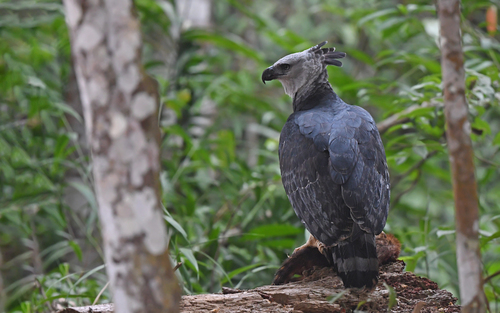
Harpy Eagle (Harpia harpyja) Harpy Eagle

Media

Loading…

In short

The most reliable way to separate White-tailed Kite from Harpy Eagle is by overall size and structure: Harpy Eagle is a massive, heavy-bodied eagle with a huge head and bill, while White-tailed Kite is a slim, small raptor with a falcon-like shape and dainty bill. In flight, White-tailed Kite often hovers (kiting) with pointed wings and a rounded white tail, whereas Harpy Eagle soars or perches with broad, rounded wings and a short, fan-shaped tail. Adult plumage is also distinctive: White-tailed Kite is mostly white below with black shoulder patches and a white tail, while Harpy Eagle is gray, black, and white with a bold black chest band and a striking double crest. Even at a distance, the size gap is so extreme that confusion is unlikely except in poor conditions or with misleading views.

Identification tips

  1. Size is the most immediate clue: Harpy Eagle is nearly 20 times heavier than White-tailed Kite. If the bird appears massive, with thick legs and a huge head, it is a Harpy Eagle; if it is light, slim, and falcon-like, it is a White-tailed Kite.
  2. Bill and head structure: Harpy Eagle has a very large, deep, hooked bill and a broad, crested head. White-tailed Kite has a small, delicate bill and a smooth, rounded head with no crest.
  3. Tail shape and pattern: White-tailed Kite has a long, rounded, pure white tail in all ages. Harpy Eagle has a short, broad tail with bold black and white bands.
  4. Wing shape: In flight, White-tailed Kite shows long, pointed wings (almost tern- or falcon-like). Harpy Eagle's wings are broad and rounded, adapted for maneuvering through forest.
  5. Plumage color: White-tailed Kite is mostly white below and on the head, with pale gray upperparts and black shoulder patches. Harpy Eagle is gray-headed with a black chest band, white belly, and black upperparts; the head crest is unique among these two.
  6. Shoulder patch: The black 'shoulder' (wrist) patch is a key field mark of White-tailed Kite, visible in flight and at rest. Harpy Eagle lacks this feature.
  7. Crest: Harpy Eagle has a prominent double crest on the head, often held erect. White-tailed Kite never shows a crest.
  8. Behavior in flight: White-tailed Kite frequently hovers (kiting) over open areas. Harpy Eagle does not hover and is rarely seen in open country.
  9. Perching posture: Harpy Eagle perches upright with thick, feathered legs and a massive bill. White-tailed Kite perches lightly, often on exposed branches or wires, with a slim silhouette.
  10. Habitat context: Open country and agricultural fields favor White-tailed Kite; dense, mature rainforest is the domain of Harpy Eagle.
  11. Feeding behavior: White-tailed Kite hunts small mammals and insects, often eating on the wing. Harpy Eagle hunts large mammals (sloths, monkeys) and always carries prey to a perch.
  12. Roosting: White-tailed Kite may be seen in communal roosts outside breeding season; Harpy Eagle is solitary.
  13. Juvenile confusion: Even young Harpy Eagles are huge and lack the kite's white tail and black shoulder patches. Juvenile White-tailed Kites look similar to adults in structure and flight.
  14. Likelihood of encounter: White-tailed Kite is locally common in open areas; Harpy Eagle is rare and restricted to large tracts of rainforest.
  15. When in doubt, use multiple clues: If size is hard to judge, look for the combination of habitat, wing shape, tail pattern, and behavior to confirm the ID.

Size

Harpy Eagle is one of the largest eagles in the world, with an average adult body mass of about 5950 g [wikidata], dwarfing the White-tailed Kite, which averages only 311.65 g [wikidata]. In the field, Harpy Eagle appears huge and powerfully built, with a broad chest, thick legs, and a massive head and bill. White-tailed Kite is slender, light, and noticeably smaller even than a crow, with long, pointed wings and a small, delicate bill. The difference is so great that even a distant perched Harpy Eagle looks imposing, while White-tailed Kite is always slight and buoyant.

Plumage

There are no detailed notes on age-specific upperwing patterns for either species, but adults are easily separated by overall coloration and pattern. White-tailed Kite is predominantly white below and on the head, with gray upperparts and distinctive black patches at the bend of the wing (shoulders) visible in flight and at rest. The tail is rounded and pure white, giving the species its name. Harpy Eagle, by contrast, is strikingly patterned with a gray head, bold black chest band, white belly and legs, and black upperparts. The head features a prominent double crest, and the tail is short and broadly banded. Juvenile Harpy Eagles are paler but still much bulkier and lack the kite's black shoulder patches and all-white tail. No age or seasonal confusion is likely, as even young Harpy Eagles are massive and structurally distinct.

Behaviour

White-tailed Kite is famous for its 'kiting' behavior: hovering in place with rapid wingbeats while scanning for prey over open grasslands or scrub. It often feeds on the wing, transferring prey from talons to bill in flight. Harpy Eagle, in contrast, is a perch hunter of dense forests, rarely seen hovering or in open country. It waits motionless for long periods, then launches a powerful ambush on large arboreal mammals like sloths and monkeys. In flight, Harpy Eagle is strong and steady, with slow, deep wingbeats and rarely hovers. Socially, White-tailed Kite may roost communally outside the breeding season, while Harpy Eagle is solitary or seen in pairs.

Habitat

White-tailed Kite is found in open habitats such as grasslands, savannas, agricultural fields, and scrubby areas, often in lowland regions of South and western North America [wikipedia]. It is rarely found in dense forest. Harpy Eagle, by contrast, is restricted to large tracts of tropical lowland rainforest in Central and South America, where it hunts in the canopy and subcanopy. If you see a large raptor soaring or hovering over open country, it is almost certainly not a Harpy Eagle. Conversely, a huge eagle deep in mature forest is never a White-tailed Kite.

Submit a better description

Use the same sections as the comparison. Your text is published immediately.

The most reliable way to separate White-tailed Kite from Harpy Eagle is by overall size and structure: Harpy Eagle is a massive, heavy-bodied eagle with a huge head and bill, while White-tailed Kite is a slim, small raptor with a falcon-like shape and dainty bill. In flight, White-tailed Kite often hovers (kiting) with pointed wings and a rounded white tail, whereas Harpy Eagle soars or perches with broad, rounded wings and a short, fan-shaped tail. Adult plumage is also distinctive: White-tailed Kite is mostly white below with black shoulder patches and a white tail, while Harpy Eagle is gray, black, and white with a bold black chest band and a striking double crest. Even at a distance, the size gap is so extreme that confusion is unlikely except in poor conditions or with misleading views.

  1. Size is the most immediate clue: Harpy Eagle is nearly 20 times heavier than White-tailed Kite. If the bird appears massive, with thick legs and a huge head, it is a Harpy Eagle; if it is light, slim, and falcon-like, it is a White-tailed Kite.
  2. Bill and head structure: Harpy Eagle has a very large, deep, hooked bill and a broad, crested head. White-tailed Kite has a small, delicate bill and a smooth, rounded head with no crest.
  3. Tail shape and pattern: White-tailed Kite has a long, rounded, pure white tail in all ages. Harpy Eagle has a short, broad tail with bold black and white bands.
  4. Wing shape: In flight, White-tailed Kite shows long, pointed wings (almost tern- or falcon-like). Harpy Eagle's wings are broad and rounded, adapted for maneuvering through forest.
  5. Plumage color: White-tailed Kite is mostly white below and on the head, with pale gray upperparts and black shoulder patches. Harpy Eagle is gray-headed with a black chest band, white belly, and black upperparts; the head crest is unique among these two.
  6. Shoulder patch: The black 'shoulder' (wrist) patch is a key field mark of White-tailed Kite, visible in flight and at rest. Harpy Eagle lacks this feature.
  7. Crest: Harpy Eagle has a prominent double crest on the head, often held erect. White-tailed Kite never shows a crest.
  8. Behavior in flight: White-tailed Kite frequently hovers (kiting) over open areas. Harpy Eagle does not hover and is rarely seen in open country.
  9. Perching posture: Harpy Eagle perches upright with thick, feathered legs and a massive bill. White-tailed Kite perches lightly, often on exposed branches or wires, with a slim silhouette.
  10. Habitat context: Open country and agricultural fields favor White-tailed Kite; dense, mature rainforest is the domain of Harpy Eagle.
  11. Feeding behavior: White-tailed Kite hunts small mammals and insects, often eating on the wing. Harpy Eagle hunts large mammals (sloths, monkeys) and always carries prey to a perch.
  12. Roosting: White-tailed Kite may be seen in communal roosts outside breeding season; Harpy Eagle is solitary.
  13. Juvenile confusion: Even young Harpy Eagles are huge and lack the kite's white tail and black shoulder patches. Juvenile White-tailed Kites look similar to adults in structure and flight.
  14. Likelihood of encounter: White-tailed Kite is locally common in open areas; Harpy Eagle is rare and restricted to large tracts of rainforest.
  15. When in doubt, use multiple clues: If size is hard to judge, look for the combination of habitat, wing shape, tail pattern, and behavior to confirm the ID.

Harpy Eagle is one of the largest eagles in the world, with an average adult body mass of about 5950 g [wikidata], dwarfing the White-tailed Kite, which averages only 311.65 g [wikidata]. In the field, Harpy Eagle appears huge and powerfully built, with a broad chest, thick legs, and a massive head and bill. White-tailed Kite is slender, light, and noticeably smaller even than a crow, with long, pointed wings and a small, delicate bill. The difference is so great that even a distant perched Harpy Eagle looks imposing, while White-tailed Kite is always slight and buoyant.

There are no detailed notes on age-specific upperwing patterns for either species, but adults are easily separated by overall coloration and pattern. White-tailed Kite is predominantly white below and on the head, with gray upperparts and distinctive black patches at the bend of the wing (shoulders) visible in flight and at rest. The tail is rounded and pure white, giving the species its name. Harpy Eagle, by contrast, is strikingly patterned with a gray head, bold black chest band, white belly and legs, and black upperparts. The head features a prominent double crest, and the tail is short and broadly banded. Juvenile Harpy Eagles are paler but still much bulkier and lack the kite's black shoulder patches and all-white tail. No age or seasonal confusion is likely, as even young Harpy Eagles are massive and structurally distinct.

White-tailed Kite is famous for its 'kiting' behavior: hovering in place with rapid wingbeats while scanning for prey over open grasslands or scrub. It often feeds on the wing, transferring prey from talons to bill in flight. Harpy Eagle, in contrast, is a perch hunter of dense forests, rarely seen hovering or in open country. It waits motionless for long periods, then launches a powerful ambush on large arboreal mammals like sloths and monkeys. In flight, Harpy Eagle is strong and steady, with slow, deep wingbeats and rarely hovers. Socially, White-tailed Kite may roost communally outside the breeding season, while Harpy Eagle is solitary or seen in pairs.

White-tailed Kite is found in open habitats such as grasslands, savannas, agricultural fields, and scrubby areas, often in lowland regions of South and western North America [wikipedia]. It is rarely found in dense forest. Harpy Eagle, by contrast, is restricted to large tracts of tropical lowland rainforest in Central and South America, where it hunts in the canopy and subcanopy. If you see a large raptor soaring or hovering over open country, it is almost certainly not a Harpy Eagle. Conversely, a huge eagle deep in mature forest is never a White-tailed Kite.

Discard your changes?

You have unsaved edits. If you leave now, those changes will be lost.

White-tailed Kite · Harpy Eagle · My Tricky Birds