

Motmot

White-backed Vulture vs Rüppell's Griffon

Gyps africanus versus Gyps rueppelli

Play a quiz with White-backed Vulture and Rüppell's Griffon
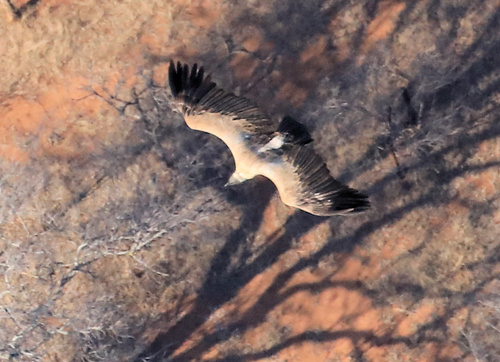
White-backed Vulture (Gyps africanus) White-backed Vulture
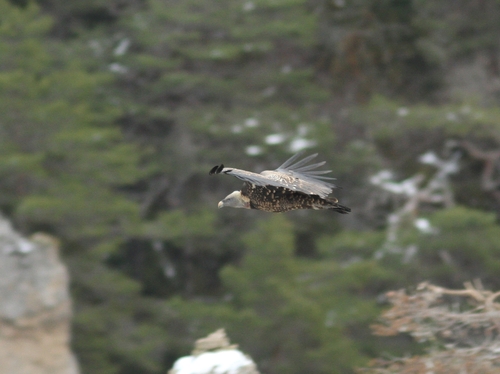
Rüppell's Griffon (Gyps rueppelli) Rüppell's Griffon

Media

Loading…

In short

The most reliable field mark between White-backed Vulture and Rüppell's Griffon is size: Rüppell's Griffon is noticeably larger and bulkier, with a longer wingspan and heavier build, especially obvious when both species are seen together. Adult White-backed Vultures show a striking whitish back that contrasts with otherwise dark plumage, while Rüppell's Griffons are more uniformly mottled brown to black, with a less distinct back contrast and a paler underbelly. Juveniles of both species are mostly dark, making separation trickier at that age, so structure and size become even more important. Both species have a white neck ruff and bare head, but Rüppell's Griffon appears shaggier and more powerful overall. In flight or at a carcass, look for the size difference and the White-backed's pale back, but be cautious with immatures.

Identification tips

  1. Size is the most reliable field mark: Rüppell's Griffon is much larger and bulkier than White-backed Vulture; look for this in mixed groups or when perched near other vultures (all ages).
  2. Wingspan and bulk: In flight, Rüppell's Griffon shows broader wings and a longer wingspan; White-backed appears more medium-sized and less imposing (all ages).
  3. Back color in adults: Adult White-backed Vulture has a pale whitish back that stands out against dark wings and body; Rüppell's Griffon lacks this, being more uniformly mottled brown or black above (adults only).
  4. Underparts: Rüppell's Griffon has a paler, whitish-brown underbelly, while White-backed is darker below (adults especially, but can be subtle).
  5. Juvenile confusion: Juveniles of both species are mostly dark and lack the pale back, so size and structure are key for young birds; do not rely on back color for immatures.
  6. Neck and head: Both have a white neck ruff, but Rüppell's Griffon has a shaggier, dirtier-white neck and head, and a deep brown crop patch (all ages).
  7. Bill and facial structure: Both have bare heads, but Rüppell's Griffon appears more powerful and robust overall; White-backed has a slightly smaller, less robust bill (all ages, subtle).
  8. Flight jizz: Rüppell's Griffon is heavier and more ponderous in flight, with broader wings; White-backed is more agile and less massive (all ages).
  9. Feeding behavior: At carcasses, Rüppell's Griffon dominates White-backed Vulture and can tackle tougher parts of the carcass; White-backed is more restricted to soft tissues (contextual, not always visible).
  10. Habitat context: White-backed Vulture is more likely in wooded savannahs and nests in trees; Rüppell's Griffon prefers cliff-nesting and is more common in areas with cliffs (contextual, not always diagnostic).
  11. Altitude: Rüppell's Griffon is known for soaring at extreme heights, but this is not a practical field mark unless observed at very high altitude (rarely useful).
  12. Vocalizations: Both are mostly silent; Rüppell's Griffon may squeal at nests or carcasses, but this is rarely diagnostic in the field.
  13. Mixed flocks: When both species are present, use direct comparison for size and back color in adults; for juveniles, rely on size and structure.
  14. Season and sex: No significant seasonal or sexual dimorphism in plumage or structure for either species; all field marks apply year-round and to both sexes.
  15. Pitfalls: Beware of relying solely on back color in juveniles or distant birds; always check size, structure, and context.

Size

Rüppell's Griffon is significantly larger than White-backed Vulture in all dimensions. Rüppell's Griffon measures 85–103 cm in length, with a wingspan of 2.26–2.6 m and a mass of 6.4–9 kg ([wikipedia], [wikidata]). White-backed Vulture is smaller: 78–98 cm long, wingspan 1.96–2.25 m, and mass 4.2–7.2 kg ([wikipedia]). In mixed flocks, Rüppell's Griffon stands out as the largest vulture after the Lappet-faced, with a heavier, bulkier frame and broader wings. This size difference is often the easiest way to separate them, especially in flight or at carcasses.

Plumage

Adult White-backed Vultures have a distinctive pale whitish back that contrasts sharply with their otherwise dark brown to blackish body and wings. This pale back is absent in Rüppell's Griffon, which is more uniformly mottled brown or black above, with a paler, whitish-brown underbelly but no sharply defined pale back. Both species have a white neck ruff and bare head, but Rüppell's Griffon has a shaggier, dirty-white neck and head, and a deep brown crop patch. Juveniles of both species are mostly dark overall, lacking the pale back of adult White-backed Vulture, so young birds are best separated by size and structure rather than plumage. In all ages, Rüppell's Griffon appears more mottled and less contrastingly patterned than White-backed Vulture.

Behaviour

Both species are obligate scavengers, specializing in carrion and often gathering in large groups at carcasses. Rüppell's Griffon is known for its ability to fly at extreme altitudes and often follows game herds on migration, feeding in large numbers. White-backed Vulture is highly social and often one of the first to arrive at a carcass, relying on conspecifics for information about food. Both species feed in groups and are subordinate to the even larger Lappet-faced Vulture. In feeding behavior, Rüppell's Griffon is more powerful and can tackle tougher parts of carcasses, including hide and bones, while White-backed Vulture is more limited to soft tissues.

Habitat

Both species occur in sub-Saharan Africa and can be found together, especially in East Africa and the Sahel. White-backed Vulture is the most common vulture in Africa and favors wooded savannahs, nesting in large trees. Rüppell's Griffon is more closely associated with cliffs for nesting and is especially prevalent in the Sahel and East Africa, often seen soaring at great heights. Both species are declining due to habitat loss and poisoning, but Rüppell's Griffon is more closely tied to cliff-nesting sites and may be less common in areas without suitable cliffs.

Voice

Both species are generally silent, but Rüppell's Griffon can be vocal at nests and carcasses, emitting squeals. There is no evidence of distinctive calls useful for separation in the field.

Submit a better description

Use the same sections as the comparison. Your text is published immediately.

The most reliable field mark between White-backed Vulture and Rüppell's Griffon is size: Rüppell's Griffon is noticeably larger and bulkier, with a longer wingspan and heavier build, especially obvious when both species are seen together. Adult White-backed Vultures show a striking whitish back that contrasts with otherwise dark plumage, while Rüppell's Griffons are more uniformly mottled brown to black, with a less distinct back contrast and a paler underbelly. Juveniles of both species are mostly dark, making separation trickier at that age, so structure and size become even more important. Both species have a white neck ruff and bare head, but Rüppell's Griffon appears shaggier and more powerful overall. In flight or at a carcass, look for the size difference and the White-backed's pale back, but be cautious with immatures.

  1. Size is the most reliable field mark: Rüppell's Griffon is much larger and bulkier than White-backed Vulture; look for this in mixed groups or when perched near other vultures (all ages).
  2. Wingspan and bulk: In flight, Rüppell's Griffon shows broader wings and a longer wingspan; White-backed appears more medium-sized and less imposing (all ages).
  3. Back color in adults: Adult White-backed Vulture has a pale whitish back that stands out against dark wings and body; Rüppell's Griffon lacks this, being more uniformly mottled brown or black above (adults only).
  4. Underparts: Rüppell's Griffon has a paler, whitish-brown underbelly, while White-backed is darker below (adults especially, but can be subtle).
  5. Juvenile confusion: Juveniles of both species are mostly dark and lack the pale back, so size and structure are key for young birds; do not rely on back color for immatures.
  6. Neck and head: Both have a white neck ruff, but Rüppell's Griffon has a shaggier, dirtier-white neck and head, and a deep brown crop patch (all ages).
  7. Bill and facial structure: Both have bare heads, but Rüppell's Griffon appears more powerful and robust overall; White-backed has a slightly smaller, less robust bill (all ages, subtle).
  8. Flight jizz: Rüppell's Griffon is heavier and more ponderous in flight, with broader wings; White-backed is more agile and less massive (all ages).
  9. Feeding behavior: At carcasses, Rüppell's Griffon dominates White-backed Vulture and can tackle tougher parts of the carcass; White-backed is more restricted to soft tissues (contextual, not always visible).
  10. Habitat context: White-backed Vulture is more likely in wooded savannahs and nests in trees; Rüppell's Griffon prefers cliff-nesting and is more common in areas with cliffs (contextual, not always diagnostic).
  11. Altitude: Rüppell's Griffon is known for soaring at extreme heights, but this is not a practical field mark unless observed at very high altitude (rarely useful).
  12. Vocalizations: Both are mostly silent; Rüppell's Griffon may squeal at nests or carcasses, but this is rarely diagnostic in the field.
  13. Mixed flocks: When both species are present, use direct comparison for size and back color in adults; for juveniles, rely on size and structure.
  14. Season and sex: No significant seasonal or sexual dimorphism in plumage or structure for either species; all field marks apply year-round and to both sexes.
  15. Pitfalls: Beware of relying solely on back color in juveniles or distant birds; always check size, structure, and context.

Rüppell's Griffon is significantly larger than White-backed Vulture in all dimensions. Rüppell's Griffon measures 85–103 cm in length, with a wingspan of 2.26–2.6 m and a mass of 6.4–9 kg ([wikipedia], [wikidata]). White-backed Vulture is smaller: 78–98 cm long, wingspan 1.96–2.25 m, and mass 4.2–7.2 kg ([wikipedia]). In mixed flocks, Rüppell's Griffon stands out as the largest vulture after the Lappet-faced, with a heavier, bulkier frame and broader wings. This size difference is often the easiest way to separate them, especially in flight or at carcasses.

Adult White-backed Vultures have a distinctive pale whitish back that contrasts sharply with their otherwise dark brown to blackish body and wings. This pale back is absent in Rüppell's Griffon, which is more uniformly mottled brown or black above, with a paler, whitish-brown underbelly but no sharply defined pale back. Both species have a white neck ruff and bare head, but Rüppell's Griffon has a shaggier, dirty-white neck and head, and a deep brown crop patch. Juveniles of both species are mostly dark overall, lacking the pale back of adult White-backed Vulture, so young birds are best separated by size and structure rather than plumage. In all ages, Rüppell's Griffon appears more mottled and less contrastingly patterned than White-backed Vulture.

Both species are obligate scavengers, specializing in carrion and often gathering in large groups at carcasses. Rüppell's Griffon is known for its ability to fly at extreme altitudes and often follows game herds on migration, feeding in large numbers. White-backed Vulture is highly social and often one of the first to arrive at a carcass, relying on conspecifics for information about food. Both species feed in groups and are subordinate to the even larger Lappet-faced Vulture. In feeding behavior, Rüppell's Griffon is more powerful and can tackle tougher parts of carcasses, including hide and bones, while White-backed Vulture is more limited to soft tissues.

Both species occur in sub-Saharan Africa and can be found together, especially in East Africa and the Sahel. White-backed Vulture is the most common vulture in Africa and favors wooded savannahs, nesting in large trees. Rüppell's Griffon is more closely associated with cliffs for nesting and is especially prevalent in the Sahel and East Africa, often seen soaring at great heights. Both species are declining due to habitat loss and poisoning, but Rüppell's Griffon is more closely tied to cliff-nesting sites and may be less common in areas without suitable cliffs.

Both species are generally silent, but Rüppell's Griffon can be vocal at nests and carcasses, emitting squeals. There is no evidence of distinctive calls useful for separation in the field.

Discard your changes?

You have unsaved edits. If you leave now, those changes will be lost.

White-backed Vulture · Rüppell's Griffon · My Tricky Birds