

Whiskered Tern vs Arctic Tern
Chlidonias hybrida versus Sterna paradisaea
Play a quiz with Whiskered Tern and Arctic Tern
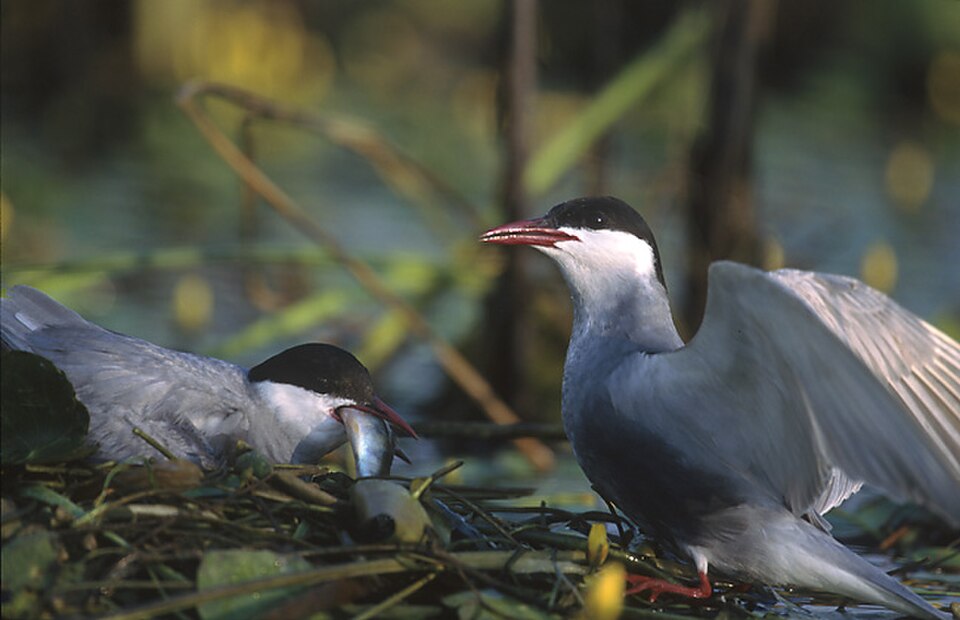 Whiskered Tern
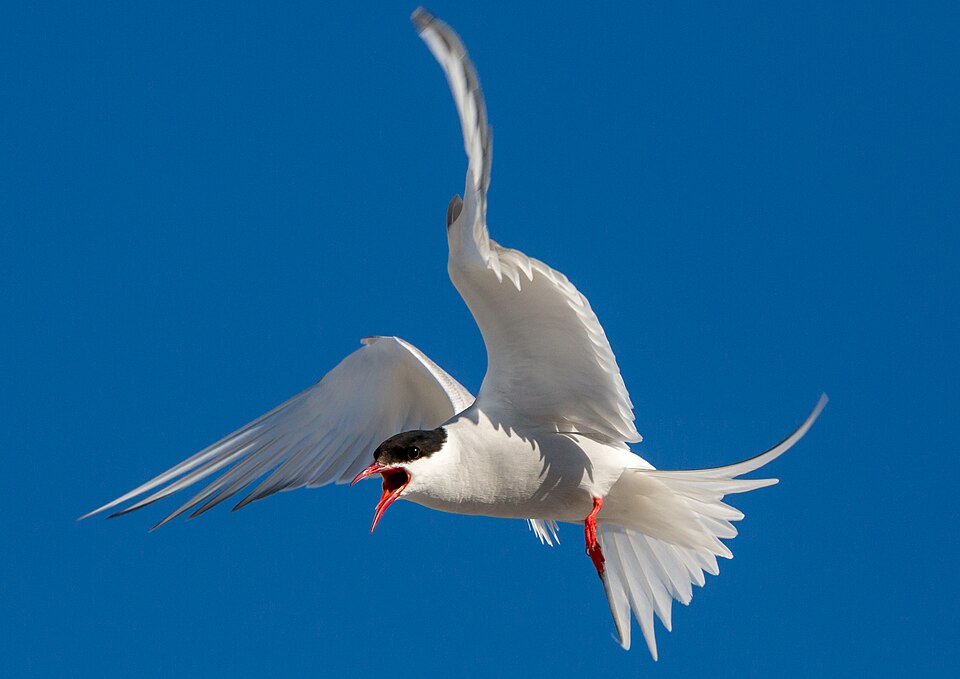 Arctic Tern
In short
The most reliable field mark between Whiskered Tern and Arctic Tern is the upperwing and tail pattern in flight, especially in juveniles and non-breeding birds. Juvenile Whiskered Tern shows a ginger-scaled back and a variegated, buff-edged mantle, while juvenile Arctic Tern has a distinctive dark carpal bar, 'scaly' wings, and a shorter tail. Adults differ in tail shape and body color: Whiskered Tern has a short, shallowly forked tail and darker, more uniform grey underparts, while Arctic Tern has a long, deeply forked white tail and paler, more contrasting plumage. Bill structure and color, as well as overall jizz and flight style, also help separate them. Both can show white foreheads in winter, so rely on structure and wing pattern when plumage is ambiguous.
Identification tips
- Juvenile upperwing pattern: Look for the dark carpal bar on the upperwing of juvenile Arctic Tern, absent in Whiskered Tern. Whiskered Tern juveniles have a ginger, scaly back with broad buff-edged scapulars, not seen in Arctic Tern.
- Tail shape and length: Arctic Tern (all ages) has a long, deeply forked tail with streamers that extend well beyond the wingtips at rest; Whiskered Tern's tail is short and only shallowly forked, never with long streamers.
- Underparts color: Adult Whiskered Tern is dark grey below in breeding plumage, while Arctic Tern is pale grey or almost white below. This contrast is most obvious in summer adults.
- Bill structure and color: Whiskered Tern has a strong, slightly stubbier bill with a pronounced gonys (especially in males), red in breeding season. Arctic Tern's bill is longer, thinner, and uniformly dark red in breeding adults; in winter and juveniles, it becomes darker.
- Leg color: Both species have red legs in breeding plumage, but Arctic Tern's are shorter and darker. In winter, Arctic Tern's legs become blackish, while Whiskered Tern's fade but remain paler.
- Crown and cheek pattern: Both have black caps in breeding plumage, but Whiskered Tern's black ear-coverts join the hindcrown in a C-shaped band, with a less sharply defined collar. Arctic Tern has a cleaner white cheek and a more sharply defined white collar.
- Rump color: Whiskered Tern always has a pale grey rump, while Arctic Tern's rump is white. This can be subtle but is visible in flight.
- Flight style: Arctic Tern is buoyant, with long, pointed wings and a graceful, gliding flight. Whiskered Tern is more direct, with shorter, broader wings and a more swallow-like jizz.
- Habitat context: If the bird is over a freshwater marsh or inland wetland, Whiskered Tern is more likely. Coastal or Arctic breeding sites favor Arctic Tern.
- Voice: Listen for Whiskered Tern's 'krekk' versus Arctic Tern's nasal, rasping calls. Voice can help in mixed flocks or when plumage is ambiguous.
- Perched posture: Arctic Tern stands taller and more upright, with a longer tail extending past the wingtips. Whiskered Tern is more compact and hunched, with the tail not extending beyond the wings.
- Seasonal changes: In winter, both species develop white foreheads, but rely on structure, tail, and wing pattern for separation, as plumage differences become less distinct.
- Sex and age: Bill size differences in Whiskered Tern (males larger, more pronounced gonys) are subtle and not always reliable in the field. Juvenile and first-winter birds are best separated by upperwing and mantle pattern.
- Common pitfalls: Do not rely solely on leg or bill color in non-breeding birds; these features change with season and age. Always check tail length and fork, and look for the carpal bar in juveniles.
- Mixed flocks: If both species are present, direct comparison of tail length, flight style, and underparts color is the fastest way to separate them.
Size
Arctic Tern is noticeably heavier (114g vs 84g) and longer overall, with a wingspan of 76–85 cm compared to the smaller, more compact Whiskered Tern. In the field, Arctic Tern appears longer-winged and more graceful, while Whiskered Tern is stockier and more swallow-like, with a shorter tail and less elongated wings. These differences are subtle at a distance but become apparent with direct comparison or when both species are present.
Plumage
- Juvenile/First-winter: Juvenile Whiskered Tern has a ginger, scaly back and dark brown scapulars with broad buff edges, plus a mottled black-and-white crown and a less-defined collar. Juvenile Arctic Tern shows a black bill and legs, a dark carpal bar across the upperwing, 'scaly' wings and mantle with dark feather tips, and a white forecrown. The tail streamers are shorter than in adults but still longer than Whiskered Tern's.
- Adult breeding: Whiskered Tern is dark grey above and below, with a black cap, white cheeks, and red bill/legs. The tail is short and only shallowly forked. Arctic Tern is pale grey above, with a black crown/nape, white cheeks, and a long, deeply forked white tail. Bill and legs are dark red.
- Adult non-breeding/winter: Both species develop a white forehead, but Whiskered Tern becomes paler grey overall, while Arctic Tern's bill and legs darken and the crown becomes whiter. The rump is always pale grey in Whiskered Tern; Arctic Tern's rump is white.
- Key contrast: Whiskered Tern is overall darker and more uniform, especially below, and lacks the long, streaming tail of Arctic Tern.
Behaviour
In flight, Arctic Tern is buoyant and graceful, with long, pointed wings and a deeply forked tail that trails behind. It often hovers and makes long, gliding forays. Whiskered Tern flies with a more direct, swallow-like action, appearing shorter-tailed and less elegant. When perched, Arctic Tern stands taller and sleeker, while Whiskered Tern appears more compact and hunched. Both species may be seen foraging over water, but Whiskered Tern is more likely to be seen over marshes and freshwater habitats, often picking insects from the surface.
Habitat
Whiskered Tern breeds and forages mainly on inland marshes, lakes, and wetlands, often far from the sea and sometimes among Black-headed Gulls. Arctic Tern is more coastal, breeding in Arctic and subarctic regions, often on islands or near the sea, and is famous for its long-distance migrations. While both can occur inland on passage, Whiskered Tern is much more likely in marshy or freshwater habitats, whereas Arctic Tern is rarely far from saltwater during breeding.
Voice
Whiskered Tern gives a characteristic 'krekk' call, which is distinct from the Arctic Tern's more nasal and rasping calls. Arctic Tern has a variety of calls, but its main alarm and advertising calls are sharper and more piercing than those of Whiskered Tern. In mixed tern flocks, voice can be a useful clue, but is less reliable at distance or in windy conditions.