
Western Subalpine Warbler vs Common Whitethroat
Curruca iberiae versus Curruca communis
Play a quiz with Western Subalpine Warbler and Common Whitethroat
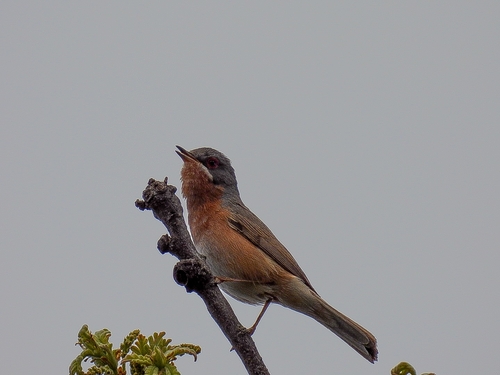 Western Subalpine Warbler
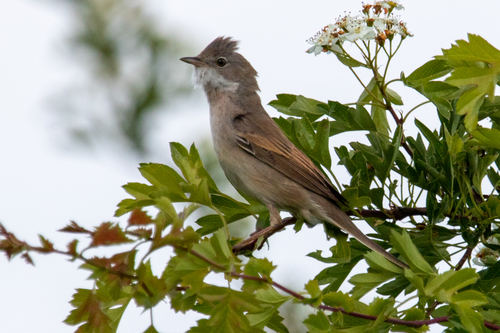 Common Whitethroat
In short
The most reliable field mark between Western Subalpine Warbler and Common Whitethroat is the color and pattern of the underparts and head in adult males: Western Subalpine Warbler males show brick-red underparts, a grey head and back, and bold white 'moustache' (malar) streaks, while Common Whitethroat males have a grey head but lack the brick-red wash, showing buff underparts and a clear white throat. Females and immatures of both species are trickier, but Subalpine Warbler females have a pinkish flush below and a greyer head, whereas Whitethroat females are browner above and buff below with a duller throat. Both species have similar overall structure and size, but subtle differences in head pattern and underpart color—especially in males—are key. Vocalizations are not diagnostic for separation, but context and habitat can help, as Subalpine Warbler is more restricted to southern Europe and northwest Africa.
Identification tips
- Adult male underparts: Western Subalpine Warbler males show brick-red underparts, while Common Whitethroat males are buff below. This is the quickest field check in spring and early summer.
- Adult male head pattern: Both have grey heads, but only Subalpine Warbler males have bold white malar streaks ('moustaches'); Whitethroat males have a plain white throat with no strong malar.
- Back color in males: Subalpine Warbler males have a grey back, while Whitethroat males are brown above.
- Female/immature head and underparts: Subalpine Warbler females are brown above with a greyer head and a pinkish flush to the whitish underparts; Whitethroat females are brown above, lack the grey head, and are buff below with a duller white throat.
- Throat color in females: Whitethroat females have a dull white throat, while Subalpine Warbler females may show a pinkish tinge below but no clear white throat patch.
- Malar streaks: Only Subalpine Warbler males have bold white malar streaks; this is absent in all Whitethroats.
- Sexual dimorphism: Both species show distinct male and female plumages, but the contrast is stronger in Subalpine Warbler due to the brick-red and malar streaks in males.
- Upperwing pattern: No specific age-related upperwing or flight marks are described for either species, so do not rely on wing panels or trailing edges.
- Structure and jizz: Both are small, active warblers with similar structure; do not rely on size or shape for separation.
- Habitat context: In southernmost Europe and Mediterranean scrub, Subalpine Warbler is more likely; in northern or central Europe, Common Whitethroat is far more common.
- Voice: Both have fast, rattling or scratchy songs; do not use voice alone for separation.
- Seasonal context: In spring, adult males are easiest to separate by plumage; in autumn, juveniles and females are more challenging, so focus on subtle head and underpart color differences.
- Geographic range: Subalpine Warbler is restricted to southern Europe and northwest Africa; Whitethroat is widespread across Europe and western Asia.
- Pitfalls: Immature and female Subalpine Warblers can look very similar to Whitethroats, especially in poor light; always look for the pinkish flush and greyer head in Subalpine, and the plain buff below and brown upperparts in Whitethroat.
- Do not use white throat alone: Both species can show a white throat, but only Subalpine males have strong malar streaks and brick-red underparts.
Size
Both species are small warblers with similar structure and proportions. The Common Whitethroat has a documented average body mass of 14.5g [wikidata], while no specific mass is provided for Western Subalpine Warbler, but both are in the typical range for Curruca warblers. In the field, size is not a reliable separator between these two, as both appear equally slight and active.
Plumage
Adult males are the easiest to separate: Western Subalpine Warbler males have a grey back and head, brick-red underparts, and bold white malar streaks ('moustaches'). Common Whitethroat males also have a grey head, but their back is brown, the underparts are buff, and the throat is clear white without the brick-red wash or strong malar streak. Females and immatures are more subtle: Subalpine Warbler females are mainly brown above with a greyer head and whitish underparts with a pink flush, while Whitethroat females are brown above, lack the grey head, and are buff below with a duller white throat. Both species show sexual dimorphism, but the Subalpine's pinkish wash and malar streaks (in males) are unique. No age-specific upperwing or flight pattern marks are described for either species in the notes, so separation in flight relies on overall coloration and head/underpart contrast.
Behaviour
Both species are active, often foraging in shrubs and low vegetation. There are no diagnostic behavioral differences in the notes, but both can be seen flitting through bushes and making short flights. Jizz is similar: both are lively, with quick movements and frequent tail flicks.
Habitat
Western Subalpine Warbler is found in southernmost Europe and northwest Africa, often in Mediterranean scrub and maquis. Common Whitethroat is much more widespread, breeding throughout Europe and temperate western Asia, and winters in tropical Africa, Arabia, and Pakistan. In overlapping areas, both can be found in scrubby habitats, but Subalpine Warbler is more tied to southern, warmer, and drier Mediterranean-type environments, while Whitethroat occupies a broader range of open country with bushes and hedgerows.
Voice
Both species have fast, rattling or scratchy songs. Western Subalpine Warbler's song is described as fast and rattling, similar to Lesser Whitethroat. Common Whitethroat's song is fast and scratchy with a scolding tone, and its call is hoarse and slightly nasal. However, these vocalizations are not reliably diagnostic for field separation between these two species.
Western Subalpine Warbler · Common Whitethroat · My Tricky Birds