

Motmot

Western Capercaillie vs Grey Partridge

Tetrao urogallus versus Perdix perdix

Play a quiz with Western Capercaillie and Grey Partridge
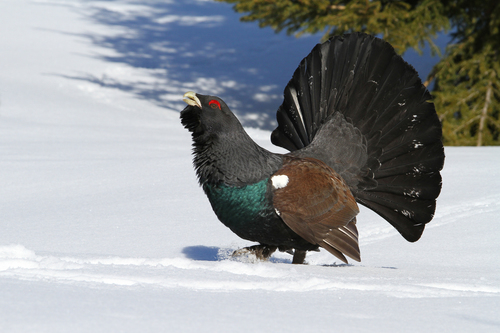
Western Capercaillie (Tetrao urogallus) Western Capercaillie
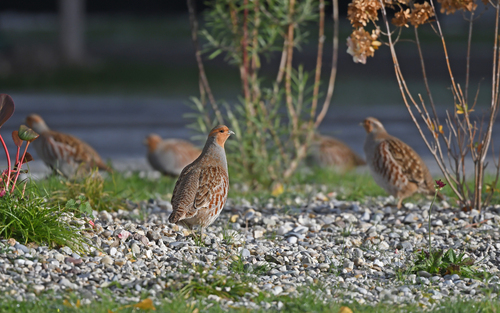
Grey Partridge (Perdix perdix) Grey Partridge

Media

Loading…

In short

The most reliable way to separate Western Capercaillie from Grey Partridge is by size and structure: Capercaillie is an enormous, heavy-bodied forest grouse, while Grey Partridge is a much smaller, compact farmland bird. Adult male Capercaillie are nearly twice the size of females and many times larger than any Grey Partridge. In flight or on the ground, Capercaillie shows a dark, bulky form with a long tail and metallic green breast (male), while Grey Partridge is much smaller, rounder, and shows a plain grey-brown plumage with a distinctive orange face in adults. Juvenile plumages are less distinctive, but even then, the size gap is unmistakable. If you see a large, turkey-sized bird in a forest, it is not a Grey Partridge.

Identification tips

  1. Size is the first check: Capercaillie is massive, even the female is much larger than any Grey Partridge. If the bird looks turkey-sized, it's Capercaillie.
  2. Habitat: Capercaillie is found only in forest (especially coniferous or mixed), never in open farmland. Grey Partridge is found in open fields and farmland, never in dense forest.
  3. Sexual dimorphism: Capercaillie shows extreme size and plumage differences between sexes; Grey Partridge sexes are nearly identical, with only subtle differences in belly patch and wing covert bars (the latter only visible in hand).
  4. Adult male Capercaillie: Look for a dark, heavy bird with metallic green breast, dark brown to black body, and a long, fanned tail. No partridge shows this combination.
  5. Adult female Capercaillie: Brown with black and silver barring above, buff below, still much larger and bulkier than any partridge. Both sexes have a white wing bow spot and red eye combs.
  6. Grey Partridge adults: Compact, round, grey-brown birds with a rufous face and (in males) a dark belly patch. Females are duller and have a smaller belly patch. No metallic green or extensive barring.
  7. Juvenile Capercaillie: Cryptic brown with black crown feathers, resembling the adult female but still much larger than any partridge chick.
  8. Juvenile Grey Partridge: Yellow-brown, lacking orange face and belly patch, smaller and paler than juvenile Capercaillie.
  9. Legs: Capercaillie has feathered legs, especially obvious in winter; Grey Partridge does not.
  10. Flight: Capercaillie is heavy and slow in flight, with broad wings and long tail; Grey Partridge flushes quickly, flying low and fast on rounded wings, usually in a tight group.
  11. Display behavior: Capercaillie males display on trees and the ground with elaborate postures and unique sounds; Grey Partridge does not display in this way.
  12. Vocalizations: Capercaillie’s display song is a long, complex series of clicks and pops; Grey Partridge gives short, harsh calls.
  13. Group size: Capercaillie is usually solitary or in small groups; Grey Partridge is often in coveys, especially outside the breeding season.
  14. Footprints: Capercaillie leaves large, snowshoe-like tracks; Grey Partridge tracks are much smaller and less distinctive.
  15. If in doubt: Use size, habitat, and overall shape as your primary checks—no overlap in these between the two species.

Size

Western Capercaillie is dramatically larger: males average 2885 g (and can reach over 4 kg), with a length of 74–85 cm and wingspan of 90–125 cm. Females are smaller but still much heavier than Grey Partridge, at 1.5–2.5 kg and 54–64 cm long. Grey Partridge is a small gamebird: 320–600 g, 29–31 cm long, wingspan 45–48 cm. Even a female Capercaillie dwarfs the largest Grey Partridge. In the field, Capercaillie looks turkey-sized, while Grey Partridge is only slightly larger than a pigeon.

Plumage

Juvenile Capercaillie resemble the adult female with cryptic brown and black barring, and only gradually acquire the adult male's metallic green breast and dark body over several months. Juvenile Grey Partridge are yellow-brown and lack the adult's orange face and belly patch, making them more uniformly pale and less marked than even female Capercaillie. Adult male Capercaillie is unmistakable with dark grey to brown body, metallic green breast, and variable black to white belly/undertail; female is brown with black and silver barring above, buff below. Both sexes have a white spot on the wing bow and a red eye comb. Grey Partridge adults are grey-brown overall with a rufous face, and both sexes are similar, though females are duller and have a smaller belly patch. The 'cross of Lorraine' (double bar) on the female's wing coverts is only visible in hand. Capercaillie always has feathered legs; Grey Partridge does not.

Behaviour

Capercaillie is primarily ground-dwelling but can be seen displaying in trees during the breeding season, with males performing elaborate courtship displays involving fanned tails, drooped wings, and upright posture. They are solitary or in small groups, especially outside the lekking season. Grey Partridge is a social, ground-dwelling bird, often found in coveys in open farmland, and flushes in a tight group with short, whirring flights. Capercaillie rarely forms large flocks and is much less likely to be seen in open fields.

Habitat

Capercaillie is strictly a bird of mature coniferous or mixed forests, often with dense undergrowth and clearings for display. It avoids open farmland and is never found in agricultural fields. Grey Partridge is a classic farmland bird, favoring open fields, grasslands, and agricultural landscapes, and is absent from dense forests. If you see the bird in a field, it is almost certainly a Grey Partridge; if deep in a forest, likely Capercaillie.

Voice

Capercaillie males produce a unique display song: a series of double-clicks accelerating into a popping cork sound, followed by scraping noises, mainly during the lekking season. Grey Partridge gives a harsh, high-pitched 'kieerr-ik' and, when flushed, a rapid 'rick rick rick'. The Capercaillie's song is longer, more complex, and only heard in forest during display; Grey Partridge's calls are short, sharp, and heard in open country.

Submit a better description

Use the same sections as the comparison. Your text is published immediately.

The most reliable way to separate Western Capercaillie from Grey Partridge is by size and structure: Capercaillie is an enormous, heavy-bodied forest grouse, while Grey Partridge is a much smaller, compact farmland bird. Adult male Capercaillie are nearly twice the size of females and many times larger than any Grey Partridge. In flight or on the ground, Capercaillie shows a dark, bulky form with a long tail and metallic green breast (male), while Grey Partridge is much smaller, rounder, and shows a plain grey-brown plumage with a distinctive orange face in adults. Juvenile plumages are less distinctive, but even then, the size gap is unmistakable. If you see a large, turkey-sized bird in a forest, it is not a Grey Partridge.

  1. Size is the first check: Capercaillie is massive, even the female is much larger than any Grey Partridge. If the bird looks turkey-sized, it's Capercaillie.
  2. Habitat: Capercaillie is found only in forest (especially coniferous or mixed), never in open farmland. Grey Partridge is found in open fields and farmland, never in dense forest.
  3. Sexual dimorphism: Capercaillie shows extreme size and plumage differences between sexes; Grey Partridge sexes are nearly identical, with only subtle differences in belly patch and wing covert bars (the latter only visible in hand).
  4. Adult male Capercaillie: Look for a dark, heavy bird with metallic green breast, dark brown to black body, and a long, fanned tail. No partridge shows this combination.
  5. Adult female Capercaillie: Brown with black and silver barring above, buff below, still much larger and bulkier than any partridge. Both sexes have a white wing bow spot and red eye combs.
  6. Grey Partridge adults: Compact, round, grey-brown birds with a rufous face and (in males) a dark belly patch. Females are duller and have a smaller belly patch. No metallic green or extensive barring.
  7. Juvenile Capercaillie: Cryptic brown with black crown feathers, resembling the adult female but still much larger than any partridge chick.
  8. Juvenile Grey Partridge: Yellow-brown, lacking orange face and belly patch, smaller and paler than juvenile Capercaillie.
  9. Legs: Capercaillie has feathered legs, especially obvious in winter; Grey Partridge does not.
  10. Flight: Capercaillie is heavy and slow in flight, with broad wings and long tail; Grey Partridge flushes quickly, flying low and fast on rounded wings, usually in a tight group.
  11. Display behavior: Capercaillie males display on trees and the ground with elaborate postures and unique sounds; Grey Partridge does not display in this way.
  12. Vocalizations: Capercaillie’s display song is a long, complex series of clicks and pops; Grey Partridge gives short, harsh calls.
  13. Group size: Capercaillie is usually solitary or in small groups; Grey Partridge is often in coveys, especially outside the breeding season.
  14. Footprints: Capercaillie leaves large, snowshoe-like tracks; Grey Partridge tracks are much smaller and less distinctive.
  15. If in doubt: Use size, habitat, and overall shape as your primary checks—no overlap in these between the two species.

Western Capercaillie is dramatically larger: males average 2885 g (and can reach over 4 kg), with a length of 74–85 cm and wingspan of 90–125 cm. Females are smaller but still much heavier than Grey Partridge, at 1.5–2.5 kg and 54–64 cm long. Grey Partridge is a small gamebird: 320–600 g, 29–31 cm long, wingspan 45–48 cm. Even a female Capercaillie dwarfs the largest Grey Partridge. In the field, Capercaillie looks turkey-sized, while Grey Partridge is only slightly larger than a pigeon.

Juvenile Capercaillie resemble the adult female with cryptic brown and black barring, and only gradually acquire the adult male's metallic green breast and dark body over several months. Juvenile Grey Partridge are yellow-brown and lack the adult's orange face and belly patch, making them more uniformly pale and less marked than even female Capercaillie. Adult male Capercaillie is unmistakable with dark grey to brown body, metallic green breast, and variable black to white belly/undertail; female is brown with black and silver barring above, buff below. Both sexes have a white spot on the wing bow and a red eye comb. Grey Partridge adults are grey-brown overall with a rufous face, and both sexes are similar, though females are duller and have a smaller belly patch. The 'cross of Lorraine' (double bar) on the female's wing coverts is only visible in hand. Capercaillie always has feathered legs; Grey Partridge does not.

Capercaillie is primarily ground-dwelling but can be seen displaying in trees during the breeding season, with males performing elaborate courtship displays involving fanned tails, drooped wings, and upright posture. They are solitary or in small groups, especially outside the lekking season. Grey Partridge is a social, ground-dwelling bird, often found in coveys in open farmland, and flushes in a tight group with short, whirring flights. Capercaillie rarely forms large flocks and is much less likely to be seen in open fields.

Capercaillie is strictly a bird of mature coniferous or mixed forests, often with dense undergrowth and clearings for display. It avoids open farmland and is never found in agricultural fields. Grey Partridge is a classic farmland bird, favoring open fields, grasslands, and agricultural landscapes, and is absent from dense forests. If you see the bird in a field, it is almost certainly a Grey Partridge; if deep in a forest, likely Capercaillie.

Capercaillie males produce a unique display song: a series of double-clicks accelerating into a popping cork sound, followed by scraping noises, mainly during the lekking season. Grey Partridge gives a harsh, high-pitched 'kieerr-ik' and, when flushed, a rapid 'rick rick rick'. The Capercaillie's song is longer, more complex, and only heard in forest during display; Grey Partridge's calls are short, sharp, and heard in open country.

Discard your changes?

You have unsaved edits. If you leave now, those changes will be lost.

Western Capercaillie · Grey Partridge · My Tricky Birds