

Western Bonelli's Warbler vs Eastern Bonelli's Warbler
Phylloscopus bonelli versus Phylloscopus orientalis
Play a quiz with Western Bonelli's Warbler and Eastern Bonelli's Warbler
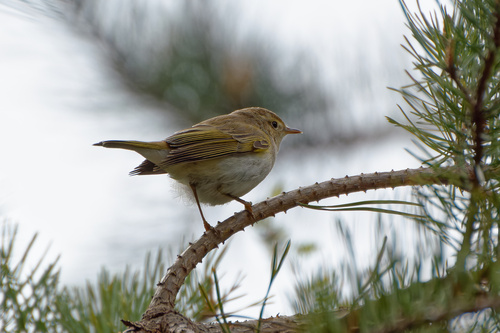 Western Bonelli's Warbler
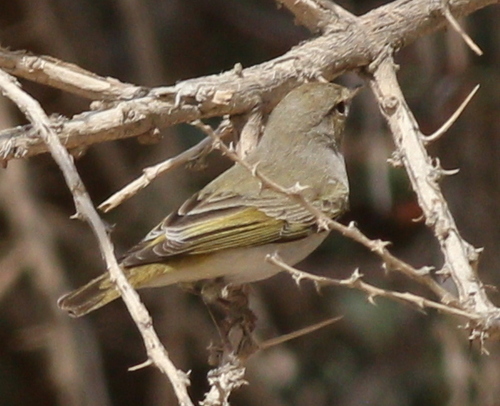 Eastern Bonelli's Warbler
In short
The most reliable field mark for separating Western and Eastern Bonelli's Warblers is their call: Western gives a soft, disyllabic 'hu-it', while Eastern gives a sharp, hard 'chup' reminiscent of a crossbill or sparrow. In plumage, both species are extremely similar, but Western Bonelli's tends to have a browner tinge to the upperparts, while Eastern may show a faint greenish cast instead. Structural features, size, and general jizz are not useful for separation, and both sexes and all ages look very much alike. Only voice and subtle upperpart tones offer practical field separation; habitat and range do not overlap in breeding season but can overlap on migration or as vagrants.
Identification tips
- Call is diagnostic: Western Bonelli's Warbler gives a soft, disyllabic 'hu-it'; Eastern Bonelli's gives a hard, single 'chup'. This is the most reliable field mark in all seasons and ages.
- Song is not reliable: Both species sing a fast, monotone trill that is very similar and should not be used for separation.
- Upperparts color: Western Bonelli's Warbler tends to have a browner tinge to the upperparts, while Eastern Bonelli's may appear slightly greener. This is subtle and can be affected by light, wear, and individual variation. Use with caution and only in good light.
- No wing pattern differences: Both species lack strong wing bars, panels, or contrasting flight feathers at all ages. Immature and adult birds look alike in wing pattern.
- Underparts: Both species have whitish underparts with no distinguishing marks.
- Bill and legs: Both have small, pointed bills and brown legs; these features are not useful for separation.
- Sexes and ages: Males and females, adults and immatures, are identical in both species. No age- or sex-specific field marks are available.
- Habitat and range: In the breeding season, range is diagnostic (Western in SW Europe/N Africa, Eastern in SE Europe/Asia Minor). On migration or as vagrants, ranges can overlap, so do not rely on location alone.
- Behavior: Both species forage actively in foliage and behave similarly; behavior does not help with identification.
- Facial pattern: Both species have plain faces with no strong supercilium or eye-stripe; this is not a separator.
- Context: If you hear the call, prioritize it over all visual marks. If silent, use upperpart tone only as a last resort, and be aware of the high risk of error.
- Pitfalls: Do not rely on song, jizz, or habitat outside the breeding range. Do not expect to separate these species by structure or flight style.
- Summary tip: If you cannot hear the call, treat any identification as provisional unless upperpart tone is clear and you have direct comparison or local knowledge of likely species.
Size
Both Western and Eastern Bonelli's Warblers are small leaf warblers with essentially identical structure and proportions. No meaningful differences in body size, bill shape, or wing length are described in the available sources. Sexes are alike in both species.
Plumage
There are no age-specific or flight-only wing pattern differences between Western and Eastern Bonelli's Warblers described in the sources; both show plain grey-green backs, green-toned rumps and wings, and whitish underparts in all ages and seasons. The only subtle difference is that Western Bonelli's Warbler usually has a browner tinge to the upperparts, while Eastern Bonelli's can appear slightly greener above. This difference is slight and may be difficult to judge except in direct comparison or ideal light. Both species have small, pointed bills and brown legs, and lack strong facial markings or wing bars. Sexes are identical in both species.
Behaviour
Both species behave similarly, foraging actively in foliage for insects, and are most often seen flitting through woodland or forest undergrowth. No behavioral differences are reported that would help in field identification.
Habitat
Breeding ranges do not overlap: Western Bonelli's Warbler breeds in southwest Europe and North Africa, while Eastern Bonelli's Warbler breeds in southeast Europe and Asia Minor. Both winter in sub-Saharan Africa and are rare vagrants in northern Europe. Habitat preferences are similar, with both favoring forest and woodland, so habitat is not a useful separator outside the breeding range.
Voice
Vocalizations are the most reliable way to separate these two species. The song of both is a fast, monotone trill and is very similar—nearly indistinguishable in the field. However, the call is diagnostic: Western Bonelli's Warbler gives a soft, disyllabic 'hu-it', while Eastern Bonelli's Warbler gives a hard, single 'chup', reminiscent of a crossbill or house sparrow. This difference is consistent and should be prioritized for identification, especially in migration or vagrancy contexts.
Western Bonelli's Warbler · Eastern Bonelli's Warbler · My Tricky Birds