
Motmot

Village Weaver vs Red-headed Quelea

Ploceus cucullatus versus Quelea erythrops

Play a quiz with Village Weaver and Red-headed Quelea
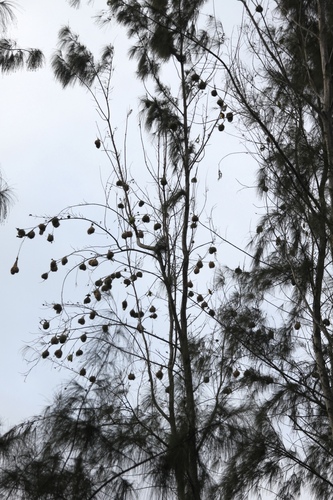
Village Weaver (Ploceus cucullatus) Village Weaver
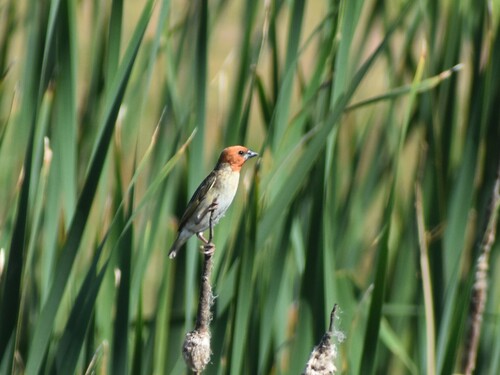
Red-headed Quelea (Quelea erythrops) Red-headed Quelea

Media

Loading…

In short

The most reliable way to separate Village Weaver from Red-headed Quelea is by size and structure: Village Weaver is much larger and bulkier, with a heavier conical bill, while Red-headed Quelea is distinctly smaller and more delicate. In breeding plumage, male Village Weavers have a black head (with or without chestnut, depending on region), contrasting with the red or rufous face of male Red-headed Quelea. Females and nonbreeding birds are trickier, but Village Weaver remains larger, with more yellow and black in the wings and underparts. Juveniles of both species are similar, but the weaver is always stockier with a stronger bill. Both species can occur in flocks, but Village Weaver often forms noisy colonies in urban areas.

Identification tips

  1. Size and bulk: Village Weaver is much larger and heavier than Red-headed Quelea. If the bird looks chunky and robust, especially in a mixed flock, it's likely a weaver.
  2. Bill shape: Village Weaver has a strong, deep-based conical bill, while Red-headed Quelea's bill is smaller and more sparrow-like. This is especially useful when the birds are feeding or perched in good light.
  3. Breeding male head color: Male Village Weaver in breeding plumage has a black head (sometimes with chestnut on the nape and chest in the north), while male Red-headed Quelea has a red or rufous face. This is the most striking difference in adult males.
  4. Nonbreeding male and female plumage: Nonbreeding male Village Weaver loses the black hood but retains a yellow head with an olive crown, and the wings remain yellow and black. Females and immatures are streaked olive above with yellow and black wings and pale yellow underparts. Red-headed Quelea females and immatures are generally drabber and browner, lacking the strong yellow and black contrast.
  5. Wing pattern: At all ages, Village Weaver shows more yellow and black in the wings than Red-headed Quelea, which is useful in flight or when perched with wings spread.
  6. Juvenile confusion: Juvenile Village Weavers resemble females but are browner on the back; still, they are bulkier and show more wing contrast than juvenile queleas, which are plainer and smaller.
  7. Flock structure: Village Weavers often form large, noisy colonies, especially near buildings or in hotel gardens. Red-headed Quelea flocks are more likely in open country or near water.
  8. Nest type (context clue): Village Weavers build large, coarsely woven hanging nests with downward-facing entrances, often many in a single tree. Quelea nests are less conspicuous and not typically seen in urban settings.
  9. Habitat: If seen in a town, village, or garden, especially in a noisy group, Village Weaver is more likely. In open grassland or wetland, especially in a mixed flock, check carefully for queleas.
  10. Eye color: Adult Village Weavers have dark reddish eyes, which can be a subtle but helpful mark at close range; queleas do not show this feature.
  11. Underpart color: Village Weaver tends to have brighter yellow underparts, while Red-headed Quelea is generally paler or buff below.
  12. Regional variation: In southern Africa, male Village Weavers may have less black on the head, but still show a black face and throat, while Red-headed Quelea males always show a red or rufous face in breeding plumage.
  13. Behavior: Village Weavers are bolder and more confiding around people, often feeding on scraps or crops in settlements; queleas are more wary and less urban.
  14. No distinctive flight marks: Neither species shows a unique upperwing pattern in flight, but the weaver's overall bulk and wing contrast can help.
  15. When in doubt: Use a combination of size, bill shape, and wing contrast, as plumage alone can be misleading in nonbreeding or immature birds.

Size

Village Weaver is nearly twice as heavy as Red-headed Quelea (37.5g vs 19.4g) and appears much stockier in the field. The weaver is 15–17 cm long, with a robust, deep-based bill and a thickset body, while the quelea is smaller, lighter, and more sparrow-like in build. This size difference is usually obvious when seen side by side or with experience, but can be underestimated at a distance or in isolation.

Plumage

Juvenile and female Village Weavers have streaked olive upperparts, yellow and black wings, and pale yellow underparts, while young Red-headed Quelea are generally plainer and browner, lacking the strong yellow and black contrast. In breeding males, Village Weaver shows a black head (sometimes with chestnut on the nape and chest in northern populations), yellow underparts, and black and yellow wings. In contrast, male Red-headed Quelea has a red or rufous face, with the rest of the plumage less boldly marked. Nonbreeding male Village Weavers lose the black hood, showing a yellow head with an olive crown and grey upperparts, but retain yellow and black in the wings. Female and immature queleas are generally drab, lacking the vivid yellow and black wing pattern of the weaver. No distinctive upperwing pattern is described for either species in flight, but the weaver's wing contrast is stronger at all ages.

Behaviour

Village Weavers are often found in large, noisy colonies, especially near human habitation, where they build conspicuous hanging nests. They are bold and active, frequently seen in groups in trees or on the ground. Red-headed Quelea also forms flocks, but is less tied to urban areas and is more likely to be encountered in open country or near water. Both species feed on seeds and grains, but Village Weaver is more likely to be a noticeable crop pest around settlements.

Habitat

Both species occur widely in sub-Saharan Africa and can overlap in range. Village Weaver is especially common in open or semi-open habitats near human habitation, including towns, villages, and gardens, where it forms large colonies. Red-headed Quelea is more typical of open country, grasslands, and wetlands, and is less closely associated with people. If you see a large, noisy colony in a town or hotel garden, Village Weaver is more likely.

Submit a better description

Use the same sections as the comparison. Your text is published immediately.

The most reliable way to separate Village Weaver from Red-headed Quelea is by size and structure: Village Weaver is much larger and bulkier, with a heavier conical bill, while Red-headed Quelea is distinctly smaller and more delicate. In breeding plumage, male Village Weavers have a black head (with or without chestnut, depending on region), contrasting with the red or rufous face of male Red-headed Quelea. Females and nonbreeding birds are trickier, but Village Weaver remains larger, with more yellow and black in the wings and underparts. Juveniles of both species are similar, but the weaver is always stockier with a stronger bill. Both species can occur in flocks, but Village Weaver often forms noisy colonies in urban areas.

  1. Size and bulk: Village Weaver is much larger and heavier than Red-headed Quelea. If the bird looks chunky and robust, especially in a mixed flock, it's likely a weaver.
  2. Bill shape: Village Weaver has a strong, deep-based conical bill, while Red-headed Quelea's bill is smaller and more sparrow-like. This is especially useful when the birds are feeding or perched in good light.
  3. Breeding male head color: Male Village Weaver in breeding plumage has a black head (sometimes with chestnut on the nape and chest in the north), while male Red-headed Quelea has a red or rufous face. This is the most striking difference in adult males.
  4. Nonbreeding male and female plumage: Nonbreeding male Village Weaver loses the black hood but retains a yellow head with an olive crown, and the wings remain yellow and black. Females and immatures are streaked olive above with yellow and black wings and pale yellow underparts. Red-headed Quelea females and immatures are generally drabber and browner, lacking the strong yellow and black contrast.
  5. Wing pattern: At all ages, Village Weaver shows more yellow and black in the wings than Red-headed Quelea, which is useful in flight or when perched with wings spread.
  6. Juvenile confusion: Juvenile Village Weavers resemble females but are browner on the back; still, they are bulkier and show more wing contrast than juvenile queleas, which are plainer and smaller.
  7. Flock structure: Village Weavers often form large, noisy colonies, especially near buildings or in hotel gardens. Red-headed Quelea flocks are more likely in open country or near water.
  8. Nest type (context clue): Village Weavers build large, coarsely woven hanging nests with downward-facing entrances, often many in a single tree. Quelea nests are less conspicuous and not typically seen in urban settings.
  9. Habitat: If seen in a town, village, or garden, especially in a noisy group, Village Weaver is more likely. In open grassland or wetland, especially in a mixed flock, check carefully for queleas.
  10. Eye color: Adult Village Weavers have dark reddish eyes, which can be a subtle but helpful mark at close range; queleas do not show this feature.
  11. Underpart color: Village Weaver tends to have brighter yellow underparts, while Red-headed Quelea is generally paler or buff below.
  12. Regional variation: In southern Africa, male Village Weavers may have less black on the head, but still show a black face and throat, while Red-headed Quelea males always show a red or rufous face in breeding plumage.
  13. Behavior: Village Weavers are bolder and more confiding around people, often feeding on scraps or crops in settlements; queleas are more wary and less urban.
  14. No distinctive flight marks: Neither species shows a unique upperwing pattern in flight, but the weaver's overall bulk and wing contrast can help.
  15. When in doubt: Use a combination of size, bill shape, and wing contrast, as plumage alone can be misleading in nonbreeding or immature birds.

Village Weaver is nearly twice as heavy as Red-headed Quelea (37.5g vs 19.4g) and appears much stockier in the field. The weaver is 15–17 cm long, with a robust, deep-based bill and a thickset body, while the quelea is smaller, lighter, and more sparrow-like in build. This size difference is usually obvious when seen side by side or with experience, but can be underestimated at a distance or in isolation.

Juvenile and female Village Weavers have streaked olive upperparts, yellow and black wings, and pale yellow underparts, while young Red-headed Quelea are generally plainer and browner, lacking the strong yellow and black contrast. In breeding males, Village Weaver shows a black head (sometimes with chestnut on the nape and chest in northern populations), yellow underparts, and black and yellow wings. In contrast, male Red-headed Quelea has a red or rufous face, with the rest of the plumage less boldly marked. Nonbreeding male Village Weavers lose the black hood, showing a yellow head with an olive crown and grey upperparts, but retain yellow and black in the wings. Female and immature queleas are generally drab, lacking the vivid yellow and black wing pattern of the weaver. No distinctive upperwing pattern is described for either species in flight, but the weaver's wing contrast is stronger at all ages.

Village Weavers are often found in large, noisy colonies, especially near human habitation, where they build conspicuous hanging nests. They are bold and active, frequently seen in groups in trees or on the ground. Red-headed Quelea also forms flocks, but is less tied to urban areas and is more likely to be encountered in open country or near water. Both species feed on seeds and grains, but Village Weaver is more likely to be a noticeable crop pest around settlements.

Both species occur widely in sub-Saharan Africa and can overlap in range. Village Weaver is especially common in open or semi-open habitats near human habitation, including towns, villages, and gardens, where it forms large colonies. Red-headed Quelea is more typical of open country, grasslands, and wetlands, and is less closely associated with people. If you see a large, noisy colony in a town or hotel garden, Village Weaver is more likely.

Discard your changes?

You have unsaved edits. If you leave now, those changes will be lost.

Village Weaver · Red-headed Quelea · My Tricky Birds