

Motmot

Tundra Bean Goose vs European Golden Plover

Anser serrirostris versus Pluvialis apricaria

Play a quiz with Tundra Bean Goose and European Golden Plover
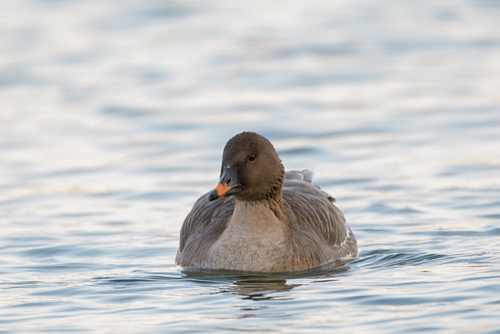
Tundra Bean Goose (Anser serrirostris) Tundra Bean Goose
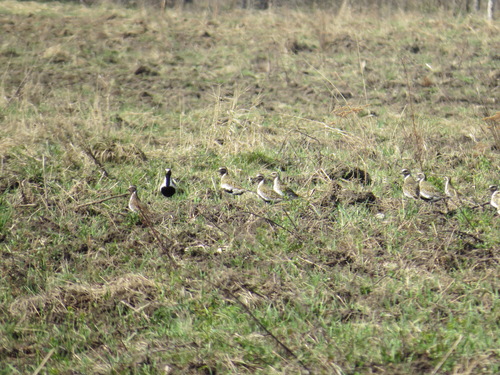
European Golden Plover (Pluvialis apricaria) European Golden Plover

Media

Loading…

In short

The most reliable way to separate Tundra Bean Goose from European Golden Plover is by overall structure and bill: the goose is a massive, heavy-bodied waterfowl with a thick neck and a large orange-and-black bill, while the plover is a much smaller, compact shorebird with a short, fine bill and a distinctive white 'S'-shaped face band in breeding plumage. In flight, the goose shows dark brown upperwing-coverts with narrow white fringes, while the plover has white axillaries (armpits) and a rapid, powerful flight action. Even at a distance, the goose's size and shape are unmistakable compared to the much daintier plover. If you see a chunky, orange-legged bird in open water or wet grassland, it's the goose; if you see a smaller, gold-spangled bird running on moorland or fields, it's the plover.

Identification tips

  1. Size is the first clue: Tundra Bean Goose is enormous compared to European Golden Plover. If you see a bird the size of a mallard or larger, it's not a plover.
  2. Bill structure: The goose has a thick, long bill with a black base and tip and a narrow orange band in the middle. The plover's bill is short, fine, and entirely dark.
  3. Leg color: Both have bright legs, but the goose's are orange and thick, while the plover's are much thinner and duller (not as diagnostic, but helps at close range).
  4. Flight jizz: Geese fly with long necks outstretched and deep, slow wingbeats. Plovers have rapid, powerful wingbeats and a compact, thickset profile.
  5. Upperwing pattern (all ages): Goose shows dark brown upperwing-coverts with narrow white fringes; plover shows white axillaries in flight (if seen from below), but otherwise plain wings.
  6. Breeding plumage (plover): Look for the striking white 'S'-shaped band and black face/belly on the plover. Goose never shows this pattern.
  7. Non-breeding plumage: Plovers become mottled and pale, but still lack the uniform brownish-grey of the goose.
  8. Habitat: Geese are almost always near water; plovers are usually on open ground, moorland, or fields, rarely swimming.
  9. Posture: Geese are upright, heavy, and slow-moving; plovers are alert, run quickly, and often pause upright on the ground.
  10. Group behavior: Geese often in tight, vocal flocks; plovers in looser groups, sometimes mixed with other shorebirds.
  11. Vocalizations: Plovers give soft, plaintive 'tuu' calls; geese are much louder and honking (not described here, but always diagnostic in the field).
  12. Bill color and pattern: Only the goose shows a two-tone bill with orange; plover's bill is always dark and never orange.
  13. Face pattern: Only the plover has a white forehead-to-flank band in breeding plumage; goose has a plain face.
  14. Feet: Goose has large, webbed feet (for swimming); plover has small, unwebbed feet (for running).

Size

Tundra Bean Goose is vastly larger, with males averaging over 3 kg (7.1 lb) and females nearly 2.8 kg (6.3 lb) [wikipedia], compared to the European Golden Plover's mere 175 g (0.39 lb) [wikidata]. The goose measures 68–90 cm in length with a 140–174 cm wingspan, dwarfing the plover, which is described as a 'relatively large' plover but is still tiny next to any goose. Even at a great distance, the goose's bulk, long neck, and heavy build contrast sharply with the plover's compact, short-necked, and much lighter appearance.

Plumage

Juvenile and adult Tundra Bean Geese have dark brown upperwing-coverts with narrow white fringes, a pattern shared with some other geese but not with plovers. The European Golden Plover, in all ages, shows white axillaries (armpits) in flight, a key mark that separates it from American and Pacific golden plovers (which have grey axillaries) but is not relevant to geese. In breeding plumage, the plover is striking with a black face, throat, and belly bordered by a white S-shaped band from forehead to flanks, and gold-spangled upperparts. The goose is overall brownish-grey with no such face or belly pattern, but has a distinctive orange band on the bill and bright orange legs and feet. Non-breeding plovers lose the black and gold but retain a more mottled, pale look; the goose remains fairly uniform year-round.

Behaviour

Tundra Bean Goose is a classic waterfowl: it swims, grazes, and moves in slow, deliberate fashion, often in flocks on lakes, marshes, or wet meadows. Its flight is strong but heavy, with deep wingbeats and a long neck extended. European Golden Plover is a shorebird, usually found running or standing alert on open ground, often in loose groups. Its flight is rapid and agile, with regular wingbeats and a compact, thickset shape. The plover is much more likely to be seen walking or running on dry land, while the goose is rarely far from water.

Habitat

Tundra Bean Goose breeds in northern Siberian tundra and winters further south, usually in wetlands, lakes, and wet grasslands. European Golden Plover breeds on moorland, tundra, and upland grassland, and winters in open fields, coastal flats, and sometimes estuaries. While both can occur in open country, the goose is tied to water and wet habitats, whereas the plover prefers drier, open ground and is rarely seen swimming.

Voice

The notes only describe the plover's call: a monosyllabic, slightly descending, melancholic 'tuu'. No vocal description is given for the goose here, but in practice, geese have loud, honking calls, while plovers have softer, more plaintive whistles.

Submit a better description

Use the same sections as the comparison. Your text is published immediately.

The most reliable way to separate Tundra Bean Goose from European Golden Plover is by overall structure and bill: the goose is a massive, heavy-bodied waterfowl with a thick neck and a large orange-and-black bill, while the plover is a much smaller, compact shorebird with a short, fine bill and a distinctive white 'S'-shaped face band in breeding plumage. In flight, the goose shows dark brown upperwing-coverts with narrow white fringes, while the plover has white axillaries (armpits) and a rapid, powerful flight action. Even at a distance, the goose's size and shape are unmistakable compared to the much daintier plover. If you see a chunky, orange-legged bird in open water or wet grassland, it's the goose; if you see a smaller, gold-spangled bird running on moorland or fields, it's the plover.

  1. Size is the first clue: Tundra Bean Goose is enormous compared to European Golden Plover. If you see a bird the size of a mallard or larger, it's not a plover.
  2. Bill structure: The goose has a thick, long bill with a black base and tip and a narrow orange band in the middle. The plover's bill is short, fine, and entirely dark.
  3. Leg color: Both have bright legs, but the goose's are orange and thick, while the plover's are much thinner and duller (not as diagnostic, but helps at close range).
  4. Flight jizz: Geese fly with long necks outstretched and deep, slow wingbeats. Plovers have rapid, powerful wingbeats and a compact, thickset profile.
  5. Upperwing pattern (all ages): Goose shows dark brown upperwing-coverts with narrow white fringes; plover shows white axillaries in flight (if seen from below), but otherwise plain wings.
  6. Breeding plumage (plover): Look for the striking white 'S'-shaped band and black face/belly on the plover. Goose never shows this pattern.
  7. Non-breeding plumage: Plovers become mottled and pale, but still lack the uniform brownish-grey of the goose.
  8. Habitat: Geese are almost always near water; plovers are usually on open ground, moorland, or fields, rarely swimming.
  9. Posture: Geese are upright, heavy, and slow-moving; plovers are alert, run quickly, and often pause upright on the ground.
  10. Group behavior: Geese often in tight, vocal flocks; plovers in looser groups, sometimes mixed with other shorebirds.
  11. Vocalizations: Plovers give soft, plaintive 'tuu' calls; geese are much louder and honking (not described here, but always diagnostic in the field).
  12. Bill color and pattern: Only the goose shows a two-tone bill with orange; plover's bill is always dark and never orange.
  13. Face pattern: Only the plover has a white forehead-to-flank band in breeding plumage; goose has a plain face.
  14. Feet: Goose has large, webbed feet (for swimming); plover has small, unwebbed feet (for running).

Tundra Bean Goose is vastly larger, with males averaging over 3 kg (7.1 lb) and females nearly 2.8 kg (6.3 lb) [wikipedia], compared to the European Golden Plover's mere 175 g (0.39 lb) [wikidata]. The goose measures 68–90 cm in length with a 140–174 cm wingspan, dwarfing the plover, which is described as a 'relatively large' plover but is still tiny next to any goose. Even at a great distance, the goose's bulk, long neck, and heavy build contrast sharply with the plover's compact, short-necked, and much lighter appearance.

Juvenile and adult Tundra Bean Geese have dark brown upperwing-coverts with narrow white fringes, a pattern shared with some other geese but not with plovers. The European Golden Plover, in all ages, shows white axillaries (armpits) in flight, a key mark that separates it from American and Pacific golden plovers (which have grey axillaries) but is not relevant to geese. In breeding plumage, the plover is striking with a black face, throat, and belly bordered by a white S-shaped band from forehead to flanks, and gold-spangled upperparts. The goose is overall brownish-grey with no such face or belly pattern, but has a distinctive orange band on the bill and bright orange legs and feet. Non-breeding plovers lose the black and gold but retain a more mottled, pale look; the goose remains fairly uniform year-round.

Tundra Bean Goose is a classic waterfowl: it swims, grazes, and moves in slow, deliberate fashion, often in flocks on lakes, marshes, or wet meadows. Its flight is strong but heavy, with deep wingbeats and a long neck extended. European Golden Plover is a shorebird, usually found running or standing alert on open ground, often in loose groups. Its flight is rapid and agile, with regular wingbeats and a compact, thickset shape. The plover is much more likely to be seen walking or running on dry land, while the goose is rarely far from water.

Tundra Bean Goose breeds in northern Siberian tundra and winters further south, usually in wetlands, lakes, and wet grasslands. European Golden Plover breeds on moorland, tundra, and upland grassland, and winters in open fields, coastal flats, and sometimes estuaries. While both can occur in open country, the goose is tied to water and wet habitats, whereas the plover prefers drier, open ground and is rarely seen swimming.

The notes only describe the plover's call: a monosyllabic, slightly descending, melancholic 'tuu'. No vocal description is given for the goose here, but in practice, geese have loud, honking calls, while plovers have softer, more plaintive whistles.

Discard your changes?

You have unsaved edits. If you leave now, those changes will be lost.

Tundra Bean Goose · European Golden Plover · My Tricky Birds