

Thick-billed Warbler vs Eastern Olivaceous Warbler
Arundinax aedon versus Iduna pallida
Play a quiz with Thick-billed Warbler and Eastern Olivaceous Warbler
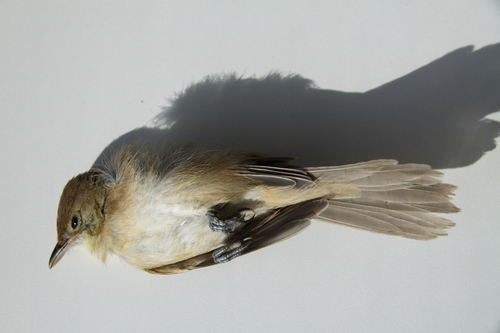 Thick-billed Warbler
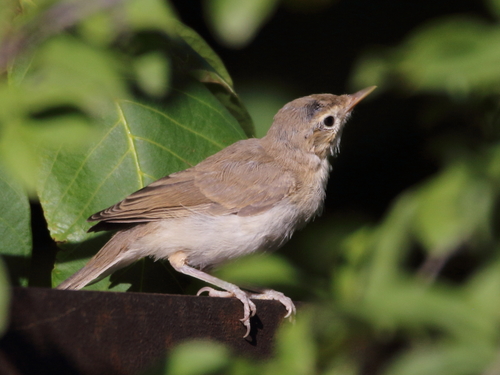 Eastern Olivaceous Warbler
In short
The most reliable way to separate Thick-billed Warbler from Eastern Olivaceous Warbler is by overall size and structure: Thick-billed is a much larger, bulkier bird with a distinctly short, thick bill and rounded forehead, while Eastern Olivaceous is noticeably smaller, slimmer, and longer-billed. Both species have plain brown upperparts and pale underparts, but Thick-billed Warbler appears more robust and lacks any obvious distinctive plumage marks, whereas Eastern Olivaceous is paler and sometimes shows a greenish tinge above. Juvenile birds of both species are buffier below, but size and structure remain the best clues. In flight or perched, focus on proportions and bill shape, as plumage is subtle and overlapping.
Identification tips
- Size is the most reliable field mark: Thick-billed Warbler is much larger and heavier than Eastern Olivaceous Warbler; use this especially when seen alongside other warblers or with experience.
- Bill shape and size: Thick-billed Warbler has a short, thick, and pointed bill with a rounded forehead, giving it a blunt-headed look; Eastern Olivaceous has a longer, slimmer, and more pointed bill, with a flatter crown.
- Overall structure: Thick-billed Warbler is bulkier and more robust, while Eastern Olivaceous is slender and delicate, both in body and head.
- Plumage tone: Both are plain brown above and pale below, but Eastern Olivaceous is paler and can show a greenish tinge above, especially in fresh plumage; Thick-billed is warmer brown and buffier below, especially in juveniles.
- Juvenile underparts: Juvenile Thick-billed Warblers are richer buff below, while juvenile Eastern Olivaceous are more buff on the belly but still paler overall.
- Wing pattern: Neither species shows strong wing panels, contrasting edges, or distinctive flight marks at any age; do not rely on wing pattern for separation.
- Tail behavior: Eastern Olivaceous Warbler often flicks its tail downward; this is not typical of Thick-billed Warbler and can be a useful behavioral clue.
- Song: If singing, Thick-billed Warbler's song is loud, fast, and full of mimicry and whistles; Eastern Olivaceous Warbler's song is a fast, nasal babble without mimicry.
- Habitat context: Both prefer dense vegetation, but breeding range is a clue—Thick-billed is an eastern species and a vagrant in the west, while Eastern Olivaceous is more western and southern in its breeding range.
- Sexes alike: Do not attempt to sex either species by plumage; both are monomorphic.
- Seasonal variation: Both species show richer buff tones below in juveniles, but otherwise little seasonal change; structure and size remain the best clues year-round.
- Pitfalls: Do not rely on subtle plumage differences alone; overlap is extensive and lighting can mislead. Focus on size, structure, and bill shape first.
- Flight views: In flight, Thick-billed Warbler will appear larger and bulkier, with a heavier head and shorter, thicker bill; Eastern Olivaceous will look slim and pointed.
- Perched views: Look for the rounded forehead and thick bill of Thick-billed versus the flatter crown and longer bill of Eastern Olivaceous.
- Vagrancy: If in western Europe, Thick-billed Warbler is extremely rare; Eastern Olivaceous is the expected species—use this only as a supporting clue, not as a primary identification feature.
Size
Thick-billed Warbler is a large warbler, nearly as big as Great Reed Warbler, with a body mass around 22g and a length of 16–17.5 cm. Eastern Olivaceous Warbler is distinctly smaller and slimmer, with a lighter build and more delicate proportions. The difference in size is often obvious in direct comparison or with experience, and is one of the most reliable field marks between these two species.
Plumage
Both species have plain brown upperparts and pale underparts, with minimal streaking or patterning. Thick-billed Warbler adults are unstreaked brown above and buff below, with a rounded forehead and short, thick bill; juveniles are richer buff below but otherwise similar. Eastern Olivaceous Warbler adults are pale brown above and whitish below, sometimes with a faint greenish tinge to the upperparts; juveniles are more buff on the belly. Neither species shows strong wing panels, contrasting edges, or distinctive flight marks at any age, so plumage differences are subtle and mostly limited to overall tone and underpart color in juveniles. Both sexes are alike in each species.
Behaviour
Eastern Olivaceous Warbler often flicks its tail downward in a characteristic manner, which can be a helpful behavioral clue. Thick-billed Warbler does not have a noted tail-flicking habit and tends to move more heavily through dense vegetation. Both species are skulking and prefer dense cover, but Thick-billed Warbler may appear bulkier and less agile than the more slender, active Eastern Olivaceous.
Habitat
Thick-billed Warbler breeds in dense vegetation such as reeds, bushes, and thick undergrowth in the temperate east Palearctic, and is a rare vagrant to western Europe. Eastern Olivaceous Warbler breeds in southeastern Europe, the Middle East, and western Asia, favoring similar dense habitats but with a more westerly core range. Both species winter far from their breeding grounds, but their breeding ranges rarely overlap. Habitat alone is not diagnostic, but context may help in vagrancy situations.
Voice
Thick-billed Warbler has a fast, loud song with much mimicry and acrocephaline whistles, somewhat reminiscent of Marsh Warbler. Eastern Olivaceous Warbler's song is a fast, nasal babbling, lacking the mimicry and variety of Thick-billed. While both are fast-paced, the presence of mimicry and whistles in Thick-billed is a useful clue if the bird is singing.
Thick-billed Warbler · Eastern Olivaceous Warbler · My Tricky Birds