

Motmot

Superb Starling vs Siberian Thrush

Lamprotornis superbus versus Geokichla sibirica

Play a quiz with Superb Starling and Siberian Thrush
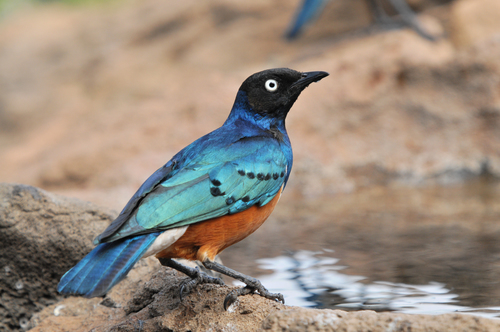
Superb Starling (Lamprotornis superbus) Superb Starling
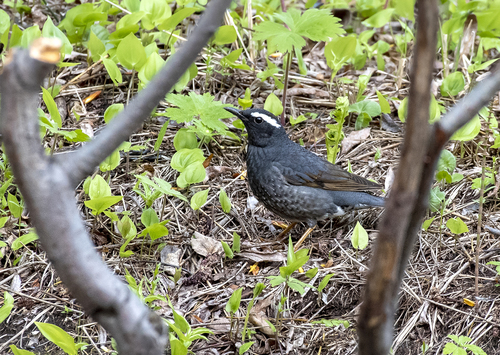
Siberian Thrush (Geokichla sibirica) Siberian Thrush

Media

Loading…

In short

The most reliable separation between Superb Starling and Siberian Thrush, especially in flight, is the underwing pattern: Siberian Thrush of all ages shows a distinctive black band across otherwise white underwings, while Superb Starling has white wing linings but lacks any black band. Perched, Superb Starling adults are unmistakable with their bold white breast band and red-orange belly, while Siberian Thrush lacks these colors entirely. Eye color is also key: adult Superb Starlings have pale creamy-white eyes, whereas Siberian Thrush has dark eyes. Both species are similar in size and mass, so focus on plumage and structural details for confident identification.

Identification tips

  1. Underwing pattern in flight: Siberian Thrush of all ages shows a black band on white underwings, visible in flight—unique and diagnostic. Superb Starling has white wing linings but no black band.
  2. White breast band: Adult Superb Starlings have a bold white breast band separating the blue breast from the red-orange belly. Siberian Thrush never shows this feature.
  3. Belly color: Superb Starling adults have a striking red-orange belly; Siberian Thrush lacks any such coloration.
  4. Eye color: Adult Superb Starlings have pale creamy-white eyes, while Siberian Thrush has dark eyes. Juvenile starlings start with brown eyes, turning pale with age—so beware of young birds.
  5. Head and upperparts: Superb Starling adults have a black head and iridescent blue-to-green back, wings, and tail. Siberian Thrush is more uniformly dark above, lacking the starling's metallic sheen.
  6. Juvenile confusion: Juvenile Superb Starlings are duller and may lack a clear white breast band, but still show some suggestion of it. Siberian Thrush juveniles do not show any starling-like color blocks.
  7. Tail and structure: Superb Starling is short-tailed and robust with a long, narrow bill. Siberian Thrush is more thrush-like, with a proportionally longer tail and less robust body.
  8. Behavior: Superb Starlings are often seen in groups, moving actively and confidently on the ground or in trees. Siberian Thrush is more solitary and ground-oriented, typical of thrushes.
  9. Flight style: Superb Starling's flight is direct and agile, often in flocks. Siberian Thrush has a more bounding, less hurried flight.
  10. Vocalizations: If heard, Superb Starling's loud trills, chatters, and harsh calls are distinctive. Siberian Thrush is quieter (not described in notes).
  11. Bill shape: Superb Starling has a long, narrow bill; Siberian Thrush has a typical thrush bill, shorter and stouter.
  12. Wing linings: Superb Starling has white wing linings visible in flight but lacks the black band of Siberian Thrush.
  13. Context: If seen in East Africa, Superb Starling is common and expected; Siberian Thrush is a rare vagrant in most of Africa.
  14. Sex differences: No strong sexual dimorphism is described for either species in the notes, so use age and plumage marks instead.
  15. Pitfalls: Beware of juvenile Superb Starlings lacking a clear white breast band and with brown eyes—check for the overall color pattern and structure, and look for the absence of the underwing black band.

Size

Both Superb Starling and Siberian Thrush are closely matched in size and weight, with body masses of about 65 grams each [wikidata]. Superb Starling is 18–19 cm in length [wikipedia], which is similar to the Siberian Thrush, noted as being about the size of a Song Thrush. Size alone is not a reliable separator in the field.

Plumage

Juvenile and adult Siberian Thrush of both sexes show a diagnostic black band on otherwise white underwings in flight—a feature not found in Superb Starling at any age. Superb Starling, including juveniles, has white wing linings but no black band. Perched, adult Superb Starlings are striking: black head, iridescent blue-green upperparts, white breast band, and red-orange belly. Juvenile Superb Starlings are duller, lacking the sharp white breast band, but still show some suggestion of it. Siberian Thrush, in contrast, lacks the starling's bold color blocks and instead has more subdued thrush-like plumage. Eye color is also a strong mark: adult Superb Starlings have pale creamy-white eyes, while Siberian Thrush has dark eyes. Superb Starling juveniles start with brown eyes, turning pale with age.

Behaviour

Superb Starlings are robust, short-tailed, and often move in flocks, showing strong feet and a jizz typical of starlings. Siberian Thrushes are ground-oriented thrushes, more solitary or in loose groups, and their flight is less direct than a starling's. In flight, the starling may appear more compact and agile, while the thrush's flight is more bounding and less hurried.

Habitat

No diagnostic habitat differences are described in the provided notes for field separation. Both species can occur in overlapping regions as vagrants, so habitat should not be relied upon for separation.

Voice

Superb Starling is notably vocal, with long, loud songs of trills and chatters, as well as harsh, complex calls. Siberian Thrush vocalizations are not described in the provided notes, so voice is only useful if you hear the starling's distinctive song or calls.

Submit a better description

Use the same sections as the comparison. Your text is published immediately.

The most reliable separation between Superb Starling and Siberian Thrush, especially in flight, is the underwing pattern: Siberian Thrush of all ages shows a distinctive black band across otherwise white underwings, while Superb Starling has white wing linings but lacks any black band. Perched, Superb Starling adults are unmistakable with their bold white breast band and red-orange belly, while Siberian Thrush lacks these colors entirely. Eye color is also key: adult Superb Starlings have pale creamy-white eyes, whereas Siberian Thrush has dark eyes. Both species are similar in size and mass, so focus on plumage and structural details for confident identification.

  1. Underwing pattern in flight: Siberian Thrush of all ages shows a black band on white underwings, visible in flight—unique and diagnostic. Superb Starling has white wing linings but no black band.
  2. White breast band: Adult Superb Starlings have a bold white breast band separating the blue breast from the red-orange belly. Siberian Thrush never shows this feature.
  3. Belly color: Superb Starling adults have a striking red-orange belly; Siberian Thrush lacks any such coloration.
  4. Eye color: Adult Superb Starlings have pale creamy-white eyes, while Siberian Thrush has dark eyes. Juvenile starlings start with brown eyes, turning pale with age—so beware of young birds.
  5. Head and upperparts: Superb Starling adults have a black head and iridescent blue-to-green back, wings, and tail. Siberian Thrush is more uniformly dark above, lacking the starling's metallic sheen.
  6. Juvenile confusion: Juvenile Superb Starlings are duller and may lack a clear white breast band, but still show some suggestion of it. Siberian Thrush juveniles do not show any starling-like color blocks.
  7. Tail and structure: Superb Starling is short-tailed and robust with a long, narrow bill. Siberian Thrush is more thrush-like, with a proportionally longer tail and less robust body.
  8. Behavior: Superb Starlings are often seen in groups, moving actively and confidently on the ground or in trees. Siberian Thrush is more solitary and ground-oriented, typical of thrushes.
  9. Flight style: Superb Starling's flight is direct and agile, often in flocks. Siberian Thrush has a more bounding, less hurried flight.
  10. Vocalizations: If heard, Superb Starling's loud trills, chatters, and harsh calls are distinctive. Siberian Thrush is quieter (not described in notes).
  11. Bill shape: Superb Starling has a long, narrow bill; Siberian Thrush has a typical thrush bill, shorter and stouter.
  12. Wing linings: Superb Starling has white wing linings visible in flight but lacks the black band of Siberian Thrush.
  13. Context: If seen in East Africa, Superb Starling is common and expected; Siberian Thrush is a rare vagrant in most of Africa.
  14. Sex differences: No strong sexual dimorphism is described for either species in the notes, so use age and plumage marks instead.
  15. Pitfalls: Beware of juvenile Superb Starlings lacking a clear white breast band and with brown eyes—check for the overall color pattern and structure, and look for the absence of the underwing black band.

Both Superb Starling and Siberian Thrush are closely matched in size and weight, with body masses of about 65 grams each [wikidata]. Superb Starling is 18–19 cm in length [wikipedia], which is similar to the Siberian Thrush, noted as being about the size of a Song Thrush. Size alone is not a reliable separator in the field.

Juvenile and adult Siberian Thrush of both sexes show a diagnostic black band on otherwise white underwings in flight—a feature not found in Superb Starling at any age. Superb Starling, including juveniles, has white wing linings but no black band. Perched, adult Superb Starlings are striking: black head, iridescent blue-green upperparts, white breast band, and red-orange belly. Juvenile Superb Starlings are duller, lacking the sharp white breast band, but still show some suggestion of it. Siberian Thrush, in contrast, lacks the starling's bold color blocks and instead has more subdued thrush-like plumage. Eye color is also a strong mark: adult Superb Starlings have pale creamy-white eyes, while Siberian Thrush has dark eyes. Superb Starling juveniles start with brown eyes, turning pale with age.

Superb Starlings are robust, short-tailed, and often move in flocks, showing strong feet and a jizz typical of starlings. Siberian Thrushes are ground-oriented thrushes, more solitary or in loose groups, and their flight is less direct than a starling's. In flight, the starling may appear more compact and agile, while the thrush's flight is more bounding and less hurried.

No diagnostic habitat differences are described in the provided notes for field separation. Both species can occur in overlapping regions as vagrants, so habitat should not be relied upon for separation.

Superb Starling is notably vocal, with long, loud songs of trills and chatters, as well as harsh, complex calls. Siberian Thrush vocalizations are not described in the provided notes, so voice is only useful if you hear the starling's distinctive song or calls.

Discard your changes?

You have unsaved edits. If you leave now, those changes will be lost.

Superb Starling · Siberian Thrush · My Tricky Birds