
Steppe Eagle vs Imperial Eagle
Aquila nipalensis versus Aquila heliaca
Play a quiz with Steppe Eagle and Imperial Eagle
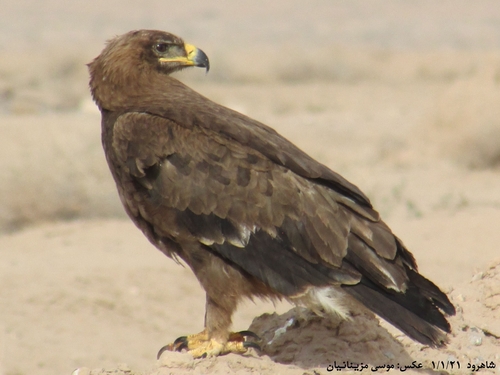 Steppe Eagle
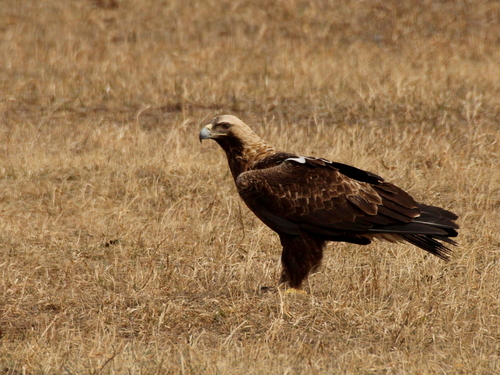 Imperial Eagle
In short
Juvenile Steppe Eagles and Imperial Eagles are most reliably separated by their wing and tail patterns in flight: juvenile Steppe Eagles show broad white tips to the greater coverts, wings, and tail, while juvenile Imperial Eagles have a unique tawny-buff base color with brownish streaking and strikingly pale primary wedges. Adults are trickier, but Steppe Eagles look bulkier and more robust, with a thick neck and small head, while Imperial Eagles are more slender with a proportionately larger head and longer neck. Perched, Steppe Eagles often appear upright and have notably well-feathered, almost shaggy legs. Use structure and facial features as much as plumage, since both species can be variable and overlap in overall brown tones.
Identification tips
- Juvenile wing/tail pattern: Juvenile Steppe Eagles show broad white tips to greater coverts, wings, and tail, and a narrow cream band on the median coverts; these pale tips are bold in first-years and wear down by the second winter. Juvenile Imperial Eagles are tawny-buff with brown streaking and show pale primary wedges in flight, with a dark mantle and chest band—never the broad white tips of Steppe.
- Nape patch: Both species can show a pale nape patch, but it is more pronounced and rufous-buff in eastern juvenile Steppe Eagles; Imperial juveniles have a more uniform tawny-buff with streaking.
- Adult mantle/shoulder: Adult Imperial Eagles have white spots on the wing mantle and a greyish under-tail, lacking in Steppe Eagles. Adult Steppe Eagles are variable brown with darker coverts and sometimes a pale nape patch.
- Facial structure: Steppe Eagles have a small head, thick neck, and a massive gape-line extending to the rear of the eye, giving a fierce expression. Imperial Eagles have a proportionately larger head and longer neck.
- Leg feathering: Steppe Eagles have very well-feathered, almost shaggy legs, more so than Imperial Eagles.
- Perched posture: Steppe Eagles perch upright and often look bulky and robust, while Imperial Eagles are more slender and less upright.
- Flight shape: Steppe Eagles are long-winged with a longish, rounded tail and more rectangular or squarish wing tips with longer, more conspicuous 'fingers.' Imperial Eagles are more slender, with a longer neck and head projection.
- Eye color: Adult Steppe Eagles have brown to hazel eyes; juveniles are distinctly dark brown. Eye color is less useful for Imperial Eagles in the field.
- Plumage wear: By second winter, Steppe Eagle immatures look scruffy and worn, with pale tips nearly gone; Imperial Eagle immatures retain more contrast and streaking.
- Ground behavior: Steppe Eagles are often seen standing or walking on the ground for long periods, with a horizontal posture and wingtips just exceeding the tail-tip.
- Habitat context: Both species use open country, but Steppe Eagles are more typical of treeless steppes, while Imperial Eagles may be near open woodlands or forest edges.
- Size impression: Steppe Eagles look bulkier and more robust, Imperial Eagles are heavier but appear more slender and long-necked.
- Approachability: Steppe Eagles can be relatively tame and approachable, more so than Imperial Eagles.
- Adult confusion: Adults of both species can be tricky; rely on structure, mantle/shoulder marks, and facial features rather than overall color.
- Pitfalls: Both species are variable and overlap in brown tones; always try to age the bird and check for distinctive juvenile or immature patterns in flight.
Size
Imperial Eagles are heavier on average (adult body mass ~3215 g) than Steppe Eagles (~2723 g), but in the field, Steppe Eagles often look bulkier and more robust, with a thick neck and a relatively small head. Imperial Eagles, while heavier, appear more slender and less powerful in build, with a proportionately larger head and longer neck. Both species are large eagles and size alone is not always reliable unless seen side by side.
Plumage
Juvenile Steppe Eagles (first and second years) are paler overall than adults, ranging from umber-brown to tawny-buff, and show conspicuous, broad white tips to the greater coverts, wings, and tail, plus a narrow cream band on the brown median coverts. Their rufous-buff nape patch is more pronounced in eastern birds. These pale tips wear down by the second winter, making immatures look scruffier and less contrasting. Juvenile Imperial Eagles are distinctive with a tawny-buff background heavily streaked with brown, a combination not seen in Steppe Eagles, and show pale primary wedges in flight, with a dark mantle and chest band, pale rear body, and blackish tail and remiges. Adults: Steppe Eagles are variable brown with darker centers to the greater coverts, sometimes with a pale nape patch (especially eastern birds), and have a massive gape-line extending to the rear of the eye. Imperial Eagles are darker overall, with adults showing white spots on the wing mantle and a greyish under-tail, features lacking in Steppe Eagles. Subadults and immatures of both species can be confusing, but Imperial Eagles tend to retain more contrast and streaking, while Steppe Eagles become scruffier and less marked as they age.
Behaviour
Steppe Eagles often perch upright in open areas, using isolated trees, posts, rocks, or mounds, and are frequently seen standing or walking on the ground with a horizontal posture and wingtips just exceeding the tail-tip. They can be relatively tame and approachable. Imperial Eagles are also often seen perched in open country but may appear more alert and less approachable. In flight, Steppe Eagles have a more powerful, deep, and labored aquiline flight, while Imperial Eagles are more slender and less bulky in the air.
Habitat
Both species are large eagles of open country in Eurasia, with overlapping wintering and migratory ranges in parts of Asia and Africa. Steppe Eagles are typically associated with open steppes and arid regions, often seen in wide, treeless landscapes. Imperial Eagles breed in southeastern Europe and central Asia, favoring open woodlands, forest edges, and steppe mosaics, but also winter in open habitats. Habitat alone is not diagnostic where ranges overlap.