

Motmot

Squacco Heron vs Malagasy Pond Heron

Ardeola ralloides versus Ardeola idae

Play a quiz with Squacco Heron and Malagasy Pond Heron
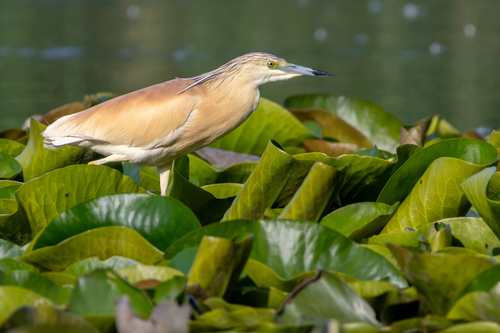
Squacco Heron (Ardeola ralloides) Squacco Heron

Malagasy Pond Heron (Ardeola idae) Malagasy Pond Heron

Media

Loading…

In short

The most reliable field separation between Squacco Heron and Malagasy Pond Heron is the adult breeding plumage: Malagasy Pond Heron becomes almost entirely snow white with a deep blue bill, while Squacco Heron retains a buff-brown back and only appears white in flight due to its wings. Non-breeding and immature birds are much trickier, as both species show tawny-buff and brown streaked plumage with white wings in flight, but subtle differences in bill color, streaking, and wingtip structure can help. Structural differences are minor, but Squacco Heron is slightly stockier with a thicker bill. Habitat overlap occurs in Africa, especially in mixed colonies, so context alone is not enough. Immature and non-breeding birds are the main pitfall, requiring close attention to bill color and subtle plumage details.

Identification tips

  1. Adult breeding plumage is the best separator: Malagasy Pond Heron is almost entirely snow white with a deep blue bill; Squacco Heron keeps a buff-brown back and long neck plumes, with only the wings white in flight.
  2. Non-breeding and immature birds are very similar: Both show tawny-buff and brown streaked plumage with white wings in flight. Use bill and eye color for clues.
  3. Bill color in non-breeding/immature birds: Malagasy Pond Heron has a green bill with a black tip (adults) or dull orange bill (juveniles); Squacco Heron has a shorter, thicker bill, usually duller and less green.
  4. Eye color in juveniles: Malagasy Pond Heron juveniles have pale green eyes, which can be a subtle but useful mark if seen well.
  5. Wing appearance in flight: Both look very white in flight due to white wings. Squacco Heron may show slightly narrower wingtips, but this is subtle and unreliable at distance.
  6. Back and crown color (non-breeding): Malagasy Pond Heron shows a mix of buff and black on the crown and back, while Squacco Heron is more uniformly buff-brown.
  7. Neck and breast plumes: In breeding, Malagasy Pond Heron develops dense plumes on neck and breast, but Squacco Heron also grows long neck feathers—look for overall body color (white vs buff-brown) as the main clue.
  8. Structure: Squacco Heron is stockier with a short, thick bill and shorter neck; Malagasy Pond Heron is similar but not as chunky—this is subtle and not always reliable.
  9. Behavior: Malagasy Pond Heron is more solitary and territorial, often keeping its distance from other herons, while Squacco Heron is more gregarious.
  10. Habitat context: If in Madagascar, Réunion, or Seychelles, Malagasy Pond Heron is much more likely; in southern Europe or the Middle East, it will be Squacco Heron. In Africa, both are possible but Malagasy Pond Heron is rare and localized.
  11. Mixed colonies: Both species can occur together in mixed heron colonies in Africa and Madagascar, so presence of the other species does not rule one out.
  12. Season: Malagasy Pond Heron is only in breeding plumage for a short period; outside this, rely on subtle bill and eye color differences.
  13. Pitfall: Do not rely on overall size or jizz—both are very similar and overlap in all measurements.
  14. Voice: No diagnostic vocal differences are noted in the sources.
  15. When in doubt: If you cannot see the bill color well or the bird is not in breeding plumage, identification may not be possible to species in the field—note all features and consider range and abundance.

Size

Both species are very similar in size, with Squacco Heron measuring 44–47 cm in length and a body mass around 288 g, while Malagasy Pond Heron is 45–50 cm tall and weighs 250–350 g. There is no significant sexual size difference in Malagasy Pond Heron. In the field, size is not a reliable separator; both appear as small, compact herons.

Plumage

Juvenile and non-breeding birds of both species are notoriously similar: both show a tawny-buff and brown-streaked appearance with white wings visible in flight. However, juvenile Malagasy Pond Heron has a dull orange bill and pale green eyes, while Squacco Heron juveniles have a smaller bill and lighter streaking. In flight, both look very white due to the wings, but Squacco Heron may show narrower wingtips. Adult breeding Malagasy Pond Heron is diagnostic: it turns almost entirely snow white with a deep azure blue bill, while Squacco Heron in breeding plumage keeps a buff-brown back and long neck plumes, with only the wings white in flight. Out of breeding, Malagasy Pond Heron transitions through an intermediate phase with dense neck and breast plumes and a mix of buff, black, and brown on the crown and back. Bill color is a key clue: non-breeding Malagasy Pond Heron has a green bill with a black tip, while Squacco Heron’s bill is shorter and thicker.

Behaviour

Both species are migratory and can be seen in mixed colonies, especially in Africa. Malagasy Pond Heron is notably more territorial and less social outside of breeding, often keeping a distance from conspecifics and other herons. Squacco Heron is more likely to be seen in small groups or loose colonies, often with other waders. Malagasy Pond Heron tends to forage inland and nest along the coast, while Squacco Heron prefers marshy wetlands and nests in trees or shrubs. Aggressive interactions are more commonly noted in Malagasy Pond Heron, but this is not a reliable field mark.

Habitat

Habitat overlap is common in Africa, especially at mixed heron colonies. Malagasy Pond Heron breeds in Madagascar, Réunion, and Seychelles, and winters in eastern Africa; Squacco Heron breeds in southern Europe and the Middle East, wintering in Africa. Both use wetlands, reedbeds, and marshes, but Malagasy Pond Heron may nest on coastal islands and forage further inland. Habitat alone is not diagnostic where ranges overlap, but Malagasy Pond Heron is much rarer and more localized.

Submit a better description

Use the same sections as the comparison. Your text is published immediately.

The most reliable field separation between Squacco Heron and Malagasy Pond Heron is the adult breeding plumage: Malagasy Pond Heron becomes almost entirely snow white with a deep blue bill, while Squacco Heron retains a buff-brown back and only appears white in flight due to its wings. Non-breeding and immature birds are much trickier, as both species show tawny-buff and brown streaked plumage with white wings in flight, but subtle differences in bill color, streaking, and wingtip structure can help. Structural differences are minor, but Squacco Heron is slightly stockier with a thicker bill. Habitat overlap occurs in Africa, especially in mixed colonies, so context alone is not enough. Immature and non-breeding birds are the main pitfall, requiring close attention to bill color and subtle plumage details.

  1. Adult breeding plumage is the best separator: Malagasy Pond Heron is almost entirely snow white with a deep blue bill; Squacco Heron keeps a buff-brown back and long neck plumes, with only the wings white in flight.
  2. Non-breeding and immature birds are very similar: Both show tawny-buff and brown streaked plumage with white wings in flight. Use bill and eye color for clues.
  3. Bill color in non-breeding/immature birds: Malagasy Pond Heron has a green bill with a black tip (adults) or dull orange bill (juveniles); Squacco Heron has a shorter, thicker bill, usually duller and less green.
  4. Eye color in juveniles: Malagasy Pond Heron juveniles have pale green eyes, which can be a subtle but useful mark if seen well.
  5. Wing appearance in flight: Both look very white in flight due to white wings. Squacco Heron may show slightly narrower wingtips, but this is subtle and unreliable at distance.
  6. Back and crown color (non-breeding): Malagasy Pond Heron shows a mix of buff and black on the crown and back, while Squacco Heron is more uniformly buff-brown.
  7. Neck and breast plumes: In breeding, Malagasy Pond Heron develops dense plumes on neck and breast, but Squacco Heron also grows long neck feathers—look for overall body color (white vs buff-brown) as the main clue.
  8. Structure: Squacco Heron is stockier with a short, thick bill and shorter neck; Malagasy Pond Heron is similar but not as chunky—this is subtle and not always reliable.
  9. Behavior: Malagasy Pond Heron is more solitary and territorial, often keeping its distance from other herons, while Squacco Heron is more gregarious.
  10. Habitat context: If in Madagascar, Réunion, or Seychelles, Malagasy Pond Heron is much more likely; in southern Europe or the Middle East, it will be Squacco Heron. In Africa, both are possible but Malagasy Pond Heron is rare and localized.
  11. Mixed colonies: Both species can occur together in mixed heron colonies in Africa and Madagascar, so presence of the other species does not rule one out.
  12. Season: Malagasy Pond Heron is only in breeding plumage for a short period; outside this, rely on subtle bill and eye color differences.
  13. Pitfall: Do not rely on overall size or jizz—both are very similar and overlap in all measurements.
  14. Voice: No diagnostic vocal differences are noted in the sources.
  15. When in doubt: If you cannot see the bill color well or the bird is not in breeding plumage, identification may not be possible to species in the field—note all features and consider range and abundance.

Both species are very similar in size, with Squacco Heron measuring 44–47 cm in length and a body mass around 288 g, while Malagasy Pond Heron is 45–50 cm tall and weighs 250–350 g. There is no significant sexual size difference in Malagasy Pond Heron. In the field, size is not a reliable separator; both appear as small, compact herons.

Juvenile and non-breeding birds of both species are notoriously similar: both show a tawny-buff and brown-streaked appearance with white wings visible in flight. However, juvenile Malagasy Pond Heron has a dull orange bill and pale green eyes, while Squacco Heron juveniles have a smaller bill and lighter streaking. In flight, both look very white due to the wings, but Squacco Heron may show narrower wingtips. Adult breeding Malagasy Pond Heron is diagnostic: it turns almost entirely snow white with a deep azure blue bill, while Squacco Heron in breeding plumage keeps a buff-brown back and long neck plumes, with only the wings white in flight. Out of breeding, Malagasy Pond Heron transitions through an intermediate phase with dense neck and breast plumes and a mix of buff, black, and brown on the crown and back. Bill color is a key clue: non-breeding Malagasy Pond Heron has a green bill with a black tip, while Squacco Heron’s bill is shorter and thicker.

Both species are migratory and can be seen in mixed colonies, especially in Africa. Malagasy Pond Heron is notably more territorial and less social outside of breeding, often keeping a distance from conspecifics and other herons. Squacco Heron is more likely to be seen in small groups or loose colonies, often with other waders. Malagasy Pond Heron tends to forage inland and nest along the coast, while Squacco Heron prefers marshy wetlands and nests in trees or shrubs. Aggressive interactions are more commonly noted in Malagasy Pond Heron, but this is not a reliable field mark.

Habitat overlap is common in Africa, especially at mixed heron colonies. Malagasy Pond Heron breeds in Madagascar, Réunion, and Seychelles, and winters in eastern Africa; Squacco Heron breeds in southern Europe and the Middle East, wintering in Africa. Both use wetlands, reedbeds, and marshes, but Malagasy Pond Heron may nest on coastal islands and forage further inland. Habitat alone is not diagnostic where ranges overlap, but Malagasy Pond Heron is much rarer and more localized.

Discard your changes?

You have unsaved edits. If you leave now, those changes will be lost.

Squacco Heron · Malagasy Pond Heron · My Tricky Birds