
Spotted Flycatcher vs Semicollared Flycatcher
Muscicapa striata versus Ficedula semitorquata
Play a quiz with Spotted Flycatcher and Semicollared Flycatcher
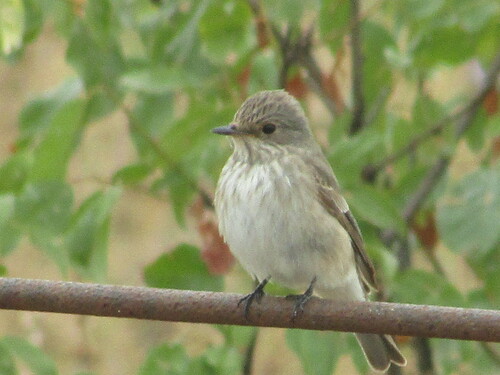 Spotted Flycatcher
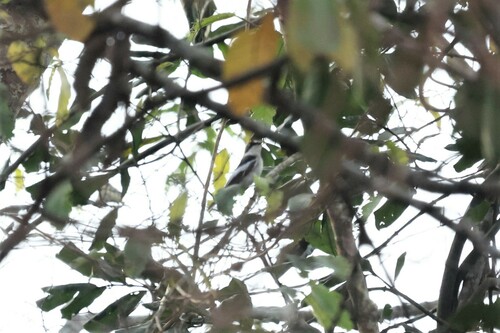 Semicollared Flycatcher
In short
The most reliable separation between Spotted Flycatcher and Semicollared Flycatcher is in the adults’ plumage: Spotted Flycatcher is a plain, streaky, grey-brown bird with no bold wing or head markings, while adult male Semicollared Flycatcher is strikingly black-and-white with a large white wing patch, a white forehead, and a partial white collar. Immature and female Semicollared Flycatchers are trickier, but still show more contrast and often a white median covert bar, unlike the Spotted Flycatcher’s overall plainness. Spotted Flycatcher is longer-tailed and slimmer, with a more upright, alert jizz and lacks any strong white in the wing or tail. Both species are migratory Old World flycatchers, but their structure, wing pattern, and head markings are key in the field.
Identification tips
- Juvenile/immature wing pattern: Spotted Flycatcher juveniles are brown with ochre-buff spots above and scaly brown below, but never show a white wing bar or bold white tertial edges. Juvenile/female Semicollared Flycatchers often have a white median covert bar and narrow white tertial edges—look for these in perched birds or in flight.
- Adult male contrast: Adult male Semicollared Flycatcher is unmistakable—black above, white below, with a large white wing patch, white forehead, and partial white collar. Spotted Flycatcher is always plain grey-brown with fine streaks, lacking any bold white.
- Tail pattern: Semicollared Flycatcher (all ages) shows white on the tail sides, especially in flight; Spotted Flycatcher’s tail is plain brown with thin pale edges.
- Wing patch: Semicollared Flycatcher (especially adult males) has a large white wing patch and white bar on the median coverts. Spotted Flycatcher never shows a white wing patch—its wings are plain with only thin pale margins.
- Head markings: Spotted Flycatcher has fine brown streaks on the crown, throat, and breast; Semicollared Flycatcher (adult male) has a bold white forehead patch and partial collar, lacking streaks.
- Overall color and contrast: Spotted Flycatcher is dull grey-brown and off-white, with a streaky, undistinguished look. Semicollared Flycatcher (even in female/immature plumage) is paler brown above but often with more contrast and white in the wing.
- Structure and jizz: Spotted Flycatcher is longer-tailed, slimmer, and perches upright and alert. Semicollared is more compact and short-tailed, with a less upright stance.
- Bill: Both have broad-based, pointed bills typical of flycatchers; not a strong separator.
- Habitat: Spotted Flycatcher is common in open woods, gardens, and parks across much of Europe. Semicollared is restricted to montane deciduous forests in SE Europe and is rare elsewhere.
- Behavior: Spotted Flycatcher often returns to the same perch after sallying for insects. Semicollared also hunts from perches but is more tied to woodland interiors.
- Voice: Spotted Flycatcher’s call is a thin, descending 'tssssseeeeeppppp.' Semicollared’s song is more complex, with slow whistles. Calls are subtle and not usually diagnostic in the field.
- Season and range: Outside the Balkans and adjacent regions, Semicollared is a rarity. In most of Europe, a streaky, plain flycatcher is almost certainly Spotted.
- Sex differences: Both species have similar female and immature plumages, but only Semicollared shows the white covert bar and tail sides.
- Pitfalls: Female/immature Semicollared can look drab and brown, but the white covert bar and tertial edges are clues. Spotted Flycatcher never shows these white marks.
- In flight: Look for white in the wing and tail for Semicollared; Spotted Flycatcher’s flight is plain, with no bold white.
Size
Spotted Flycatcher is slightly larger, measuring about 14.5 cm in length and weighing 14–20 g [wikipedia], while Semicollared Flycatcher is a bit smaller at 12–13.5 cm [wikipedia]. The difference is subtle and not always obvious in the field, but Spotted Flycatcher often appears longer-tailed and slimmer, while Semicollared Flycatcher is more compact and short-tailed. Both have a typical flycatcher bill, broad-based and pointed.
Plumage
For juveniles and immatures: Spotted Flycatcher juveniles are brownish above with ochre-buff spots and scaly brown spots below, giving a mottled, streaky look. They lack any bold white wing or tail markings. Juvenile and female Semicollared Flycatchers are pale brown above, but often show a white bar on the median coverts and narrower white edges to the tertials, features that Spotted Flycatcher never shows. In flight, Semicollared Flycatcher (all ages) can show white on the tail sides and a pale wing patch, while Spotted Flycatcher’s wings are plain with only thin pale edges.
In adult plumage: Spotted Flycatcher is grey-brown above, off-white below, with fine brown streaks on the crown, throat, and breast, and no bold white markings. Semicollared Flycatcher adult males are black above and white below, with a large white wing patch, white forehead, partial white collar, and white tail sides. Non-breeding males and females are browner but still show more contrast and often retain the white wing bar. Spotted Flycatcher remains plain and streaky throughout the year.
Behaviour
Spotted Flycatcher typically perches upright and exposed, making repeated sallies after flying insects and returning to the same perch. Its jizz is upright, slim, and alert. Semicollared Flycatcher also hunts from perches but is more likely to be found in woodland interiors and can appear more compact and less upright. Both species are aerial insectivores, but Spotted Flycatcher is more likely to be seen in open or edge habitats, while Semicollared prefers deciduous mountain forests.
Habitat
Spotted Flycatcher breeds widely across Europe and the Palearctic, often in open woodland, parks, gardens, and forest edges. It is more likely to be seen in human-modified landscapes. Semicollared Flycatcher is more restricted, breeding in montane deciduous forests (especially oak and hornbeam) of southeastern Europe to NW Iran, and is rare outside this range. In western Europe, Semicollared is a rare vagrant. If you are in a city park or lowland garden, Spotted Flycatcher is much more likely; in mature mountain woodland, especially in the Balkans, Semicollared is possible.
Voice
Spotted Flycatcher’s call is a thin, drawn-out, high-pitched 'tssssseeeeeppppp,' slightly descending. Semicollared Flycatcher’s song is intermediate between Collared and Pied Flycatchers, with slow, strained whistles and some rhythmic elements. Calls are not a strong field separator unless you are familiar with the subtle differences.
Spotted Flycatcher · Semicollared Flycatcher · My Tricky Birds