
Splendid Starling vs Superb Starling
Lamprotornis splendidus versus Lamprotornis superbus
Play a quiz with Splendid Starling and Superb Starling
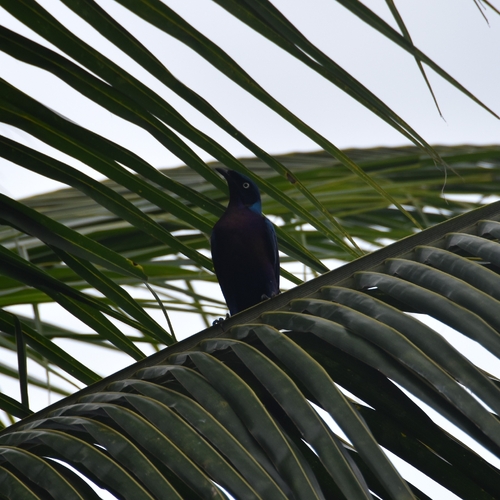 Splendid Starling
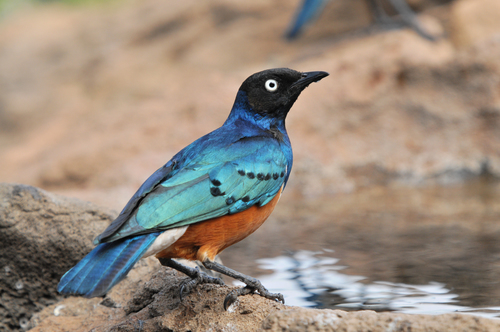 Superb Starling
In short
The most reliable field mark between Splendid Starling and Superb Starling is the Superb Starling’s distinctive plumage: adults show a black head, iridescent blue-green upperparts, a bold white breast band, and a rich red-orange belly, while Splendid Starling lacks the white breast band and red belly. Superb Starling is also much smaller and lighter than Splendid Starling, with a noticeably shorter tail and more compact structure. Juvenile Superb Starlings are duller and lack the full white band, which can cause confusion, but their smaller size and structural differences remain helpful. In flight or perched, focus on the combination of size, belly color, and the presence or absence of the white breast band for the best separation.
Identification tips
- Size: Splendid Starling is almost twice as heavy as Superb Starling; use overall bulk and length as a quick check, especially if birds are seen side by side or with other starlings for scale.
- Tail Length and Shape: Superb Starling has a noticeably shorter tail compared to the longer, more robust tail of Splendid Starling. This is most apparent when perched or in flight.
- Head Color: Adult Superb Starlings have a black head that contrasts sharply with the iridescent blue-green upperparts. Splendid Starling’s head is more uniformly glossy and does not show this strong contrast.
- Breast Band: The white breast band is a key mark for adult Superb Starling. Splendid Starling never shows a white breast band.
- Belly Color: Superb Starling’s belly is a rich red-orange, sharply separated from the blue breast by the white band. Splendid Starling’s underparts are more uniformly dark or glossy, lacking the red-orange belly.
- Juvenile Pitfall: Juvenile Superb Starlings lack the white breast band and are duller overall, which can make them resemble Splendid Starling. In these cases, rely more on size, structure, and the absence of strong underpart color separation.
- Eye Color: Adult Superb Starlings have pale, creamy-white eyes, while juveniles have brown eyes. Eye color is not described for Splendid Starling in the notes, so use with caution.
- Underwing and Undertail: Superb Starling has white undertail coverts and wing linings, which may be visible in flight or when preening. Splendid Starling does not show this pattern.
- Bill Structure: Superb Starling has a long, narrow bill; Splendid Starling’s bill is not described as distinctive, but its larger size may make the bill appear more robust.
- Jizz: Superb Starling appears more compact and agile, while Splendid Starling is bulkier and more solid in build.
- Vocalizations: If you hear a long, loud song of trills and chatters, it is likely Superb Starling, but absence of vocal description for Splendid Starling means this is not a primary mark.
- Flock Structure: Both species may be seen in mixed starling flocks; use size and plumage to pick them out.
- Perched vs. Flight Views: The white breast band and red-orange belly of Superb Starling are visible both perched and in flight, making these marks reliable in most viewing conditions.
- No Seasonal or Sex Differences: No seasonal or sex-based plumage differences are described for either species, so these marks are reliable year-round.
- Common Pitfall: Immature Superb Starlings are the most likely to be confused with Splendid Starling; in these cases, size and structure are your best clues.
Size
Splendid Starling is nearly twice as heavy as Superb Starling (125 g vs 65.5 g), making it a much bulkier bird in the field. Superb Starling is a small, short-tailed starling, while Splendid Starling appears larger and more robust overall. When seen together or with other starlings for scale, the size difference is usually obvious, especially in direct comparison.
Plumage
- Juvenile/Immature: Juvenile Superb Starlings are duller overall and lack the clear white breast band and red-orange belly of adults; their eyes are brown rather than pale. This can make them superficially similar to Splendid Starling, but they still tend to be smaller and more compact. No distinctive age-specific wing pattern is described for either species.
- Adult: Adult Superb Starlings are striking with a black head, iridescent blue-to-green back, upper breast, wings, and tail, a bold white breast band, and a red-orange belly. The undertail coverts and wing linings are white. Splendid Starling, in contrast, lacks the white breast band and red-orange belly; its underparts are more uniformly dark or glossy, and the overall impression is of a glossy blue-green bird without strong color separation on the underparts.
Behaviour
Both species are typical starlings in behavior, often seen in flocks and foraging on the ground or in trees. Superb Starling may appear more active and agile due to its smaller size and shorter tail, while Splendid Starling’s larger size gives it a more robust, less sprightly jizz. No major behavioral differences are noted that are diagnostic for field separation.
Voice
Superb Starling is noted for its long, loud song of trills and chatters, and several harsh, complex calls. No vocal description is provided for Splendid Starling, so voice is not reliably diagnostic between these two based on the available notes.