

Motmot

Southern Rockhopper Penguin vs Fluttering Shearwater

Eudyptes chrysocome versus Puffinus gavia

Play a quiz with Southern Rockhopper Penguin and Fluttering Shearwater
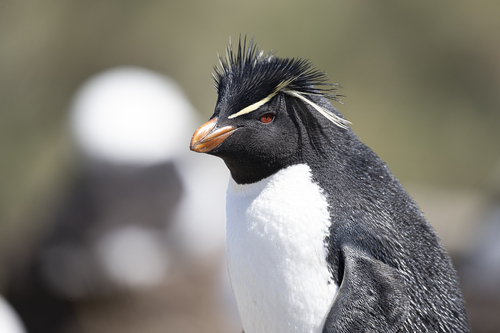
Southern Rockhopper Penguin (Eudyptes chrysocome) Southern Rockhopper Penguin
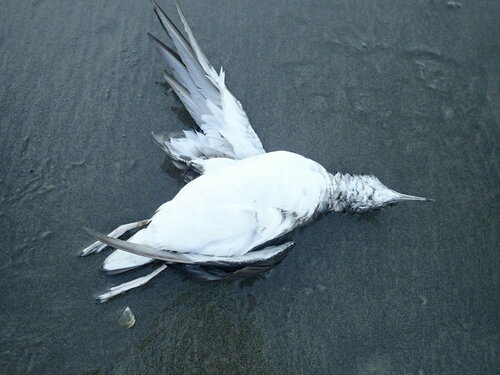
Fluttering Shearwater (Puffinus gavia) Fluttering Shearwater

Media

Loading…

In short

The most reliable way to separate Southern Rockhopper Penguin from Fluttering Shearwater is by overall structure and behavior: Rockhopper Penguins are chunky, upright, flightless birds with short flipper-like wings, while Fluttering Shearwaters are slender, long-winged seabirds that fly low over water with rapid wingbeats. In flight, Fluttering Shearwaters show a distinctive dark upperwing and white underwing with a dark thigh patch, while Rockhopper Penguins never fly and are only seen swimming or walking. Juvenile shearwaters resemble adults but have paler wing covert edges, while penguin chicks are covered in thick down. If you see a bird leaping across rocks or standing upright on land, it's a penguin; if it's flying, it's a shearwater.

Identification tips

  1. Flight ability: If the bird is flying, it is a Fluttering Shearwater; Southern Rockhopper Penguins are completely flightless at all ages.
  2. Posture on land: Penguins stand upright and waddle or hop over rocks; shearwaters, when on land, sit horizontally and never hop upright.
  3. Wing structure: Penguins have short, stiff, paddle-like flippers with no visible flight feathers; shearwaters have long, pointed wings with clear feathering and can be seen flapping or gliding.
  4. Upperwing in flight (shearwater only): Fluttering Shearwater shows dark brown upperwings above and mostly white underwings with a dark thigh patch; penguins never show this pattern because they do not fly.
  5. Underparts: Both species are white below, but the penguin's white belly is sharply demarcated from the black back, while the shearwater's white extends from chin to undertail with a softer transition and a dark thigh patch.
  6. Tail shape: Shearwater has a short, fan-shaped tail with mixed dark and white; penguin tail is short and not fan-shaped, usually not prominent.
  7. Bill: Penguin has a heavy, thick bill; shearwater's bill is long, thin, and dark.
  8. Legs and feet: Shearwater's pinkish-brown legs and feet extend beyond the tail in flight; penguin's legs are short and set far back, never visible in flight (since they do not fly).
  9. Crest: Adult Rockhopper Penguins have yellow crest feathers above the eyes; shearwaters lack any crest at all ages.
  10. Juvenile plumage: Young shearwaters resemble adults but with paler wing covert edges; penguin chicks are covered in thick down and are never seen flying.
  11. Moult: Shearwaters in moult look paler and ragged but keep the same pattern; penguins also moult but remain flightless and upright.
  12. Vocalization: Any call from a flying bird is a shearwater; penguins vocalize only at colonies and never in flight.
  13. Habitat and range: In New Zealand or Australia, a flying seabird is a shearwater; penguins are only found in southern South America and nearby subantarctic islands.
  14. Behavior at sea: Shearwaters fly low and fast over water; penguins swim with only the head and back visible, never flying.
  15. Group behavior: Penguins often move in tight, upright groups on land; shearwaters are seen singly or in loose flocks flying over water.

Size

Southern Rockhopper Penguin is much heavier and bulkier, with an adult mass around 2470 g [wikidata], compared to the Fluttering Shearwater's 243–302 g [wikipedia]. The penguin is a stout, upright bird with a thickset body, while the shearwater is slim, streamlined, and built for flight. The difference in size and build is dramatic and should be obvious at any distance.

Plumage

Plumage differences are stark. Adult Fluttering Shearwater has dark brown upperparts (including wings and tail), a white underside, and a distinctive dark thigh patch visible in flight. The underwing is mostly white with a grey-brown axillary area, and the tail is short and fan-shaped with mixed dark and white. Juveniles are similar but with paler edges to wing coverts. Southern Rockhopper Penguin, in contrast, is overall black above and white below, with no flight feathers adapted for flight; their wings are stiff, paddle-like flippers. Chicks are covered in thick slate-colored down above and white below (shearwater) or thick down (penguin), but only the penguin chick is truly flightless and waddles. Adult penguins have yellow crest feathers (not present in shearwater at any age). Moulting Fluttering Shearwaters appear paler and ragged, but still retain the same pattern of dark upperparts and white underparts, unlike the penguin's sharply demarcated tuxedo pattern.

Behaviour

Behavior is a key separator. Southern Rockhopper Penguins are flightless, moving on land by hopping over rocks or swimming with flipper strokes. They are often seen in dense colonies on rocky shores, standing upright. Fluttering Shearwaters are highly aerial, flying low and fast over the sea with rapid wingbeats and glides, rarely seen on land except at breeding colonies. Shearwaters dive for food using their wings underwater, but their foraging is much more pelagic and less tied to land than penguins. Penguins never fly; shearwaters never stand upright or hop on rocks like penguins.

Habitat

Southern Rockhopper Penguin breeds and forages around subantarctic South America and nearby islands, always associated with rocky coastlines and cold waters [wikipedia]. Fluttering Shearwater is endemic to New Zealand, breeding on offshore islands and migrating to Australia and the Solomon Islands. Shearwaters are seen at sea or near rocky shores but are rarely encountered on land except at colonies. If seen in New Zealand or Australia, a flying bird is almost certainly a shearwater; a penguin would be out of range except in southern South America.

Voice

Fluttering Shearwater has a distinctive, disjointed call described as 'ka-hek-ka-hek-ka-hek,' usually given in flight. Southern Rockhopper Penguin's vocalizations are not described in the provided notes, but penguin calls are typically braying or trumpeting sounds given at colonies, not in flight. Any call heard from a flying bird is diagnostic for shearwater.

Submit a better description

Use the same sections as the comparison. Your text is published immediately.

The most reliable way to separate Southern Rockhopper Penguin from Fluttering Shearwater is by overall structure and behavior: Rockhopper Penguins are chunky, upright, flightless birds with short flipper-like wings, while Fluttering Shearwaters are slender, long-winged seabirds that fly low over water with rapid wingbeats. In flight, Fluttering Shearwaters show a distinctive dark upperwing and white underwing with a dark thigh patch, while Rockhopper Penguins never fly and are only seen swimming or walking. Juvenile shearwaters resemble adults but have paler wing covert edges, while penguin chicks are covered in thick down. If you see a bird leaping across rocks or standing upright on land, it's a penguin; if it's flying, it's a shearwater.

  1. Flight ability: If the bird is flying, it is a Fluttering Shearwater; Southern Rockhopper Penguins are completely flightless at all ages.
  2. Posture on land: Penguins stand upright and waddle or hop over rocks; shearwaters, when on land, sit horizontally and never hop upright.
  3. Wing structure: Penguins have short, stiff, paddle-like flippers with no visible flight feathers; shearwaters have long, pointed wings with clear feathering and can be seen flapping or gliding.
  4. Upperwing in flight (shearwater only): Fluttering Shearwater shows dark brown upperwings above and mostly white underwings with a dark thigh patch; penguins never show this pattern because they do not fly.
  5. Underparts: Both species are white below, but the penguin's white belly is sharply demarcated from the black back, while the shearwater's white extends from chin to undertail with a softer transition and a dark thigh patch.
  6. Tail shape: Shearwater has a short, fan-shaped tail with mixed dark and white; penguin tail is short and not fan-shaped, usually not prominent.
  7. Bill: Penguin has a heavy, thick bill; shearwater's bill is long, thin, and dark.
  8. Legs and feet: Shearwater's pinkish-brown legs and feet extend beyond the tail in flight; penguin's legs are short and set far back, never visible in flight (since they do not fly).
  9. Crest: Adult Rockhopper Penguins have yellow crest feathers above the eyes; shearwaters lack any crest at all ages.
  10. Juvenile plumage: Young shearwaters resemble adults but with paler wing covert edges; penguin chicks are covered in thick down and are never seen flying.
  11. Moult: Shearwaters in moult look paler and ragged but keep the same pattern; penguins also moult but remain flightless and upright.
  12. Vocalization: Any call from a flying bird is a shearwater; penguins vocalize only at colonies and never in flight.
  13. Habitat and range: In New Zealand or Australia, a flying seabird is a shearwater; penguins are only found in southern South America and nearby subantarctic islands.
  14. Behavior at sea: Shearwaters fly low and fast over water; penguins swim with only the head and back visible, never flying.
  15. Group behavior: Penguins often move in tight, upright groups on land; shearwaters are seen singly or in loose flocks flying over water.

Southern Rockhopper Penguin is much heavier and bulkier, with an adult mass around 2470 g [wikidata], compared to the Fluttering Shearwater's 243–302 g [wikipedia]. The penguin is a stout, upright bird with a thickset body, while the shearwater is slim, streamlined, and built for flight. The difference in size and build is dramatic and should be obvious at any distance.

Plumage differences are stark. Adult Fluttering Shearwater has dark brown upperparts (including wings and tail), a white underside, and a distinctive dark thigh patch visible in flight. The underwing is mostly white with a grey-brown axillary area, and the tail is short and fan-shaped with mixed dark and white. Juveniles are similar but with paler edges to wing coverts. Southern Rockhopper Penguin, in contrast, is overall black above and white below, with no flight feathers adapted for flight; their wings are stiff, paddle-like flippers. Chicks are covered in thick slate-colored down above and white below (shearwater) or thick down (penguin), but only the penguin chick is truly flightless and waddles. Adult penguins have yellow crest feathers (not present in shearwater at any age). Moulting Fluttering Shearwaters appear paler and ragged, but still retain the same pattern of dark upperparts and white underparts, unlike the penguin's sharply demarcated tuxedo pattern.

Behavior is a key separator. Southern Rockhopper Penguins are flightless, moving on land by hopping over rocks or swimming with flipper strokes. They are often seen in dense colonies on rocky shores, standing upright. Fluttering Shearwaters are highly aerial, flying low and fast over the sea with rapid wingbeats and glides, rarely seen on land except at breeding colonies. Shearwaters dive for food using their wings underwater, but their foraging is much more pelagic and less tied to land than penguins. Penguins never fly; shearwaters never stand upright or hop on rocks like penguins.

Southern Rockhopper Penguin breeds and forages around subantarctic South America and nearby islands, always associated with rocky coastlines and cold waters [wikipedia]. Fluttering Shearwater is endemic to New Zealand, breeding on offshore islands and migrating to Australia and the Solomon Islands. Shearwaters are seen at sea or near rocky shores but are rarely encountered on land except at colonies. If seen in New Zealand or Australia, a flying bird is almost certainly a shearwater; a penguin would be out of range except in southern South America.

Fluttering Shearwater has a distinctive, disjointed call described as 'ka-hek-ka-hek-ka-hek,' usually given in flight. Southern Rockhopper Penguin's vocalizations are not described in the provided notes, but penguin calls are typically braying or trumpeting sounds given at colonies, not in flight. Any call heard from a flying bird is diagnostic for shearwater.

Discard your changes?

You have unsaved edits. If you leave now, those changes will be lost.

Southern Rockhopper Penguin · Fluttering Shearwater · My Tricky Birds