

Motmot

Southern Fiscal vs Common Bulbul

Lanius collaris versus Pycnonotus barbatus

Play a quiz with Southern Fiscal and Common Bulbul
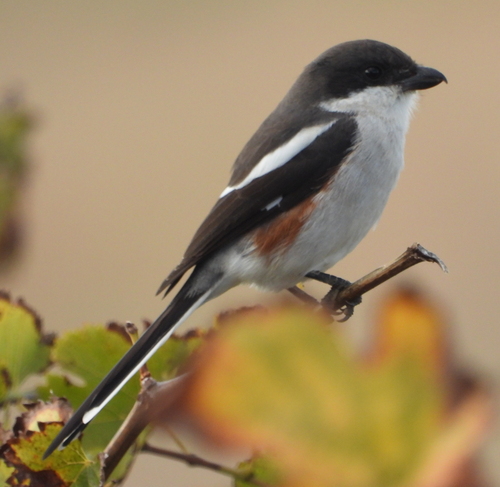
Southern Fiscal (Lanius collaris) Southern Fiscal
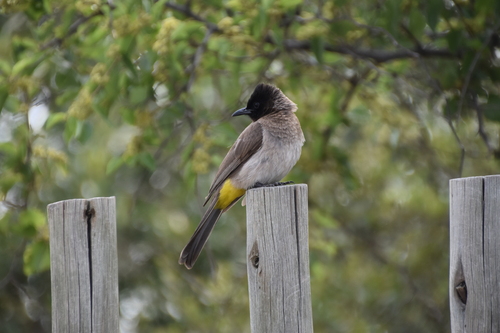
Common Bulbul (Pycnonotus barbatus) Common Bulbul

Media

Loading…

In short

The most reliable way to separate Southern Fiscal from Common Bulbul is by focusing on plumage pattern: Southern Fiscal shows striking black-and-white contrast with a bold white 'V' on the back and white in the tail, while Common Bulbul is more uniformly brownish with dull grey underparts and lacks any sharp white markings. Southern Fiscal has a heavier, shrike-like bill and a longer tail with white outer feathers, compared to the Bulbul's shorter, thinner bill and plain, long tail. Both are similar in size, but their structure and coloration make confusion avoidable with good views. Voice and behavior can help, but plumage and structure are the most decisive in the field.

Identification tips

  1. Look for the white 'V' on the back: present only in Southern Fiscal, never in Common Bulbul. This is visible when perched and sometimes in flight.
  2. Tail pattern: Southern Fiscal has a long black tail with white outer feathers and white tips; Common Bulbul's tail is plain brown or dark, sometimes with yellow undertail coverts in some subspecies, but never with white edges or tips.
  3. Bill shape: Fiscal's bill is thick, strong, and hooked at the tip (shrike-like), while Bulbul's is shorter, thinner, and slightly downcurved, more suited to fruit and insects.
  4. Overall coloration: Southern Fiscal is sharply black above and white below; Common Bulbul is brown above and dull grey below, lacking sharp contrast.
  5. Head pattern: Fiscal's head is black, blending into the back; Bulbul's head is dark brown, but not as sharply set off from the body, and lacks a mask or bold pattern.
  6. Rufous flanks: Only female Southern Fiscal may show a rufous tinge on the lower flanks; Bulbul never shows this.
  7. Eye-ring: Bulbul has a dark eye-ring, but it is not usually visible in the field; Fiscal's eye is black with no ring.
  8. Perching behavior: Fiscals often sit upright and exposed, returning to the same perch; Bulbuls are more restless, moving through foliage and less likely to perch in the open for long.
  9. Feeding behavior: Fiscal may be seen impaling prey on thorns or barbed wire; Bulbul feeds on fruit and insects, never impales prey.
  10. Vocalizations: Fiscal's calls are harsh and mechanical; Bulbul's are loud, musical, and repetitive. Listen for the 'doctor-quick' phrase for Bulbul.
  11. Habitat context: In very open, thorny areas, Fiscal is more likely; in gardens or denser vegetation, Bulbul is more likely.
  12. Flight style: Fiscal tends to fly in short, direct bursts between perches; Bulbul's flight is more fluttery and less direct.
  13. Sex and age: Both species' sexes are similar, but only female Fiscal may show rufous flanks. No juvenile or immature-specific marks are described for either species in the provided notes.
  14. Confusion risk: At a distance or in poor light, Bulbul's dark head and long tail can suggest Fiscal, but the lack of white in the tail and back, and the overall brown/grey coloration, are reliable separators.
  15. When in doubt: Focus on the presence or absence of sharp black-and-white contrasts and the bill shape—these are the most consistent field marks for all ages and seasons.

Size

Southern Fiscal is slightly heavier (40.0g) than Common Bulbul (35.05g) [wikidata], but both are similar in overall length (Fiscal: 21–23 cm; Bulbul: 18–20 cm) [wikipedia]. In the field, size alone is not a strong separator, as both appear medium-sized for passerines. Instead, focus on structure and plumage.

Plumage

No age-specific upperwing or flight pattern marks are described for either species, so focus on overall coloration. Adult Southern Fiscal is sharply marked: black upperparts (including head and back), white underparts, and a distinctive white 'V' across the back. The tail is long, black, with white outer feathers and white tips on the other feathers. Female Fiscals may show a rufous tinge on the lower flanks, but this is subtle. In contrast, Common Bulbul is much plainer: dark brown head, brown upperparts, dull grey underparts, and a long tail that lacks white markings, though some subspecies have yellow undertail coverts. The Bulbul's bill is shorter and thinner, and the eye-ring is dark and not easily seen. Both sexes of Bulbul look similar; Southern Fiscal sexes are also similar except for the female's possible rufous flank. No seasonal or age-related plumage differences are noted for either species in the provided sources.

Behaviour

Southern Fiscal is often seen perched conspicuously on exposed branches, wires, or posts, scanning for prey, and is known for impaling prey on thorns. Its upright stance and habit of returning to the same perch are distinctive. Common Bulbul is more likely to be seen foraging in pairs or small groups, moving through foliage, and is less likely to perch in the open for long periods. Bulbuls are generally more active and less stationary than Fiscals.

Habitat

Both species are widespread in Africa, but Southern Fiscal favors open habitats with scattered trees, bush, or fence lines, often near human habitation. It prefers perches with a clear view. Common Bulbul is more of a generalist, found in gardens, woodland edges, and a variety of habitats except the most arid regions. Bulbuls are more likely in denser vegetation or urban gardens, while Fiscals prefer open, semi-arid areas with perches.

Voice

Southern Fiscal gives a mix of harsh, shrike-like calls: a jumbled swizzling, and a distinctive harsh 'Dzzzttt-dzzzt-dzzzt' alarm. Its song, though sweet at times, is generally quiet and used for territory or pair-bonding. Common Bulbul is much more vocal, with a loud, ringing 'doctor-quick doctor-quick be-quick be-quick' call. Bulbul calls are more musical and repetitive, while Fiscal calls are harsher and less melodic.

Submit a better description

Use the same sections as the comparison. Your text is published immediately.

The most reliable way to separate Southern Fiscal from Common Bulbul is by focusing on plumage pattern: Southern Fiscal shows striking black-and-white contrast with a bold white 'V' on the back and white in the tail, while Common Bulbul is more uniformly brownish with dull grey underparts and lacks any sharp white markings. Southern Fiscal has a heavier, shrike-like bill and a longer tail with white outer feathers, compared to the Bulbul's shorter, thinner bill and plain, long tail. Both are similar in size, but their structure and coloration make confusion avoidable with good views. Voice and behavior can help, but plumage and structure are the most decisive in the field.

  1. Look for the white 'V' on the back: present only in Southern Fiscal, never in Common Bulbul. This is visible when perched and sometimes in flight.
  2. Tail pattern: Southern Fiscal has a long black tail with white outer feathers and white tips; Common Bulbul's tail is plain brown or dark, sometimes with yellow undertail coverts in some subspecies, but never with white edges or tips.
  3. Bill shape: Fiscal's bill is thick, strong, and hooked at the tip (shrike-like), while Bulbul's is shorter, thinner, and slightly downcurved, more suited to fruit and insects.
  4. Overall coloration: Southern Fiscal is sharply black above and white below; Common Bulbul is brown above and dull grey below, lacking sharp contrast.
  5. Head pattern: Fiscal's head is black, blending into the back; Bulbul's head is dark brown, but not as sharply set off from the body, and lacks a mask or bold pattern.
  6. Rufous flanks: Only female Southern Fiscal may show a rufous tinge on the lower flanks; Bulbul never shows this.
  7. Eye-ring: Bulbul has a dark eye-ring, but it is not usually visible in the field; Fiscal's eye is black with no ring.
  8. Perching behavior: Fiscals often sit upright and exposed, returning to the same perch; Bulbuls are more restless, moving through foliage and less likely to perch in the open for long.
  9. Feeding behavior: Fiscal may be seen impaling prey on thorns or barbed wire; Bulbul feeds on fruit and insects, never impales prey.
  10. Vocalizations: Fiscal's calls are harsh and mechanical; Bulbul's are loud, musical, and repetitive. Listen for the 'doctor-quick' phrase for Bulbul.
  11. Habitat context: In very open, thorny areas, Fiscal is more likely; in gardens or denser vegetation, Bulbul is more likely.
  12. Flight style: Fiscal tends to fly in short, direct bursts between perches; Bulbul's flight is more fluttery and less direct.
  13. Sex and age: Both species' sexes are similar, but only female Fiscal may show rufous flanks. No juvenile or immature-specific marks are described for either species in the provided notes.
  14. Confusion risk: At a distance or in poor light, Bulbul's dark head and long tail can suggest Fiscal, but the lack of white in the tail and back, and the overall brown/grey coloration, are reliable separators.
  15. When in doubt: Focus on the presence or absence of sharp black-and-white contrasts and the bill shape—these are the most consistent field marks for all ages and seasons.

Southern Fiscal is slightly heavier (40.0g) than Common Bulbul (35.05g) [wikidata], but both are similar in overall length (Fiscal: 21–23 cm; Bulbul: 18–20 cm) [wikipedia]. In the field, size alone is not a strong separator, as both appear medium-sized for passerines. Instead, focus on structure and plumage.

No age-specific upperwing or flight pattern marks are described for either species, so focus on overall coloration. Adult Southern Fiscal is sharply marked: black upperparts (including head and back), white underparts, and a distinctive white 'V' across the back. The tail is long, black, with white outer feathers and white tips on the other feathers. Female Fiscals may show a rufous tinge on the lower flanks, but this is subtle. In contrast, Common Bulbul is much plainer: dark brown head, brown upperparts, dull grey underparts, and a long tail that lacks white markings, though some subspecies have yellow undertail coverts. The Bulbul's bill is shorter and thinner, and the eye-ring is dark and not easily seen. Both sexes of Bulbul look similar; Southern Fiscal sexes are also similar except for the female's possible rufous flank. No seasonal or age-related plumage differences are noted for either species in the provided sources.

Southern Fiscal is often seen perched conspicuously on exposed branches, wires, or posts, scanning for prey, and is known for impaling prey on thorns. Its upright stance and habit of returning to the same perch are distinctive. Common Bulbul is more likely to be seen foraging in pairs or small groups, moving through foliage, and is less likely to perch in the open for long periods. Bulbuls are generally more active and less stationary than Fiscals.

Both species are widespread in Africa, but Southern Fiscal favors open habitats with scattered trees, bush, or fence lines, often near human habitation. It prefers perches with a clear view. Common Bulbul is more of a generalist, found in gardens, woodland edges, and a variety of habitats except the most arid regions. Bulbuls are more likely in denser vegetation or urban gardens, while Fiscals prefer open, semi-arid areas with perches.

Southern Fiscal gives a mix of harsh, shrike-like calls: a jumbled swizzling, and a distinctive harsh 'Dzzzttt-dzzzt-dzzzt' alarm. Its song, though sweet at times, is generally quiet and used for territory or pair-bonding. Common Bulbul is much more vocal, with a loud, ringing 'doctor-quick doctor-quick be-quick be-quick' call. Bulbul calls are more musical and repetitive, while Fiscal calls are harsher and less melodic.

Discard your changes?

You have unsaved edits. If you leave now, those changes will be lost.

Southern Fiscal · Common Bulbul · My Tricky Birds