

Snow Bunting vs Yellowhammer
Plectrophenax nivalis versus Emberiza citrinella
Play a quiz with Snow Bunting and Yellowhammer
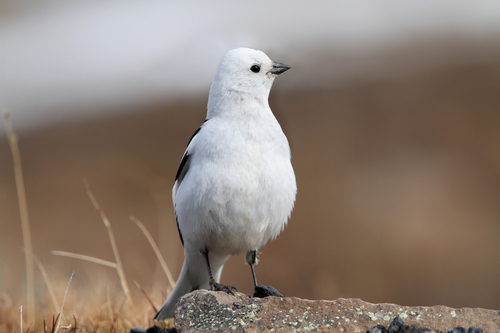 Snow Bunting
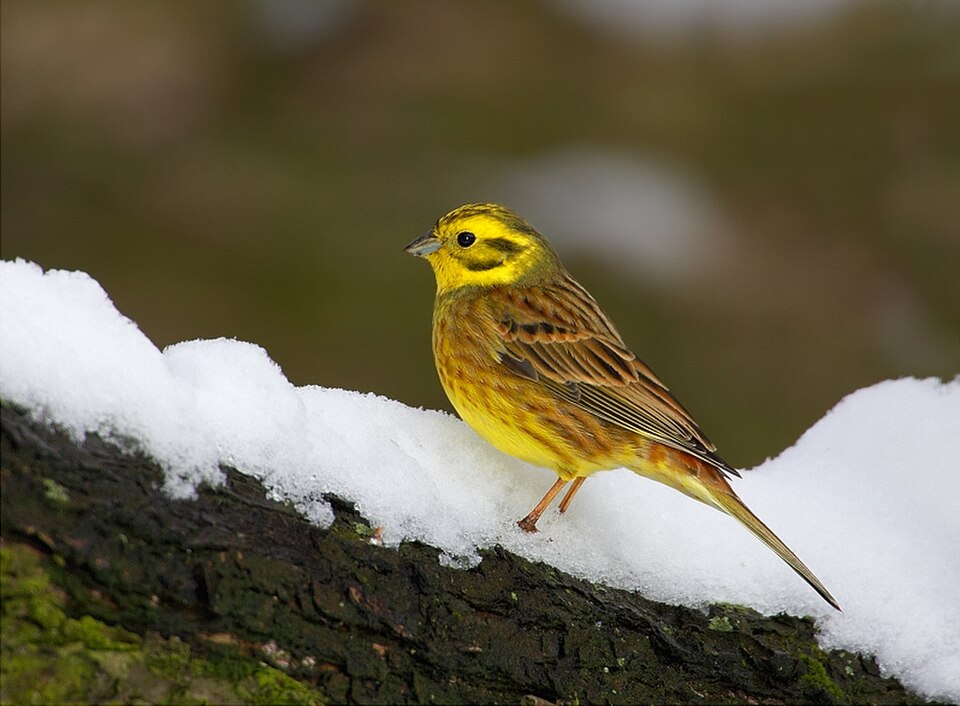 Yellowhammer
In short
The most reliable field mark to separate Snow Bunting from Yellowhammer is the extensive white in the wings and underparts of Snow Bunting, visible in all plumages and especially striking in flight, compared to the yellow and brown, heavily streaked appearance of Yellowhammer with no white in the wings. Juvenile and female Yellowhammers are duller but always show some yellow and lack the clean white and black contrast of Snow Bunting. Structurally, Snow Bunting is slightly stockier and longer-winged, with a shorter, stubbier bill and feathered tarsi, while Yellowhammer is slimmer, longer-tailed, and has a more pointed bill. Both species can be found in open country, but Snow Bunting favors Arctic or high-altitude habitats, while Yellowhammer is a bird of farmland and hedgerows. Their songs and calls are quite different, with Snow Bunting giving a rippling, liquid whistle and Yellowhammer a familiar 'little bit of bread and no cheese' phrase.
Identification tips
- White in the wings (all ages, all seasons): Snow Bunting always shows extensive white in the wings and tail, especially obvious in flight. Yellowhammer never shows white in the wing, only white outer tail feathers.
- Underparts color: Snow Bunting is white below in all plumages; Yellowhammer is yellow (male) or buffy-streaked (female/juvenile), never pure white.
- Head pattern (adult male): Yellowhammer males have a bright yellow head and underparts, with a chestnut rump. Snow Bunting males have a white head and underparts with black back and wingtips.
- Back and rump: Snow Bunting has a black-and-white or brown-fringed back depending on sex and season, with no rufous rump. Yellowhammer always has a rufous or chestnut rump, even in duller plumages.
- Bill color and shape: Snow Bunting has a short, stubby yellow bill with a black tip (all black in breeding males). Yellowhammer's bill is longer, more pointed, and horn-colored.
- Legs and tarsi: Snow Bunting has feathered tarsi, unique among passerines in its range. Yellowhammer has unfeathered legs.
- Size and structure: Snow Bunting is chunkier, with a shorter tail and longer wings. Yellowhammer is slimmer, longer-tailed, and more upright when perched.
- Juvenile confusion: Juvenile Yellowhammers are dull and streaky but always show some yellow and lack white in the wings. Juvenile Snow Buntings are white below and show white in the wings, even when heavily marked above.
- Sexual dimorphism: Both species show sex differences, but only Yellowhammer males are bright yellow; Snow Bunting males are white and black, females browner.
- Seasonal change: Snow Buntings get whiter as feather fringes wear off in spring; Yellowhammers become brighter yellow after moult, but never white.
- Flight style: Snow Bunting flocks fly low and undulating over open ground, often flashing white. Yellowhammer flight is less undulating, usually between perches or along hedgerows.
- Habitat: Snow Bunting is found in Arctic, high-altitude, or coastal open ground; Yellowhammer is a bird of farmland, hedgerows, and open countryside.
- Song: Snow Bunting's song is a short, liquid warble; Yellowhammer's is a drawn-out, repetitive phrase. Calls are also distinct.
- Perching behavior: Yellowhammer often sings from exposed perches; Snow Bunting is more likely to be on the ground or low rocks.
- Pitfalls: In dull light, female and juvenile Yellowhammers can look pale, but never show the sharp white-and-black contrast or white wing panels of Snow Bunting. Snow Buntings never show yellow tones or a rufous rump.
Size
Snow Bunting is slightly smaller but heavier, measuring about 15 cm in length with a wingspan of 32–38 cm and weighing 30–40 g [wikipedia]. Yellowhammer is longer at 16–16.5 cm, with a shorter wingspan of 23–29.5 cm and lighter at 20–36.5 g [wikipedia]. In the field, Snow Bunting often looks chunkier and more robust, while Yellowhammer appears slimmer and longer-tailed.
Plumage
- Juvenile/First-winter: Snow Bunting juveniles and non-breeding birds have broad orangey-brown fringes on the back feathers, but always show extensive white in the underparts and wings, especially in flight. Yellowhammer juveniles are duller and less yellow than adults, with a paler rump, but never show the clean white wing panels or underparts of Snow Bunting.
- Adult Breeding Male: Snow Bunting males are strikingly white below, with black back and wingtips; Yellowhammer males have a bright yellow head and underparts, streaked brown back, and rufous rump, with no white in the wings.
- Adult Female: Female Snow Buntings are similar to males but with brown-fringed black back feathers and less contrast; female Yellowhammers are duller, more streaked, and less yellow, but still show yellow tones and lack the white wing pattern.
- Winter/Non-breeding: Both species become duller, but Snow Bunting retains white underparts and wing flashes, while Yellowhammer's yellow is obscured by dark feather fringes, making it browner but still never as white as Snow Bunting.
- Key in flight: Snow Bunting always shows white in the wings and tail, a feature never present in Yellowhammer.
Behaviour
Snow Bunting is ground-dwelling, often seen walking or running on open ground, and may hop if needed. It is more likely to be seen in flocks, especially in winter. Yellowhammer is more arboreal, often perching on bushes or fence lines, and sings from prominent perches. Both species forage on the ground, but Yellowhammer is more likely to be seen along field edges and hedgerows, while Snow Bunting prefers open, often barren ground.
Habitat
Snow Bunting is an Arctic specialist, breeding in the far north and on high mountain tops, and wintering in open, often snow-covered fields or coastal areas. Yellowhammer is a classic farmland bird, found in open countryside with hedgerows, field margins, and sometimes woodland edges. Overlap is rare except in open lowland fields in winter, where Snow Buntings are still much more likely in the far north or on coasts, and Yellowhammers dominate in temperate farmland.
Voice
Snow Bunting's call is a distinctive, rippling whistle ('per,r,r,rit'), and its song is a brief, loud warble with a liquid, musical quality. Yellowhammer's song is a familiar, drawn-out phrase often described as 'a little bit of bread and no cheese,' and its calls are simpler and less musical than those of Snow Bunting. The two are unlikely to be confused by ear, especially with experience.