
Motmot

Small Minivet vs Orange Minivet

Pericrocotus cinnamomeus versus Pericrocotus flammeus

Play a quiz with Small Minivet and Orange Minivet
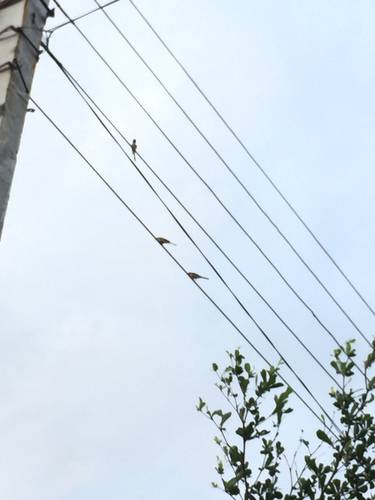
Small Minivet (Pericrocotus cinnamomeus) Small Minivet
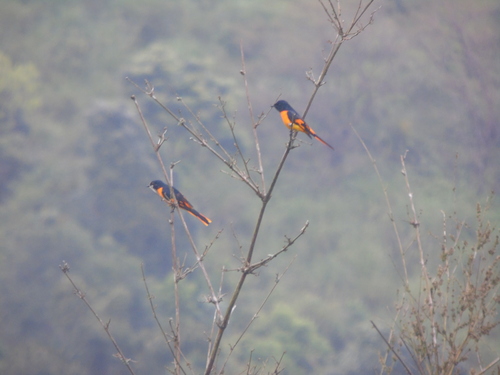
Orange Minivet (Pericrocotus flammeus) Orange Minivet

Media

Loading…

In short

The most reliable field mark between Small Minivet and Orange Minivet is the color and gloss of the male's head and upperparts: Small Minivet males have a grey (not glossy black) head and back, while Orange Minivet males show a striking glossy black head, throat, and upper back. Females of both species are grey above and yellow below, but Orange Minivet females are brighter yellow underneath and have a more extensive yellow face. Juveniles resemble females in both species, making separation tricky without close attention to head and upperpart color. Size can help: Orange Minivet is noticeably larger and heavier. Range is also helpful—Orange Minivet is restricted to the Western Ghats, west coast of India, and Sri Lanka, while Small Minivet is more widespread across southern Asia.

Identification tips

  1. Male head and upperparts: Small Minivet males have a grey head and back, never glossy black. Orange Minivet males have a glossy black head, chin, throat, mantle, and upper back—this is the single most reliable mark for adult males.
  2. Male underparts: Small Minivet males show orange underparts fading to yellow on the belly, while Orange Minivet males are bright orange-red below, with little or no fading.
  3. Male tail and rump: Both species have orange or orange-red tail edges and rump, but Orange Minivet's coloration is more intense and extensive.
  4. Female upperparts: Both are grey above, but Orange Minivet females have a yellow forehead and chin, and the grey is often paler and more ashy, especially on the lower back.
  5. Female underparts: Orange Minivet females are almost entirely bright yellow below, including the chin and face, while Small Minivet females are yellow below but less intensely so, and the yellow may not extend as fully onto the face.
  6. Juvenile plumage: Juveniles resemble females in both species, so use the same female marks. Orange Minivet juveniles may show some variation, but this is not detailed in the sources.
  7. Isolated red markings on wing: Orange Minivet can show isolated red marks near the tips of tertials and inner secondaries, but this is not a strong separator from Small Minivet and is more useful for distinguishing from Scarlet Minivet.
  8. Size: Orange Minivet is distinctly larger and heavier than Small Minivet. Use this as a supporting mark, especially if you have a direct comparison or experience with both.
  9. Range: Orange Minivet is restricted to the Western Ghats, west coast of India, and Sri Lanka. Small Minivet is widespread across southern Asia. If you are outside the Ghats or Sri Lanka, Orange Minivet is very unlikely.
  10. Racial variation in Small Minivet: Some races of Small Minivet (e.g., P. c. pallidus) are paler above and below, but none show the glossy black of Orange Minivet males. Southern races of Small Minivet can be darker and more orange below, but still lack the black head.
  11. Habitat: Both species use wooded habitats, but Orange Minivet is more closely tied to evergreen and moist forests of the Ghats. Small Minivet is more generalist in its range.
  12. Behavior: Both species are active, often in small flocks, and show similar foraging behavior. Do not rely on behavior for separation.
  13. Voice: No diagnostic vocal differences are noted in the sources, so do not use voice for separation.
  14. In flight: No distinctive age-specific wing or flight pattern marks are described for either species in the sources. Focus on plumage and structure instead.
  15. Pitfalls: Females and juveniles are the most likely to be confused. Pay close attention to the intensity and extent of yellow on the face and underparts, and use range and size as supporting clues.

Size

Small Minivet is the smaller species, measuring about 16 cm in length. Orange Minivet is larger, ranging from 17–22 cm and weighing 19–24.5 g. In the field, Orange Minivet often appears bulkier and longer-tailed, especially when seen side by side or with experience. However, size alone can be misleading due to posture and distance, so use it as supporting evidence rather than the primary mark.

Plumage

For adult males, Small Minivet shows grey upperparts and head, with orange underparts fading to yellow on the belly, and orange tail edges, rump, and wing patches. In contrast, Orange Minivet males have a glossy black head, chin, throat, mantle, and upper back, with bright orange-red lower back, rump, and underparts. The black on Orange Minivet is much more extensive and shiny. Females of both species are grey above and yellow below, but Orange Minivet females have a yellow forehead and chin, and their yellow is brighter and more extensive, including almost the entire underside. Small Minivet females have yellow underparts and face, but the yellow is less intense and the grey above is more uniform. Juveniles in both species resemble females, but Orange Minivet juveniles may show some variation. Notably, Orange Minivet can be distinguished from other Pericrocotus species by isolated red markings near the tips of tertials and inner secondaries, but this is more useful for separating it from Scarlet Minivet than from Small Minivet. There is racial variation in Small Minivet, with some males paler above and below, but none show the glossy black of Orange Minivet males.

Behaviour

Both species are active, often foraging in the canopy or mid-levels, moving in small flocks. Behavior is not a strong separator, as both show similar feeding and movement patterns typical of minivets. No distinctive difference in flight style or foraging jizz is noted in the sources.

Habitat

Small Minivet has a broader range, found in tropical southern Asia from the Indian subcontinent east to Indonesia, and is not restricted to a particular habitat within this range. Orange Minivet, by contrast, is limited to the Western Ghats, west coast of India, and Sri Lanka. If you are outside the Western Ghats or Sri Lanka, Orange Minivet is very unlikely. Both species can be found in wooded habitats, but Orange Minivet is more closely associated with evergreen and moist forests of the Ghats.

Submit a better description

Use the same sections as the comparison. Your text is published immediately.

The most reliable field mark between Small Minivet and Orange Minivet is the color and gloss of the male's head and upperparts: Small Minivet males have a grey (not glossy black) head and back, while Orange Minivet males show a striking glossy black head, throat, and upper back. Females of both species are grey above and yellow below, but Orange Minivet females are brighter yellow underneath and have a more extensive yellow face. Juveniles resemble females in both species, making separation tricky without close attention to head and upperpart color. Size can help: Orange Minivet is noticeably larger and heavier. Range is also helpful—Orange Minivet is restricted to the Western Ghats, west coast of India, and Sri Lanka, while Small Minivet is more widespread across southern Asia.

  1. Male head and upperparts: Small Minivet males have a grey head and back, never glossy black. Orange Minivet males have a glossy black head, chin, throat, mantle, and upper back—this is the single most reliable mark for adult males.
  2. Male underparts: Small Minivet males show orange underparts fading to yellow on the belly, while Orange Minivet males are bright orange-red below, with little or no fading.
  3. Male tail and rump: Both species have orange or orange-red tail edges and rump, but Orange Minivet's coloration is more intense and extensive.
  4. Female upperparts: Both are grey above, but Orange Minivet females have a yellow forehead and chin, and the grey is often paler and more ashy, especially on the lower back.
  5. Female underparts: Orange Minivet females are almost entirely bright yellow below, including the chin and face, while Small Minivet females are yellow below but less intensely so, and the yellow may not extend as fully onto the face.
  6. Juvenile plumage: Juveniles resemble females in both species, so use the same female marks. Orange Minivet juveniles may show some variation, but this is not detailed in the sources.
  7. Isolated red markings on wing: Orange Minivet can show isolated red marks near the tips of tertials and inner secondaries, but this is not a strong separator from Small Minivet and is more useful for distinguishing from Scarlet Minivet.
  8. Size: Orange Minivet is distinctly larger and heavier than Small Minivet. Use this as a supporting mark, especially if you have a direct comparison or experience with both.
  9. Range: Orange Minivet is restricted to the Western Ghats, west coast of India, and Sri Lanka. Small Minivet is widespread across southern Asia. If you are outside the Ghats or Sri Lanka, Orange Minivet is very unlikely.
  10. Racial variation in Small Minivet: Some races of Small Minivet (e.g., P. c. pallidus) are paler above and below, but none show the glossy black of Orange Minivet males. Southern races of Small Minivet can be darker and more orange below, but still lack the black head.
  11. Habitat: Both species use wooded habitats, but Orange Minivet is more closely tied to evergreen and moist forests of the Ghats. Small Minivet is more generalist in its range.
  12. Behavior: Both species are active, often in small flocks, and show similar foraging behavior. Do not rely on behavior for separation.
  13. Voice: No diagnostic vocal differences are noted in the sources, so do not use voice for separation.
  14. In flight: No distinctive age-specific wing or flight pattern marks are described for either species in the sources. Focus on plumage and structure instead.
  15. Pitfalls: Females and juveniles are the most likely to be confused. Pay close attention to the intensity and extent of yellow on the face and underparts, and use range and size as supporting clues.

Small Minivet is the smaller species, measuring about 16 cm in length. Orange Minivet is larger, ranging from 17–22 cm and weighing 19–24.5 g. In the field, Orange Minivet often appears bulkier and longer-tailed, especially when seen side by side or with experience. However, size alone can be misleading due to posture and distance, so use it as supporting evidence rather than the primary mark.

For adult males, Small Minivet shows grey upperparts and head, with orange underparts fading to yellow on the belly, and orange tail edges, rump, and wing patches. In contrast, Orange Minivet males have a glossy black head, chin, throat, mantle, and upper back, with bright orange-red lower back, rump, and underparts. The black on Orange Minivet is much more extensive and shiny. Females of both species are grey above and yellow below, but Orange Minivet females have a yellow forehead and chin, and their yellow is brighter and more extensive, including almost the entire underside. Small Minivet females have yellow underparts and face, but the yellow is less intense and the grey above is more uniform. Juveniles in both species resemble females, but Orange Minivet juveniles may show some variation. Notably, Orange Minivet can be distinguished from other Pericrocotus species by isolated red markings near the tips of tertials and inner secondaries, but this is more useful for separating it from Scarlet Minivet than from Small Minivet. There is racial variation in Small Minivet, with some males paler above and below, but none show the glossy black of Orange Minivet males.

Both species are active, often foraging in the canopy or mid-levels, moving in small flocks. Behavior is not a strong separator, as both show similar feeding and movement patterns typical of minivets. No distinctive difference in flight style or foraging jizz is noted in the sources.

Small Minivet has a broader range, found in tropical southern Asia from the Indian subcontinent east to Indonesia, and is not restricted to a particular habitat within this range. Orange Minivet, by contrast, is limited to the Western Ghats, west coast of India, and Sri Lanka. If you are outside the Western Ghats or Sri Lanka, Orange Minivet is very unlikely. Both species can be found in wooded habitats, but Orange Minivet is more closely associated with evergreen and moist forests of the Ghats.

Discard your changes?

You have unsaved edits. If you leave now, those changes will be lost.

Small Minivet · Orange Minivet · My Tricky Birds