

Motmot

Slender-billed Curlew vs Eurasian Curlew

Numenius tenuirostris versus Numenius arquata

Play a quiz with Slender-billed Curlew and Eurasian Curlew
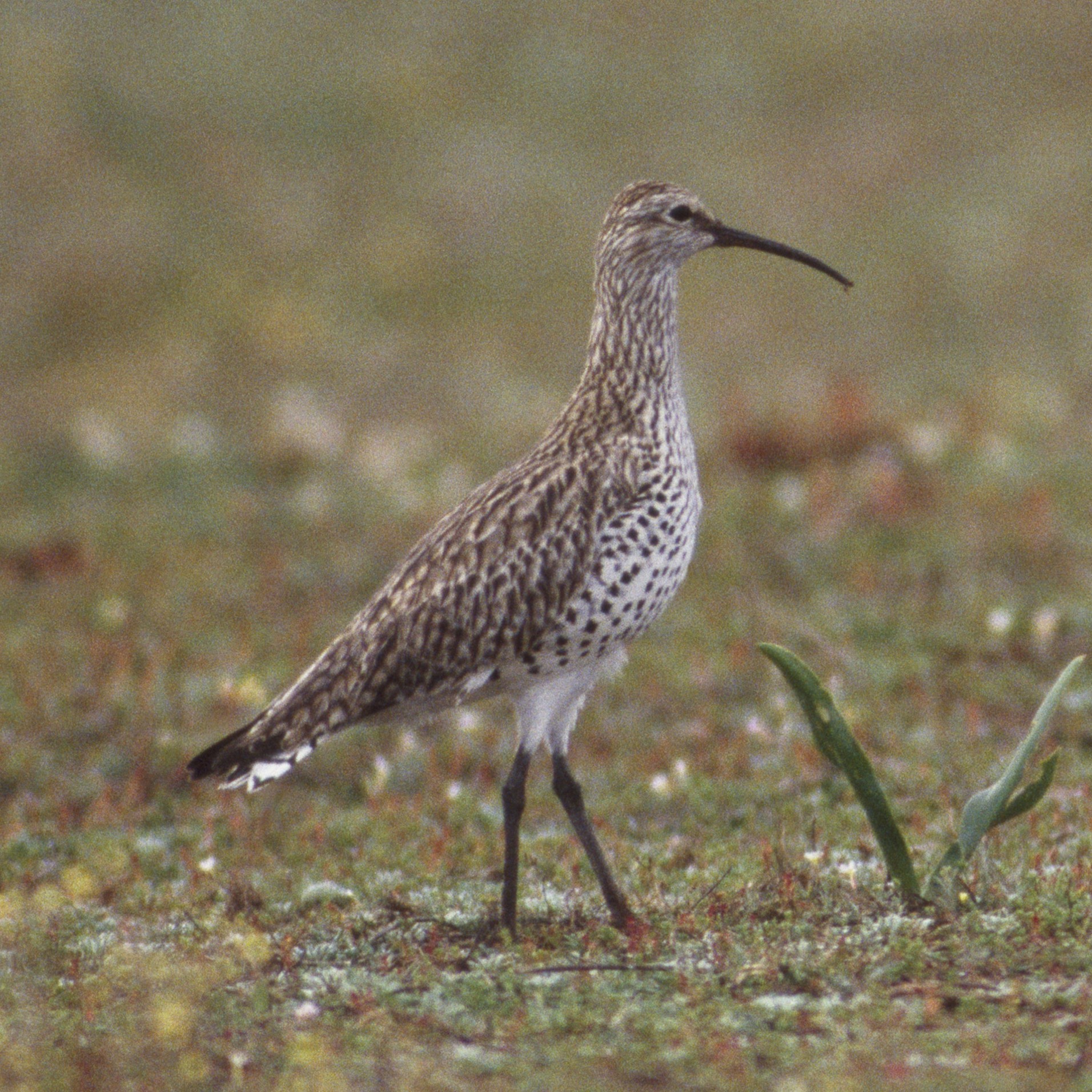
Slender-billed Curlew (Numenius tenuirostris) Slender-billed Curlew
Eurasian Curlew (Numenius arquata) Eurasian Curlew

Media

Loading…

In short

The most reliable field mark to separate Slender-billed Curlew from Eurasian Curlew is the pattern of the underwing and the shape and pattern of the flank spots—especially in adults. Slender-billed Curlew adults show round or heart-shaped flank spots and a whiter underwing, while Eurasian Curlew has arrowhead-shaped flank spots and a less contrasting underwing. In flight, Slender-billed Curlew shows a white tail with fewer dark bars and a distinctive pattern of dark outer primaries below, whereas Eurasian Curlew's tail is more heavily barred and its underwing is less strikingly white. Structurally, Slender-billed Curlew is smaller, with a shorter, more slender, and slightly straighter bill. These differences are subtle and can be hard to judge without direct comparison, especially in juvenile and first-winter birds.

Identification tips

  1. Flank Spot Shape (Adults): Slender-billed Curlew shows round or heart-shaped dark spots on the flanks, while Eurasian Curlew has arrowhead-shaped spots. This is most useful on adult birds in good view.
  2. Flank Markings (Juvenile/First-winter): Juvenile Slender-billed Curlew lacks the heart-shaped spots, showing brown streaking instead; these spots appear toward the end of the first winter. Eurasian Curlew juveniles already show arrowhead-shaped spots.
  3. Underwing Pattern: Slender-billed Curlew has a whiter underwing than Eurasian Curlew, but this can be variable and is not always reliable. Use in combination with other marks.
  4. Outer Primary Underside (Flight, All Ages): Slender-billed Curlew shows a uniformly dark underside to the outer 4–6 primaries (the 'hand'), especially in adults. Eurasian Curlew does not show this pattern as distinctly.
  5. Tail Pattern: Slender-billed Curlew has a white tail with fewer dark bars; Eurasian Curlew's tail is more heavily barred. This is best seen in flight or when preening.
  6. Bill Structure: Slender-billed Curlew's bill is shorter, more slender, and slightly straighter at the base compared to the long, smoothly downcurved bill of Eurasian Curlew. This is subtle and best judged with experience or direct comparison.
  7. Leg Color: Adult Slender-billed Curlew has black legs; juveniles and first-years have at least darker grey legs. Eurasian Curlew has greyish-blue legs. This is a supporting mark, not always visible.
  8. Head Pattern: Both species have a dark cap and whitish supercilium, but Slender-billed Curlew's head pattern is less distinct and lacks the strong central crown stripe of Whimbrel. Eurasian Curlew's head pattern is also not as bold as Whimbrel's, but is otherwise similar between the two.
  9. Size: Eurasian Curlew is much larger and bulkier, with a longer bill and longer legs. Slender-billed Curlew is closer in size to Whimbrel, but with curlew-like plumage.
  10. Context and Range: Eurasian Curlew is widespread and common in suitable habitat. Slender-billed Curlew is considered extinct; any claim of its presence requires photographic evidence and multiple clinching field marks.
  11. Sex Differences: Both species show sexual dimorphism in bill length (females longer), but this is only useful in direct comparison or in pairs.
  12. Plumage Seasonality: Both species are similar in breeding and non-breeding plumage, but Slender-billed Curlew's non-breeding plumage has fewer flank spots.
  13. Confusion with Whimbrel: Both species can recall Whimbrel in head pattern, but Whimbrel has a central crown stripe and a more clearly marked head.
  14. Vocalization: No diagnostic vocal differences are described in the sources for separating these two species.
  15. Pitfalls: Most field marks are subtle and require excellent views; beware of over-relying on underwing whiteness or leg color alone. Always use a combination of flank spot shape, tail pattern, and bill structure for the most reliable identification.

Size

Eurasian Curlew is significantly larger: it measures 50–60 cm in length with a wingspan of 89–106 cm and an average mass of about 805 g [wikidata], making it the largest wader in its range. Slender-billed Curlew is smaller, at 36–41 cm in length and a 77–88 cm wingspan [wikipedia]. This size difference is most apparent when both species are seen together, but can be misleading in isolation. Bill length is also a key difference: Eurasian Curlew has a very long, smoothly downcurved bill, especially in females, while Slender-billed Curlew's bill is shorter, more slender, and slightly straighter at the base.

Plumage

Juvenile and first-winter Slender-billed Curlew closely resemble adults but initially lack the distinctive round or heart-shaped flank spots, instead showing brown streaking on the flanks; these spots develop toward the end of the first winter. Adult Slender-billed Curlew has a whitish rump and lower back, heavily streaked whitish underparts, and round or heart-shaped dark spots on the flanks. The underwing is notably whiter than in Eurasian Curlew, but this mark is sometimes overstated and not always reliable. The tail is white with fewer dark bars. In flight, the underside of the outer 4–6 primaries is uniformly dark in Slender-billed Curlew (adults), a clinching mark, while Eurasian Curlew's primaries are less uniformly dark. Eurasian Curlew is overall greyer-brown above, with arrowhead-shaped flank spots, a more heavily barred tail, and a less contrasting underwing. Both species have a dark cap and whitish supercilium, but Slender-billed Curlew's head pattern is less distinct and lacks the strong central crown stripe of Whimbrel. Leg color is also useful: Slender-billed Curlew has black (adult) or darker grey (immature) legs, while Eurasian Curlew's legs are greyish-blue.

Behaviour

Both species are waders with similar feeding and locomotion styles, probing soft ground for invertebrates. No diagnostic behavioral differences are noted in the sources.

Habitat

Historically, Slender-billed Curlew bred in the Kazakh Steppe and migrated to shallow freshwater habitats around the Mediterranean. Eurasian Curlew is much more widespread, breeding across temperate Europe and Asia in open grasslands, meadows, and coastal areas. In the field today, Eurasian Curlew is the expected species in almost all contexts, as Slender-billed Curlew is considered extinct and any claim of its presence would require extraordinary documentation.

Submit a better description

Use the same sections as the comparison. Your text is published immediately.

The most reliable field mark to separate Slender-billed Curlew from Eurasian Curlew is the pattern of the underwing and the shape and pattern of the flank spots—especially in adults. Slender-billed Curlew adults show round or heart-shaped flank spots and a whiter underwing, while Eurasian Curlew has arrowhead-shaped flank spots and a less contrasting underwing. In flight, Slender-billed Curlew shows a white tail with fewer dark bars and a distinctive pattern of dark outer primaries below, whereas Eurasian Curlew's tail is more heavily barred and its underwing is less strikingly white. Structurally, Slender-billed Curlew is smaller, with a shorter, more slender, and slightly straighter bill. These differences are subtle and can be hard to judge without direct comparison, especially in juvenile and first-winter birds.

  1. Flank Spot Shape (Adults): Slender-billed Curlew shows round or heart-shaped dark spots on the flanks, while Eurasian Curlew has arrowhead-shaped spots. This is most useful on adult birds in good view.
  2. Flank Markings (Juvenile/First-winter): Juvenile Slender-billed Curlew lacks the heart-shaped spots, showing brown streaking instead; these spots appear toward the end of the first winter. Eurasian Curlew juveniles already show arrowhead-shaped spots.
  3. Underwing Pattern: Slender-billed Curlew has a whiter underwing than Eurasian Curlew, but this can be variable and is not always reliable. Use in combination with other marks.
  4. Outer Primary Underside (Flight, All Ages): Slender-billed Curlew shows a uniformly dark underside to the outer 4–6 primaries (the 'hand'), especially in adults. Eurasian Curlew does not show this pattern as distinctly.
  5. Tail Pattern: Slender-billed Curlew has a white tail with fewer dark bars; Eurasian Curlew's tail is more heavily barred. This is best seen in flight or when preening.
  6. Bill Structure: Slender-billed Curlew's bill is shorter, more slender, and slightly straighter at the base compared to the long, smoothly downcurved bill of Eurasian Curlew. This is subtle and best judged with experience or direct comparison.
  7. Leg Color: Adult Slender-billed Curlew has black legs; juveniles and first-years have at least darker grey legs. Eurasian Curlew has greyish-blue legs. This is a supporting mark, not always visible.
  8. Head Pattern: Both species have a dark cap and whitish supercilium, but Slender-billed Curlew's head pattern is less distinct and lacks the strong central crown stripe of Whimbrel. Eurasian Curlew's head pattern is also not as bold as Whimbrel's, but is otherwise similar between the two.
  9. Size: Eurasian Curlew is much larger and bulkier, with a longer bill and longer legs. Slender-billed Curlew is closer in size to Whimbrel, but with curlew-like plumage.
  10. Context and Range: Eurasian Curlew is widespread and common in suitable habitat. Slender-billed Curlew is considered extinct; any claim of its presence requires photographic evidence and multiple clinching field marks.
  11. Sex Differences: Both species show sexual dimorphism in bill length (females longer), but this is only useful in direct comparison or in pairs.
  12. Plumage Seasonality: Both species are similar in breeding and non-breeding plumage, but Slender-billed Curlew's non-breeding plumage has fewer flank spots.
  13. Confusion with Whimbrel: Both species can recall Whimbrel in head pattern, but Whimbrel has a central crown stripe and a more clearly marked head.
  14. Vocalization: No diagnostic vocal differences are described in the sources for separating these two species.
  15. Pitfalls: Most field marks are subtle and require excellent views; beware of over-relying on underwing whiteness or leg color alone. Always use a combination of flank spot shape, tail pattern, and bill structure for the most reliable identification.

Eurasian Curlew is significantly larger: it measures 50–60 cm in length with a wingspan of 89–106 cm and an average mass of about 805 g [wikidata], making it the largest wader in its range. Slender-billed Curlew is smaller, at 36–41 cm in length and a 77–88 cm wingspan [wikipedia]. This size difference is most apparent when both species are seen together, but can be misleading in isolation. Bill length is also a key difference: Eurasian Curlew has a very long, smoothly downcurved bill, especially in females, while Slender-billed Curlew's bill is shorter, more slender, and slightly straighter at the base.

Juvenile and first-winter Slender-billed Curlew closely resemble adults but initially lack the distinctive round or heart-shaped flank spots, instead showing brown streaking on the flanks; these spots develop toward the end of the first winter. Adult Slender-billed Curlew has a whitish rump and lower back, heavily streaked whitish underparts, and round or heart-shaped dark spots on the flanks. The underwing is notably whiter than in Eurasian Curlew, but this mark is sometimes overstated and not always reliable. The tail is white with fewer dark bars. In flight, the underside of the outer 4–6 primaries is uniformly dark in Slender-billed Curlew (adults), a clinching mark, while Eurasian Curlew's primaries are less uniformly dark. Eurasian Curlew is overall greyer-brown above, with arrowhead-shaped flank spots, a more heavily barred tail, and a less contrasting underwing. Both species have a dark cap and whitish supercilium, but Slender-billed Curlew's head pattern is less distinct and lacks the strong central crown stripe of Whimbrel. Leg color is also useful: Slender-billed Curlew has black (adult) or darker grey (immature) legs, while Eurasian Curlew's legs are greyish-blue.

Both species are waders with similar feeding and locomotion styles, probing soft ground for invertebrates. No diagnostic behavioral differences are noted in the sources.

Historically, Slender-billed Curlew bred in the Kazakh Steppe and migrated to shallow freshwater habitats around the Mediterranean. Eurasian Curlew is much more widespread, breeding across temperate Europe and Asia in open grasslands, meadows, and coastal areas. In the field today, Eurasian Curlew is the expected species in almost all contexts, as Slender-billed Curlew is considered extinct and any claim of its presence would require extraordinary documentation.

Discard your changes?

You have unsaved edits. If you leave now, those changes will be lost.

Slender-billed Curlew · Eurasian Curlew · My Tricky Birds