

Short-clawed Lark vs Karoo Long-billed Lark
Certhilauda chuana versus Certhilauda subcoronata
Play a quiz with Short-clawed Lark and Karoo Long-billed Lark
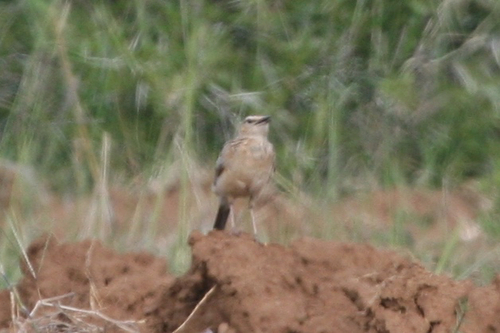 Short-clawed Lark
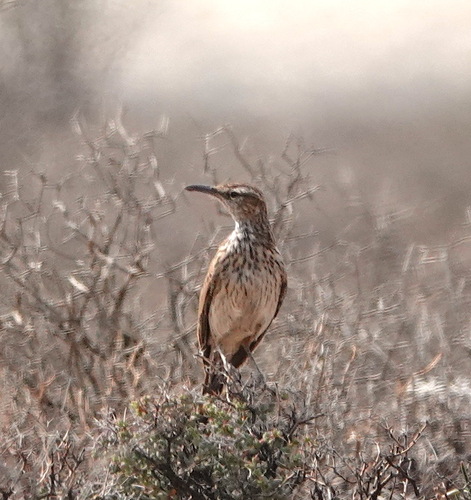 Karoo Long-billed Lark
In short
The most reliable way to separate Short-clawed Lark from Karoo Long-billed Lark is by bill structure: Short-clawed Lark has a noticeably shorter, less decurved bill, while Karoo Long-billed Lark shows a long, strongly downcurved bill that stands out even at a distance. Both species are streaky brown larks of open, arid country, but their preferred habitats differ: Short-clawed Lark favors dry savannah in Botswana and South Africa, while Karoo Long-billed Lark is found in dry shrubland and Karoo regions further southwest. In the field, look for the overall impression of bill length and curvature, as plumage differences are subtle and not well documented in available sources. Juvenile and immature plumages are not described in detail for either species, so structure and habitat are your best clues.
Identification tips
- Bill length and shape is the key field mark: Short-clawed Lark has a noticeably shorter, less downcurved bill; Karoo Long-billed Lark has a long, strongly decurved bill that is obvious even at a distance. This is the most reliable feature in all plumages and ages.
- Habitat context helps: If you are in dry, grassy savannah in Botswana or northeastern South Africa, Short-clawed Lark is more likely. In Karoo shrubland or semi-desert of western South Africa, Namibia, or Angola, expect Karoo Long-billed Lark.
- Plumage is not diagnostic: Both species are streaky brown above and pale below, with no described differences in pattern, color, or upperwing markings for any age. Do not rely on streaking or general coloration.
- Juvenile/immature confusion: There are no documented upperwing or flight pattern differences for young birds. If you see a streaky brown lark with a short bill in savannah, it's likely Short-clawed; a long, curved bill in shrubland points to Karoo Long-billed.
- Structure in profile: When perched, compare the bill to head length. Karoo Long-billed Lark's bill is almost as long as the head and curves downward, while Short-clawed Lark's bill is proportionally shorter and straighter.
- Flight views: Even in flight, the bill of Karoo Long-billed Lark often projects and appears long; Short-clawed Lark's bill is less prominent.
- No reliable size difference: Both are medium-sized larks; do not use overall body size for separation.
- No sex or seasonal differences: No sexual dimorphism or seasonal plumage changes are described for either species.
- Voice is not a field mark: No distinctive calls or songs are described in the available sources.
- Range overlap caution: In regions where dry savannah grades into Karoo shrubland, both species may be possible. Use bill structure as your primary mark.
- Subspecies confusion: Karoo Long-billed Lark has several subspecies, but all share the long, decurved bill. Do not attempt to separate subspecies in the field unless highly familiar with local forms.
- Similar larks: If you are unsure, compare with other local Certhilauda larks, but remember that Short-clawed is unique in its short bill among this group.
- Photos for confirmation: If in doubt, photograph the bird's profile to assess bill length and curvature for later review.
- Do not rely on leg color, tail shape, or wing formula: No differences are described in these features for these two species.
- Summary tip: When in doubt, bill length and habitat are your best tools; plumage and voice will not help.
Size
Direct size comparisons are not detailed in the available sources, but both species are medium-sized larks. Any difference in overall body size is likely minor and not reliable for field separation. Focus instead on bill length and shape, which is much more distinctive: Karoo Long-billed Lark has a conspicuously longer and more curved bill than Short-clawed Lark. Both species share a similar, robust lark build.
Plumage
There is no detailed information on age-specific plumage or upperwing pattern for either species in the available sources. Both are described as streaky brown larks typical of the Alaudidae family, with no mention of distinctive juvenile or immature flight marks. Thus, plumage alone is not a reliable way to separate them, especially at a distance or in poor light. If forced to rely on plumage, expect considerable overlap and potential for confusion.
Behaviour
Behavioral differences are not described in the sources. Both species are ground-dwelling larks of open, arid habitats and likely share similar foraging and flight behaviors typical of the group. No unique display, foraging, or flight style is mentioned that would reliably distinguish one from the other in the field.
Habitat
Habitat is a helpful secondary clue. Short-clawed Lark is restricted to dry savannah in Botswana and South Africa, often in more grassy, open environments. In contrast, Karoo Long-billed Lark is found in subtropical or tropical dry shrubland, especially in the Karoo and adjacent arid regions of Namibia, Angola, and South Africa. If you are birding in classic Karoo shrubland or semi-desert, Karoo Long-billed Lark is much more likely. In more open, grassy savannah, especially in Botswana, Short-clawed Lark is the expected species. However, ranges may overlap in some transitional zones, so do not rely solely on habitat.
Voice
No vocal differences are described in the available sources. Both species are larks and likely have complex songs, but without detailed descriptions or recordings, voice is not a reliable field mark for separation.
Short-clawed Lark · Karoo Long-billed Lark · My Tricky Birds