

Sharp-tailed Grouse vs White-tailed Ptarmigan
Tympanuchus phasianellus versus Lagopus leucura
Play a quiz with Sharp-tailed Grouse and White-tailed Ptarmigan
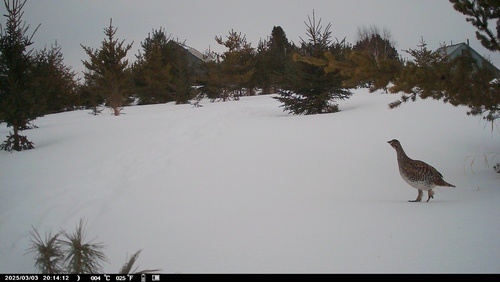 Sharp-tailed Grouse
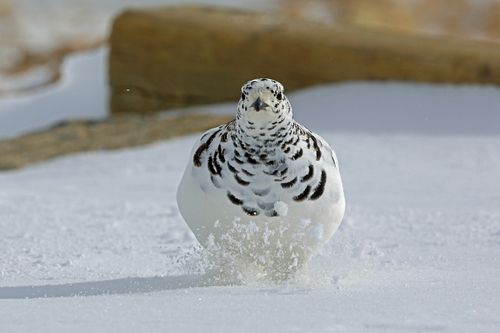 White-tailed Ptarmigan
In short
The most reliable field mark is the all-white wings and tail of White-tailed Ptarmigan in all seasons, which sharply contrast with the barred, pointed tail and patterned wings of Sharp-tailed Grouse. In flight or on the ground, White-tailed Ptarmigan always shows a square-ended, pure white tail and white wings, while Sharp-tailed Grouse has a long, pointed tail with dark central feathers and barred wings. Ptarmigan also undergoes dramatic seasonal color changes, turning entirely white in winter, while Sharp-tailed Grouse remains brown and barred year-round. Structure and size are also helpful: Sharp-tailed Grouse is much larger and longer-tailed, while White-tailed Ptarmigan is compact and round-bodied. Habitat is a strong clue—ptarmigan is strictly alpine, grouse is a bird of prairies and open woodlands.
Identification tips
- Tail shape and color: Ptarmigan always has a square-ended, pure white tail in all seasons and ages; grouse has a long, pointed tail with dark central feathers and pale outer feathers. This is visible both in flight and when perched.
- Wing pattern: Ptarmigan shows all-white wings year-round, including in summer when the rest of the plumage is brown; grouse has barred brown wings with no white.
- Seasonal plumage: In winter, ptarmigan is completely white; grouse remains brown and barred. In summer, ptarmigan is finely barred gray-brown above with white belly, wings, and tail; grouse is overall brown and barred, with no white belly or wings.
- Size and structure: Grouse is much larger and more elongated, with a long neck and tail; ptarmigan is small, round-bodied, with a short neck and compact build. If the bird looks chicken-sized or larger, it's a grouse; if quail-sized and very round, it's ptarmigan.
- Bill and feet: Ptarmigan has a small, black bill and heavily feathered feet (adapted for snow); grouse has a stouter bill and less feathering on the feet (not always visible in the field).
- Habitat: Ptarmigan is only found in alpine tundra above treeline; grouse is in prairies, grasslands, and open woodlands, never in true alpine zones.
- Behavior: Ptarmigan tends to crouch, walk, or hide rather than flush; grouse often flushes with strong flight and displays on leks.
- Eye combs: Male ptarmigan have reddish eye combs visible year-round; grouse males may show yellowish combs during display, but this is less reliable at a distance.
- Flight jizz: Ptarmigan in flight looks compact, with rounded wings and short tail; grouse appears larger, with a longer, pointed tail and more direct flight.
- Underparts: Ptarmigan always has a white belly; grouse has barred or mottled underparts, never pure white.
- Vocalizations: Grouse is much more likely to be heard making bubbling or rattling calls, especially in spring; ptarmigan is usually silent.
- Context and location: If you are above treeline in rocky, windswept terrain, expect ptarmigan; if in open grassland or woodland, expect grouse.
- Group size: Both can be seen in groups, but ptarmigan flocks tend to be smaller and more tightly bunched, especially in winter.
- Molting pattern: Ptarmigan molts gradually and is often seen in transitional plumage (patches of brown and white); grouse does not show such dramatic seasonal changes.
- Pitfalls: Immature grouse never show white wings or tail; ptarmigan never shows a pointed tail or barred wings, even in juvenile plumage.
Size
Sharp-tailed Grouse is significantly larger and heavier (average 885 g [wikidata]) compared to the much smaller, stockier White-tailed Ptarmigan (average 325 g [wikipedia]). Grouse is medium-sized for a prairie grouse, with a long, pointed tail and a more elongated body. Ptarmigan is the smallest grouse in North America, very compact, with a short neck and rounded wings. In the field, the grouse will look nearly three times the bulk of a ptarmigan, with a longer, more upright stance.
Plumage
Age-specific wing and tail patterns are key: White-tailed Ptarmigan of all ages and seasons shows pure white wings and a square-ended, all-white tail, even in summer when the rest of the plumage is brown and cryptic. In winter, the entire bird is white. Sharp-tailed Grouse, regardless of age, never shows white wings or tail; instead, it has barred brown wings and a distinctive long, pointed tail with dark central feathers and pale outer feathers. Juvenile and adult grouse both show this pointed tail and barred pattern. In summer, ptarmigan shows a finely barred, grayish-brown back with white belly, wings, and tail—never the overall barred look of grouse. In winter, ptarmigan is entirely white, while grouse remains brown and barred. Males of both species may show fleshy eye combs, but only ptarmigan males have prominent reddish combs year-round.
Behaviour
White-tailed Ptarmigan is adapted to cold alpine environments and often avoids flight, preferring to walk or crouch, and will roost in snowbanks in winter. It is generally silent and inconspicuous, relying on camouflage. Sharp-tailed Grouse is more likely to flush with a strong, direct flight and is famous for its elaborate lekking displays on open ground, where males dance and display their pointed tails. Grouse are more likely to be seen in groups on the ground or flying between cover in open country.
Habitat
Habitat is a strong separator: White-tailed Ptarmigan is strictly found above treeline in alpine tundra, on rocky slopes and open, windswept areas at high elevations. It is never found in lowland prairies or woodlands. Sharp-tailed Grouse is a bird of prairies, grasslands, and open woodlands, often in areas with scattered shrubs or trees but never in true alpine zones. If you see the bird in tundra above treeline, it is ptarmigan; if in grassland or open woodland below treeline, it is grouse.
Voice
White-tailed Ptarmigan is generally silent, but may give quiet, low-pitched hoots or soft clucking. Sharp-tailed Grouse is much more vocal, especially during lekking displays, with a variety of bubbling, cooing, and rattling calls. However, vocalizations are not usually the primary field mark for separating these two species.
Sharp-tailed Grouse · White-tailed Ptarmigan · My Tricky Birds