
Motmot

Semipalmated Plover vs Wilson's Plover

Charadrius semipalmatus versus Anarhynchus wilsonia

Play a quiz with Semipalmated Plover and Wilson's Plover
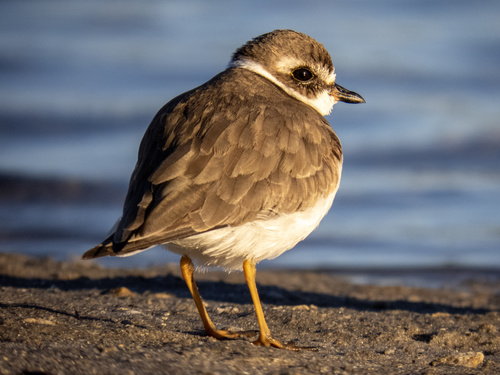
Semipalmated Plover (Charadrius semipalmatus) Semipalmated Plover
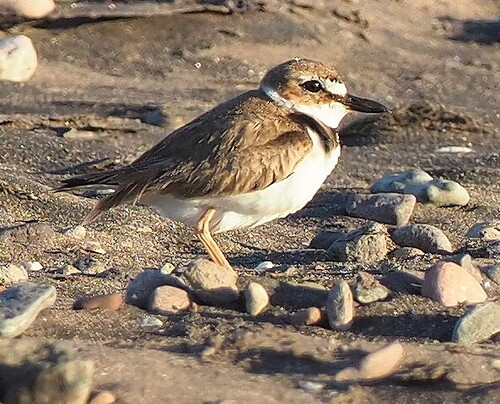
Wilson's Plover (Anarhynchus wilsonia) Wilson's Plover

Media

Loading…

In short

The most reliable field mark to separate Semipalmated Plover from Wilson's Plover is the bill: Semipalmated has a short, fine, orange-based bill with a black tip, while Wilson's shows a much larger, all-dark, heavy bill. Both species have a single dark breast band, but Wilson's is bulkier overall, with longer legs and a more robust look. Juvenile and non-breeding birds can be confusing, but Wilson's Plover often shows a paler, incomplete breast band in immatures, and pinkish legs, while Semipalmated always has a neat, complete band and duller legs. In flight, both are similar, so focus on bill size and shape, leg color, and overall proportions.

Identification tips

  1. Bill size and shape: Semipalmated Plover has a short, fine bill with an orange base and black tip; Wilson's Plover has a much larger, heavier, all-dark bill. This is the most consistent field mark at all ages and seasons.
  2. Breast band: Semipalmated Plover always shows a single, crisp, complete black breast band. Wilson's Plover's band is broader in adult males (breeding), but in immatures and females it can be incomplete or paler brown.
  3. Leg color: Wilson's Plover has pink legs (brightest in breeding season), while Semipalmated Plover's legs are duller, yellowish or grayish.
  4. Facial pattern: Semipalmated Plover has a brown cap, white forehead, and a neat black mask around the eyes. Wilson's Plover lacks this sharp facial contrast, especially in non-breeding plumage.
  5. Size and structure: Wilson's is bulkier, with a longer body, heavier head, and longer legs. Semipalmated is more compact and delicate. This is especially noticeable when both are side by side.
  6. In flight: Neither species has a unique upperwing pattern for quick separation. Focus on bill size and overall proportions if you glimpse them in flight.
  7. Juvenile confusion: Young Wilson's Plovers may show a broken or faint breast band, while Semipalmated juveniles always have a neat, complete band. Bill size remains a clue.
  8. Sex and season: Breeding male Wilson's Plover shows a blacker breast band and lores, sometimes with a rufous mask. Females and non-breeding birds are browner and less contrasting, but bill and leg color still separate them.
  9. Habitat context: Away from the coast, a single-banded plover is almost always Semipalmated. On southern beaches, check bill size and leg color carefully.
  10. Behavior: Wilson's often appears slower and more ponderous, Semipalmated more active and quick-stepping.
  11. Voice: Wilson's Plover gives a high, weak whistle; Semipalmated's call is sharper and more abrupt, but this is subtle and best used by experienced listeners.
  12. Wing bar and tail: Wilson's Plover shows a short white wing bar and white tail sides in flight, but these are not usually diagnostic between the two.
  13. Pitfall: Do not rely solely on the breast band color or width, as both can vary with age and wear; always check bill size and leg color as well.
  14. Mixed flocks: On migration, both can occur together, but Semipalmated is much more numerous away from the southern U.S. coast.
  15. Lighting: In poor light, the bill size and leg color are still visible with good binoculars—use these over subtle plumage tones.

Size

Wilson's Plover is distinctly larger and heavier than Semipalmated Plover. Wilson's measures 16–20 cm in length and weighs 55–70 g, with a wingspan of about 48 cm. Semipalmated Plover is smaller at 17–19 cm long, but lighter (mean 46–47 g, range 38–55 g) and with a shorter mean wing length (12–13 cm). In the field, Wilson's appears bulkier and more robust, especially in the head and bill, while Semipalmated is more delicate and compact.

Plumage

Juvenile and immature Wilson's Plovers often have an incomplete or paler breast band, and their upperparts are dark grey with a short white wing bar and white tail sides. The bill is always large and dark, and the legs are pinkish (brighter in breeding season). Semipalmated Plover, in all ages, shows a single, crisp, complete black breast band, a short orange-and-black bill, and duller legs. Adults of both species have brownish upperparts and white underparts, but Semipalmated has a brown cap, white forehead, and a neat black mask. In breeding plumage, Wilson's male has a blacker breast band and lores, sometimes with a rufous mask, while females and non-breeders are browner and less contrasting. In flight, neither species shows distinctive upperwing patterns that separate them easily, so focus on structural and facial features.

Behaviour

Both species forage on beaches and tidal flats, but Semipalmated Plover is more likely to be seen in open, sparsely vegetated areas, sometimes away from the immediate shoreline. Wilson's Plover is a coastal specialist, often sticking to sandy beaches and salt flats. Semipalmated is more active and quick-moving, while Wilson's often appears slower and more deliberate, befitting its heavier build.

Habitat

Semipalmated Plover breeds on open ground in northern Canada and Alaska, and migrates to coastal areas in the southern U.S., Caribbean, and South America. It can be found inland on migration. Wilson's Plover is strictly coastal, breeding on sandy beaches and salt flats along both American coasts north from the equator. If you see a single-banded plover inland, it's almost certainly Semipalmated; on a southern U.S. beach, both are possible, but Wilson's prefers more open, sandy stretches.

Voice

Wilson's Plover gives a high, weak whistle, which is quite different from the sharper, more abrupt calls of Semipalmated Plover. However, voice is rarely diagnostic unless you know both species well.

Submit a better description

Use the same sections as the comparison. Your text is published immediately.

The most reliable field mark to separate Semipalmated Plover from Wilson's Plover is the bill: Semipalmated has a short, fine, orange-based bill with a black tip, while Wilson's shows a much larger, all-dark, heavy bill. Both species have a single dark breast band, but Wilson's is bulkier overall, with longer legs and a more robust look. Juvenile and non-breeding birds can be confusing, but Wilson's Plover often shows a paler, incomplete breast band in immatures, and pinkish legs, while Semipalmated always has a neat, complete band and duller legs. In flight, both are similar, so focus on bill size and shape, leg color, and overall proportions.

  1. Bill size and shape: Semipalmated Plover has a short, fine bill with an orange base and black tip; Wilson's Plover has a much larger, heavier, all-dark bill. This is the most consistent field mark at all ages and seasons.
  2. Breast band: Semipalmated Plover always shows a single, crisp, complete black breast band. Wilson's Plover's band is broader in adult males (breeding), but in immatures and females it can be incomplete or paler brown.
  3. Leg color: Wilson's Plover has pink legs (brightest in breeding season), while Semipalmated Plover's legs are duller, yellowish or grayish.
  4. Facial pattern: Semipalmated Plover has a brown cap, white forehead, and a neat black mask around the eyes. Wilson's Plover lacks this sharp facial contrast, especially in non-breeding plumage.
  5. Size and structure: Wilson's is bulkier, with a longer body, heavier head, and longer legs. Semipalmated is more compact and delicate. This is especially noticeable when both are side by side.
  6. In flight: Neither species has a unique upperwing pattern for quick separation. Focus on bill size and overall proportions if you glimpse them in flight.
  7. Juvenile confusion: Young Wilson's Plovers may show a broken or faint breast band, while Semipalmated juveniles always have a neat, complete band. Bill size remains a clue.
  8. Sex and season: Breeding male Wilson's Plover shows a blacker breast band and lores, sometimes with a rufous mask. Females and non-breeding birds are browner and less contrasting, but bill and leg color still separate them.
  9. Habitat context: Away from the coast, a single-banded plover is almost always Semipalmated. On southern beaches, check bill size and leg color carefully.
  10. Behavior: Wilson's often appears slower and more ponderous, Semipalmated more active and quick-stepping.
  11. Voice: Wilson's Plover gives a high, weak whistle; Semipalmated's call is sharper and more abrupt, but this is subtle and best used by experienced listeners.
  12. Wing bar and tail: Wilson's Plover shows a short white wing bar and white tail sides in flight, but these are not usually diagnostic between the two.
  13. Pitfall: Do not rely solely on the breast band color or width, as both can vary with age and wear; always check bill size and leg color as well.
  14. Mixed flocks: On migration, both can occur together, but Semipalmated is much more numerous away from the southern U.S. coast.
  15. Lighting: In poor light, the bill size and leg color are still visible with good binoculars—use these over subtle plumage tones.

Wilson's Plover is distinctly larger and heavier than Semipalmated Plover. Wilson's measures 16–20 cm in length and weighs 55–70 g, with a wingspan of about 48 cm. Semipalmated Plover is smaller at 17–19 cm long, but lighter (mean 46–47 g, range 38–55 g) and with a shorter mean wing length (12–13 cm). In the field, Wilson's appears bulkier and more robust, especially in the head and bill, while Semipalmated is more delicate and compact.

Juvenile and immature Wilson's Plovers often have an incomplete or paler breast band, and their upperparts are dark grey with a short white wing bar and white tail sides. The bill is always large and dark, and the legs are pinkish (brighter in breeding season). Semipalmated Plover, in all ages, shows a single, crisp, complete black breast band, a short orange-and-black bill, and duller legs. Adults of both species have brownish upperparts and white underparts, but Semipalmated has a brown cap, white forehead, and a neat black mask. In breeding plumage, Wilson's male has a blacker breast band and lores, sometimes with a rufous mask, while females and non-breeders are browner and less contrasting. In flight, neither species shows distinctive upperwing patterns that separate them easily, so focus on structural and facial features.

Both species forage on beaches and tidal flats, but Semipalmated Plover is more likely to be seen in open, sparsely vegetated areas, sometimes away from the immediate shoreline. Wilson's Plover is a coastal specialist, often sticking to sandy beaches and salt flats. Semipalmated is more active and quick-moving, while Wilson's often appears slower and more deliberate, befitting its heavier build.

Semipalmated Plover breeds on open ground in northern Canada and Alaska, and migrates to coastal areas in the southern U.S., Caribbean, and South America. It can be found inland on migration. Wilson's Plover is strictly coastal, breeding on sandy beaches and salt flats along both American coasts north from the equator. If you see a single-banded plover inland, it's almost certainly Semipalmated; on a southern U.S. beach, both are possible, but Wilson's prefers more open, sandy stretches.

Wilson's Plover gives a high, weak whistle, which is quite different from the sharper, more abrupt calls of Semipalmated Plover. However, voice is rarely diagnostic unless you know both species well.

Discard your changes?

You have unsaved edits. If you leave now, those changes will be lost.

Semipalmated Plover · Wilson's Plover · My Tricky Birds