

Motmot

Sclater's Lark vs Pink-billed Lark

Spizocorys sclateri versus Spizocorys conirostris

Play a quiz with Sclater's Lark and Pink-billed Lark
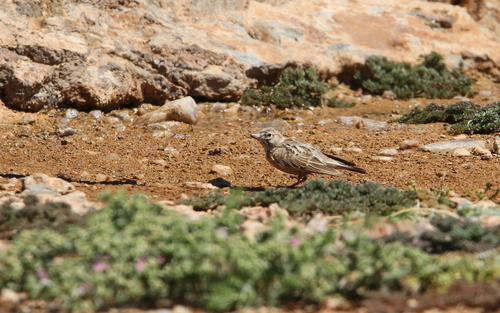
Sclater's Lark (Spizocorys sclateri) Sclater's Lark
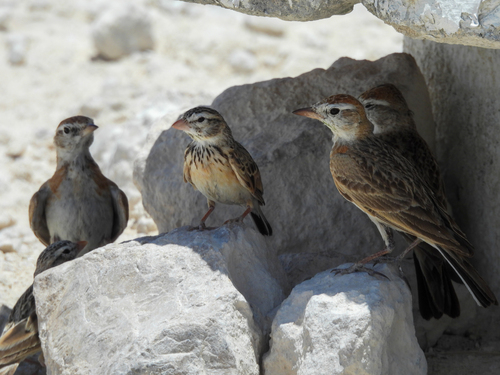
Pink-billed Lark (Spizocorys conirostris) Pink-billed Lark

Media

Loading…

In short

The most reliable difference between Sclater's Lark and Pink-billed Lark is their habitat preference: Sclater's Lark favors dry shrubland, while Pink-billed Lark is found in dry lowland grassland. Sclater's Lark is also noticeably heavier and bulkier than the smaller, lighter Pink-billed Lark. In the field, both species can look similar, but subtle differences in structure and context can help. There are no detailed age-specific wing or juvenile plumage marks documented for either species in the available sources, so focus on habitat, size, and overall structure for separation.

Identification tips

  1. Habitat is often the best clue: Sclater's Lark is tied to dry shrubland, while Pink-billed Lark prefers open grassland. Always note the dominant vegetation and landscape.
  2. Size and build: Sclater's Lark is heavier and bulkier (19.0 g) compared to the lighter, daintier Pink-billed Lark (14.3 g). In direct comparison, Sclater's looks more solid.
  3. Structure: While detailed bill or wing formula differences are not described, Pink-billed Lark is generally smaller and may appear more delicate, especially in mixed flocks.
  4. Plumage similarity: Both species are sandy-brown with subtle streaking; do not rely on color or streaking to separate them. No unique juvenile or immature marks are documented.
  5. Flight behavior: If you see a lark performing a steep, silent ascent followed by a rapid, pulsed song in flight, it is likely a Pink-billed Lark male displaying.
  6. Flock context: Pink-billed Lark may be more likely to be seen in larger, vocal flocks, especially in open grassland. Sclater's Lark is more localized and may be less conspicuous.
  7. Vocalizations: If you hear a high-pitched, individualized flight call or a rapid, pulsed flight song, Pink-billed Lark is a strong candidate. Sclater's Lark's calls are not described, so absence of these vocalizations is not diagnostic.
  8. Range overlap: Both species occur in Namibia and South Africa, but Pink-billed Lark extends into Botswana and Zambia. Check your location against known ranges.
  9. Breeding context: Pink-billed Lark is noted for low breeding success and a variety of nestling and adult calls, but these are not field marks for quick separation.
  10. Seasonality: No seasonal plumage or structural differences are described for either species; both can be present year-round in their respective habitats.
  11. Sex differences: No sexual dimorphism is noted in the available sources for either species.
  12. When in doubt: If you cannot separate them by habitat, size, or behavior, it may not be possible to identify the bird to species in the field without a close, diagnostic view or vocalization.

Size

Sclater's Lark is the heavier of the two, with an average adult mass of 19.0 g compared to the Pink-billed Lark's 14.3 g [wikidata]. This difference is often apparent in the field, as Sclater's Lark appears more robust and solid, while Pink-billed Lark is smaller and more delicate overall. Both are small larks, but this mass difference is one of the most consistent structural clues.

Plumage

No detailed age-specific or upperwing pattern differences are documented in the sources for either species, so plumage is not a reliable separator. Both species are typical sandy-brown larks with subtle streaking, and no unique juvenile or immature marks are described. Adult plumage is similar, with no mention of distinctive breeding or non-breeding differences that would aid field separation.

Behaviour

Both species are ground-dwelling larks, but Pink-billed Lark is noted for its aerial display flight, where the male ascends silently and then sings while flying irregularly before descending. Sclater's Lark's behavior is less described, but it is likely more terrestrial and less prone to conspicuous display flights. In mixed lark flocks, Pink-billed Lark may be more vocal and active in flight.

Habitat

Habitat is a key separator: Sclater's Lark is found in subtropical or tropical dry shrubland, mainly in Namibia and South Africa [wikipedia]. Pink-billed Lark prefers subtropical or tropical dry lowland grassland across a broader swath of southern Africa, including Botswana, Zambia, and South Africa [wikipedia]. If you find a lark in open shrubland, Sclater's is more likely; in open grassland, Pink-billed is favored.

Voice

Pink-billed Lark has a wide range of calls, including a high-pitched flight call, a rapid pulsed flight song during aerial displays, and various soft or harsh calls depending on context [wikipedia]. Sclater's Lark's vocalizations are not described in the available sources, so voice is not a reliable separator unless you are familiar with Pink-billed Lark's repertoire. In practice, a distinctive flight song or high-pitched call in a flock may point to Pink-billed Lark.

Submit a better description

Use the same sections as the comparison. Your text is published immediately.

The most reliable difference between Sclater's Lark and Pink-billed Lark is their habitat preference: Sclater's Lark favors dry shrubland, while Pink-billed Lark is found in dry lowland grassland. Sclater's Lark is also noticeably heavier and bulkier than the smaller, lighter Pink-billed Lark. In the field, both species can look similar, but subtle differences in structure and context can help. There are no detailed age-specific wing or juvenile plumage marks documented for either species in the available sources, so focus on habitat, size, and overall structure for separation.

  1. Habitat is often the best clue: Sclater's Lark is tied to dry shrubland, while Pink-billed Lark prefers open grassland. Always note the dominant vegetation and landscape.
  2. Size and build: Sclater's Lark is heavier and bulkier (19.0 g) compared to the lighter, daintier Pink-billed Lark (14.3 g). In direct comparison, Sclater's looks more solid.
  3. Structure: While detailed bill or wing formula differences are not described, Pink-billed Lark is generally smaller and may appear more delicate, especially in mixed flocks.
  4. Plumage similarity: Both species are sandy-brown with subtle streaking; do not rely on color or streaking to separate them. No unique juvenile or immature marks are documented.
  5. Flight behavior: If you see a lark performing a steep, silent ascent followed by a rapid, pulsed song in flight, it is likely a Pink-billed Lark male displaying.
  6. Flock context: Pink-billed Lark may be more likely to be seen in larger, vocal flocks, especially in open grassland. Sclater's Lark is more localized and may be less conspicuous.
  7. Vocalizations: If you hear a high-pitched, individualized flight call or a rapid, pulsed flight song, Pink-billed Lark is a strong candidate. Sclater's Lark's calls are not described, so absence of these vocalizations is not diagnostic.
  8. Range overlap: Both species occur in Namibia and South Africa, but Pink-billed Lark extends into Botswana and Zambia. Check your location against known ranges.
  9. Breeding context: Pink-billed Lark is noted for low breeding success and a variety of nestling and adult calls, but these are not field marks for quick separation.
  10. Seasonality: No seasonal plumage or structural differences are described for either species; both can be present year-round in their respective habitats.
  11. Sex differences: No sexual dimorphism is noted in the available sources for either species.
  12. When in doubt: If you cannot separate them by habitat, size, or behavior, it may not be possible to identify the bird to species in the field without a close, diagnostic view or vocalization.

Sclater's Lark is the heavier of the two, with an average adult mass of 19.0 g compared to the Pink-billed Lark's 14.3 g [wikidata]. This difference is often apparent in the field, as Sclater's Lark appears more robust and solid, while Pink-billed Lark is smaller and more delicate overall. Both are small larks, but this mass difference is one of the most consistent structural clues.

No detailed age-specific or upperwing pattern differences are documented in the sources for either species, so plumage is not a reliable separator. Both species are typical sandy-brown larks with subtle streaking, and no unique juvenile or immature marks are described. Adult plumage is similar, with no mention of distinctive breeding or non-breeding differences that would aid field separation.

Both species are ground-dwelling larks, but Pink-billed Lark is noted for its aerial display flight, where the male ascends silently and then sings while flying irregularly before descending. Sclater's Lark's behavior is less described, but it is likely more terrestrial and less prone to conspicuous display flights. In mixed lark flocks, Pink-billed Lark may be more vocal and active in flight.

Habitat is a key separator: Sclater's Lark is found in subtropical or tropical dry shrubland, mainly in Namibia and South Africa [wikipedia]. Pink-billed Lark prefers subtropical or tropical dry lowland grassland across a broader swath of southern Africa, including Botswana, Zambia, and South Africa [wikipedia]. If you find a lark in open shrubland, Sclater's is more likely; in open grassland, Pink-billed is favored.

Pink-billed Lark has a wide range of calls, including a high-pitched flight call, a rapid pulsed flight song during aerial displays, and various soft or harsh calls depending on context [wikipedia]. Sclater's Lark's vocalizations are not described in the available sources, so voice is not a reliable separator unless you are familiar with Pink-billed Lark's repertoire. In practice, a distinctive flight song or high-pitched call in a flock may point to Pink-billed Lark.

Discard your changes?

You have unsaved edits. If you leave now, those changes will be lost.

Sclater's Lark · Pink-billed Lark · My Tricky Birds