
Motmot

Scaly Spurfowl vs Clapperton's Spurfowl

Pternistis squamatus versus Pternistis clappertoni

Play a quiz with Scaly Spurfowl and Clapperton's Spurfowl
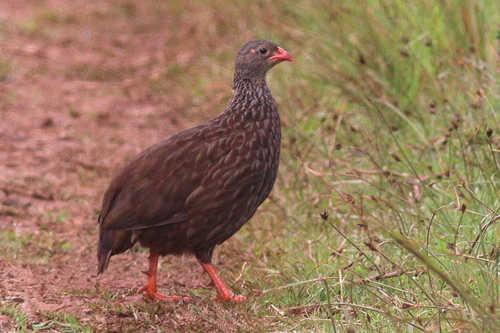
Scaly Spurfowl (Pternistis squamatus) Scaly Spurfowl
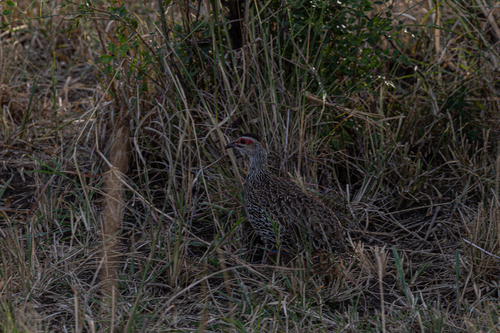
Clapperton's Spurfowl (Pternistis clappertoni) Clapperton's Spurfowl

Media

Loading…

In short

Scaly Spurfowl and Clapperton's Spurfowl are both medium-sized, ground-dwelling birds of the genus Pternistis, and their ranges overlap in parts of Central and East Africa. The most reliable field separation is based on subtle differences in their overall plumage patterning and the context of their typical habitats, as both species are structurally very similar. In the field, look for the more distinctly 'scaly' appearance of Scaly Spurfowl, with its fine-edged feather markings, compared to the plainer, less patterned look of Clapperton's Spurfowl. Habitat can also be a clue: Scaly Spurfowl is more often found in forested or dense woodland environments, while Clapperton's Spurfowl favors drier, more open savanna and Sahelian habitats. Age-specific wing or flight patterns are not described in the available notes for either species, so focus on ground views and context.

Identification tips

  1. Scaly breast and flank pattern: Scaly Spurfowl shows pale-edged feathers on the underparts, creating a distinct 'scaly' look, especially on the breast and flanks. This is the most reliable visual mark at close range for all ages and sexes.
  2. Plainer underparts in Clapperton's: Clapperton's Spurfowl lacks the strong pale feather edging, appearing more uniformly brownish or grayish below, with only subtle patterning.
  3. Habitat context: In dense forest or heavy woodland, Scaly Spurfowl is much more likely; in open savanna, bush, or Sahel, Clapperton's is expected. Use habitat as a strong supporting clue, especially when plumage is hard to judge.
  4. No strong facial or wing pattern: Both species lack bold face stripes, throat patches, or strong wing panels, so do not rely on these marks for separation.
  5. Similar structure: Both are medium-sized, robust, short-tailed gamebirds. Bill, tail, and leg structure are not useful for separation.
  6. Flight views are not diagnostic: No distinctive upperwing or flight pattern differences are described for either species, so in-flight separation is unreliable.
  7. Juvenile and immature birds: No age-specific plumage or wing pattern differences are noted; the 'scaly' effect on Scaly Spurfowl should be visible even in younger birds, though less crisp.
  8. Sexes similar: Both species show little sexual dimorphism in plumage, so male/female differences are not useful for field ID.
  9. Overlap in range: Both species can occur in Cameroon, Central African Republic, Ethiopia, Nigeria, Sudan, and Uganda, so do not use range alone for separation in these countries.
  10. Behavior not diagnostic: Both species behave similarly—shy, terrestrial, quick to run for cover—so do not rely on behavior for separation.
  11. Voice not described: No vocal differences are provided in the available notes; do not use voice for separation unless you have local expertise.
  12. Context of encounter: If you find a spurfowl in thick, humid forest, lean toward Scaly; in dry, open country, lean toward Clapperton's. When in doubt, try to get a clear view of the underpart feather edges.

Size

Both species are similar in overall size and structure, typical of the Pternistis genus. There is no diagnostic difference in body size, bill shape, or tail length noted between Scaly Spurfowl and Clapperton's Spurfowl in the available sources. Expect both to appear as medium-sized, robust, short-tailed gamebirds with strong legs and a compact build.

Plumage

No age-specific upperwing or flight pattern differences are described for either species in the available notes. For all ages, the main plumage distinction is the 'scaly' effect on Scaly Spurfowl: its body feathers, especially on the breast and flanks, are edged with pale margins, giving a scaled appearance. Clapperton's Spurfowl, in contrast, is less distinctly patterned, often appearing plainer or more uniform brownish, with less obvious feather edging. This difference is most apparent on perched or walking birds at close range. Both species lack strong facial markings or bold wing panels that would be visible at a distance or in flight.

Behaviour

Both species are shy, terrestrial birds that prefer to run rather than fly when disturbed. Their behavior is similar: typically seen singly or in pairs, foraging on the ground and quickly seeking cover. There is no diagnostic behavioral difference noted between the two in the available sources.

Habitat

Habitat is a useful supporting clue. Scaly Spurfowl is most often found in forested areas, dense woodland, and thick undergrowth, sometimes near forest edges. Clapperton's Spurfowl, on the other hand, prefers drier, more open habitats such as savanna, Sahel, and bush country, often away from dense forest. Where their ranges overlap, habitat context can help: a spurfowl in thick forest is more likely Scaly, while one in open, arid country is more likely Clapperton's.

Submit a better description

Use the same sections as the comparison. Your text is published immediately.

Scaly Spurfowl and Clapperton's Spurfowl are both medium-sized, ground-dwelling birds of the genus Pternistis, and their ranges overlap in parts of Central and East Africa. The most reliable field separation is based on subtle differences in their overall plumage patterning and the context of their typical habitats, as both species are structurally very similar. In the field, look for the more distinctly 'scaly' appearance of Scaly Spurfowl, with its fine-edged feather markings, compared to the plainer, less patterned look of Clapperton's Spurfowl. Habitat can also be a clue: Scaly Spurfowl is more often found in forested or dense woodland environments, while Clapperton's Spurfowl favors drier, more open savanna and Sahelian habitats. Age-specific wing or flight patterns are not described in the available notes for either species, so focus on ground views and context.

  1. Scaly breast and flank pattern: Scaly Spurfowl shows pale-edged feathers on the underparts, creating a distinct 'scaly' look, especially on the breast and flanks. This is the most reliable visual mark at close range for all ages and sexes.
  2. Plainer underparts in Clapperton's: Clapperton's Spurfowl lacks the strong pale feather edging, appearing more uniformly brownish or grayish below, with only subtle patterning.
  3. Habitat context: In dense forest or heavy woodland, Scaly Spurfowl is much more likely; in open savanna, bush, or Sahel, Clapperton's is expected. Use habitat as a strong supporting clue, especially when plumage is hard to judge.
  4. No strong facial or wing pattern: Both species lack bold face stripes, throat patches, or strong wing panels, so do not rely on these marks for separation.
  5. Similar structure: Both are medium-sized, robust, short-tailed gamebirds. Bill, tail, and leg structure are not useful for separation.
  6. Flight views are not diagnostic: No distinctive upperwing or flight pattern differences are described for either species, so in-flight separation is unreliable.
  7. Juvenile and immature birds: No age-specific plumage or wing pattern differences are noted; the 'scaly' effect on Scaly Spurfowl should be visible even in younger birds, though less crisp.
  8. Sexes similar: Both species show little sexual dimorphism in plumage, so male/female differences are not useful for field ID.
  9. Overlap in range: Both species can occur in Cameroon, Central African Republic, Ethiopia, Nigeria, Sudan, and Uganda, so do not use range alone for separation in these countries.
  10. Behavior not diagnostic: Both species behave similarly—shy, terrestrial, quick to run for cover—so do not rely on behavior for separation.
  11. Voice not described: No vocal differences are provided in the available notes; do not use voice for separation unless you have local expertise.
  12. Context of encounter: If you find a spurfowl in thick, humid forest, lean toward Scaly; in dry, open country, lean toward Clapperton's. When in doubt, try to get a clear view of the underpart feather edges.

Both species are similar in overall size and structure, typical of the Pternistis genus. There is no diagnostic difference in body size, bill shape, or tail length noted between Scaly Spurfowl and Clapperton's Spurfowl in the available sources. Expect both to appear as medium-sized, robust, short-tailed gamebirds with strong legs and a compact build.

No age-specific upperwing or flight pattern differences are described for either species in the available notes. For all ages, the main plumage distinction is the 'scaly' effect on Scaly Spurfowl: its body feathers, especially on the breast and flanks, are edged with pale margins, giving a scaled appearance. Clapperton's Spurfowl, in contrast, is less distinctly patterned, often appearing plainer or more uniform brownish, with less obvious feather edging. This difference is most apparent on perched or walking birds at close range. Both species lack strong facial markings or bold wing panels that would be visible at a distance or in flight.

Both species are shy, terrestrial birds that prefer to run rather than fly when disturbed. Their behavior is similar: typically seen singly or in pairs, foraging on the ground and quickly seeking cover. There is no diagnostic behavioral difference noted between the two in the available sources.

Habitat is a useful supporting clue. Scaly Spurfowl is most often found in forested areas, dense woodland, and thick undergrowth, sometimes near forest edges. Clapperton's Spurfowl, on the other hand, prefers drier, more open habitats such as savanna, Sahel, and bush country, often away from dense forest. Where their ranges overlap, habitat context can help: a spurfowl in thick forest is more likely Scaly, while one in open, arid country is more likely Clapperton's.

Discard your changes?

You have unsaved edits. If you leave now, those changes will be lost.

Scaly Spurfowl · Clapperton's Spurfowl · My Tricky Birds