
Motmot

Satin Bowerbird vs Great Bowerbird

Ptilonorhynchus violaceus versus Chlamydera nuchalis

Play a quiz with Satin Bowerbird and Great Bowerbird
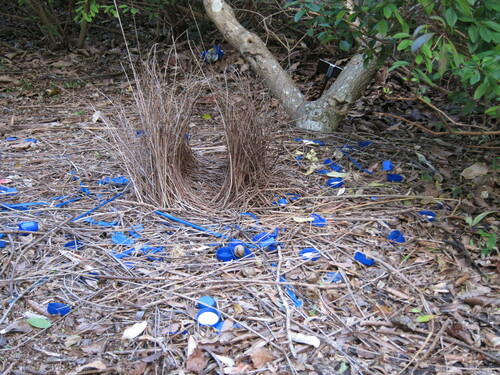
Satin Bowerbird (Ptilonorhynchus violaceus) Satin Bowerbird
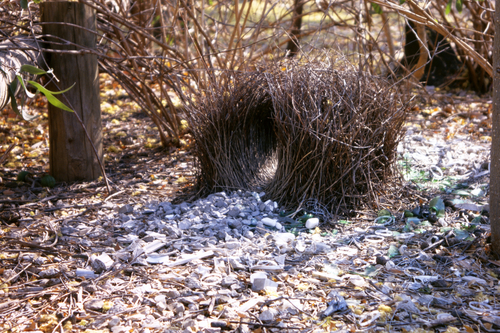
Great Bowerbird (Chlamydera nuchalis) Great Bowerbird

Media

Loading…

In short

The most reliable field mark to separate Satin Bowerbird from Great Bowerbird is the adult male's plumage: mature male Satin Bowerbirds are a striking, glossy blue-black with violet-blue eyes, while Great Bowerbird males are never this color and instead show a pale brownish overall tone with a distinctive lavender nuchal crest visible during display. Immature and female Satin Bowerbirds are greenish-brown with bold scalloping below and bright blue eyes, which can be confused with the more uniformly pale brown Great Bowerbird, but the latter lacks the blue eye and intricate underpart pattern. Both species build bowers, but the structure and decoration style differ, and their ranges do not overlap: Satin Bowerbird is found in eastern Australia, Great Bowerbird in the north. Always consider age and sex, as immature Satin Bowerbirds are the most frequent source of confusion.

Identification tips

  1. Adult male Satin Bowerbird: Look for a bird that is entirely glossy blue-black with a metallic sheen and violet-blue eyes. No other bowerbird in Australia shows this combination.
  2. Adult male Great Bowerbird: Never glossy blue-black; instead, pale brownish overall with a concealed lavender nuchal crest that is flared during display. The crest is only visible when the bird is displaying at the bower.
  3. Female/immature Satin Bowerbird: Greenish-brown above, paler below with bold scalloping or reticulation, and always bright blue eyes. This scalloped underpart pattern is diagnostic when seen well.
  4. Great Bowerbird (all ages/sexes): Uniformly pale brownish or grey-brown above and below, with little contrast and no strong scalloping. Underparts may be faintly streaked but lack the intricate pattern of Satin Bowerbird. Eye is dark, never blue.
  5. Eye color: Blue in all Satin Bowerbirds (including immatures and females), dark in Great Bowerbird. This is a key mark at any age if seen well.
  6. Nuchal crest: Only Great Bowerbird males have a bright lavender nuchal crest, which is usually hidden but flared during display. If you see a pale brown bird with a lavender crest, it is Great Bowerbird.
  7. Bower structure and decoration: Satin Bowerbird males prefer blue objects and their bowers may be more focused on blue tones. Great Bowerbird bowers are often oriented north-south and decorated with a wider variety of colored objects. If you see a bower with a strong blue theme, suspect Satin Bowerbird; if the bower is oriented north-south and the male is displaying a lavender crest, it's Great Bowerbird.
  8. Range: Satin Bowerbird is only in eastern Australia, Great Bowerbird only in the north. If you are outside the known range for one species, default to the local one.
  9. Habitat: Satin Bowerbird prefers forest and woodland; Great Bowerbird is more flexible, using open forest, woodland, vine thickets, monsoon forest, and mangroves.
  10. Juvenile confusion: Immature Satin Bowerbirds are the most likely to be confused with Great Bowerbird, but the blue eye and scalloped underparts are reliable separators.
  11. Bill and structure: Both species have a similar strong, straight bill and medium-long tail; structure is not a reliable separator.
  12. Flight views: No distinctive wing or flight pattern differences are described for these species; rely on perched views for identification.
  13. Voice: Not described in the sources; do not rely on vocalizations for separation.
  14. Sexual maturity: Male Satin Bowerbirds do not acquire their blue-black plumage until 7–8 years old; before that, they look like females and require careful scrutiny.
  15. Pitfalls: Do not rely on overall size or shape. Always check eye color and underpart pattern in perched birds, and look for the lavender crest display in Great Bowerbird males.

Size

Satin Bowerbird has a reported average body mass of 173g [wikidata], which is robust for a bowerbird but not exceptional. No direct mass is given for Great Bowerbird, but field experience and the literature suggest Great Bowerbird is similar or slightly larger in overall size and bulk. Both are medium-large passerines with a strong, straight bill and fairly long tail, so size alone is not a reliable separator in the field.

Plumage

Adult male Satin Bowerbird is unmistakable: entirely deep blue-black with a metallic sheen and violet-blue eyes. This glossy, almost iridescent look is unique among bowerbirds and never shown by Great Bowerbird. Female and immature Satin Bowerbirds are greenish-brown above, paler below with strong scalloping or reticulation, and always have striking blue eyes. Great Bowerbird of all ages is pale brownish or grey-brown above and below, with less contrast and no strong scalloping; the underparts are plain or faintly streaked. The male Great Bowerbird has a concealed but sometimes visible bright lavender nuchal crest, which is flared during display but otherwise hidden. Eye color is a key mark: blue in Satin Bowerbird (all ages), dark in Great Bowerbird. No distinctive age-specific wing or flight pattern is described for either species in the sources, so separation relies on perched views and head/underpart detail.

Behaviour

Both species are classic bowerbirds: males build and decorate bowers and perform elaborate displays to attract females, while females build the nest and raise young alone. Satin Bowerbird males favor blue objects for decoration, which may accentuate their plumage, while Great Bowerbird males use a variety of colored objects and are noted for orienting their bowers north-south to maximize sunlight on their lavender crest during display. Both species are shy around the nest but males are conspicuous at bowers. Display behavior, bower orientation, and decoration color can help with identification if observed closely.

Habitat

Satin Bowerbird is restricted to eastern Australia, typically in forests and woodlands, whereas Great Bowerbird is found across northern Australia, from Broome to Cape York, in a wide range of habitats including open forest, woodland, vine thickets, monsoon forest, and even mangrove margins. If you are outside the overlap zone, range is a strong clue. In areas where only one species occurs, habitat can be a useful supporting mark.

Submit a better description

Use the same sections as the comparison. Your text is published immediately.

The most reliable field mark to separate Satin Bowerbird from Great Bowerbird is the adult male's plumage: mature male Satin Bowerbirds are a striking, glossy blue-black with violet-blue eyes, while Great Bowerbird males are never this color and instead show a pale brownish overall tone with a distinctive lavender nuchal crest visible during display. Immature and female Satin Bowerbirds are greenish-brown with bold scalloping below and bright blue eyes, which can be confused with the more uniformly pale brown Great Bowerbird, but the latter lacks the blue eye and intricate underpart pattern. Both species build bowers, but the structure and decoration style differ, and their ranges do not overlap: Satin Bowerbird is found in eastern Australia, Great Bowerbird in the north. Always consider age and sex, as immature Satin Bowerbirds are the most frequent source of confusion.

  1. Adult male Satin Bowerbird: Look for a bird that is entirely glossy blue-black with a metallic sheen and violet-blue eyes. No other bowerbird in Australia shows this combination.
  2. Adult male Great Bowerbird: Never glossy blue-black; instead, pale brownish overall with a concealed lavender nuchal crest that is flared during display. The crest is only visible when the bird is displaying at the bower.
  3. Female/immature Satin Bowerbird: Greenish-brown above, paler below with bold scalloping or reticulation, and always bright blue eyes. This scalloped underpart pattern is diagnostic when seen well.
  4. Great Bowerbird (all ages/sexes): Uniformly pale brownish or grey-brown above and below, with little contrast and no strong scalloping. Underparts may be faintly streaked but lack the intricate pattern of Satin Bowerbird. Eye is dark, never blue.
  5. Eye color: Blue in all Satin Bowerbirds (including immatures and females), dark in Great Bowerbird. This is a key mark at any age if seen well.
  6. Nuchal crest: Only Great Bowerbird males have a bright lavender nuchal crest, which is usually hidden but flared during display. If you see a pale brown bird with a lavender crest, it is Great Bowerbird.
  7. Bower structure and decoration: Satin Bowerbird males prefer blue objects and their bowers may be more focused on blue tones. Great Bowerbird bowers are often oriented north-south and decorated with a wider variety of colored objects. If you see a bower with a strong blue theme, suspect Satin Bowerbird; if the bower is oriented north-south and the male is displaying a lavender crest, it's Great Bowerbird.
  8. Range: Satin Bowerbird is only in eastern Australia, Great Bowerbird only in the north. If you are outside the known range for one species, default to the local one.
  9. Habitat: Satin Bowerbird prefers forest and woodland; Great Bowerbird is more flexible, using open forest, woodland, vine thickets, monsoon forest, and mangroves.
  10. Juvenile confusion: Immature Satin Bowerbirds are the most likely to be confused with Great Bowerbird, but the blue eye and scalloped underparts are reliable separators.
  11. Bill and structure: Both species have a similar strong, straight bill and medium-long tail; structure is not a reliable separator.
  12. Flight views: No distinctive wing or flight pattern differences are described for these species; rely on perched views for identification.
  13. Voice: Not described in the sources; do not rely on vocalizations for separation.
  14. Sexual maturity: Male Satin Bowerbirds do not acquire their blue-black plumage until 7–8 years old; before that, they look like females and require careful scrutiny.
  15. Pitfalls: Do not rely on overall size or shape. Always check eye color and underpart pattern in perched birds, and look for the lavender crest display in Great Bowerbird males.

Satin Bowerbird has a reported average body mass of 173g [wikidata], which is robust for a bowerbird but not exceptional. No direct mass is given for Great Bowerbird, but field experience and the literature suggest Great Bowerbird is similar or slightly larger in overall size and bulk. Both are medium-large passerines with a strong, straight bill and fairly long tail, so size alone is not a reliable separator in the field.

Adult male Satin Bowerbird is unmistakable: entirely deep blue-black with a metallic sheen and violet-blue eyes. This glossy, almost iridescent look is unique among bowerbirds and never shown by Great Bowerbird. Female and immature Satin Bowerbirds are greenish-brown above, paler below with strong scalloping or reticulation, and always have striking blue eyes. Great Bowerbird of all ages is pale brownish or grey-brown above and below, with less contrast and no strong scalloping; the underparts are plain or faintly streaked. The male Great Bowerbird has a concealed but sometimes visible bright lavender nuchal crest, which is flared during display but otherwise hidden. Eye color is a key mark: blue in Satin Bowerbird (all ages), dark in Great Bowerbird. No distinctive age-specific wing or flight pattern is described for either species in the sources, so separation relies on perched views and head/underpart detail.

Both species are classic bowerbirds: males build and decorate bowers and perform elaborate displays to attract females, while females build the nest and raise young alone. Satin Bowerbird males favor blue objects for decoration, which may accentuate their plumage, while Great Bowerbird males use a variety of colored objects and are noted for orienting their bowers north-south to maximize sunlight on their lavender crest during display. Both species are shy around the nest but males are conspicuous at bowers. Display behavior, bower orientation, and decoration color can help with identification if observed closely.

Satin Bowerbird is restricted to eastern Australia, typically in forests and woodlands, whereas Great Bowerbird is found across northern Australia, from Broome to Cape York, in a wide range of habitats including open forest, woodland, vine thickets, monsoon forest, and even mangrove margins. If you are outside the overlap zone, range is a strong clue. In areas where only one species occurs, habitat can be a useful supporting mark.

Discard your changes?

You have unsaved edits. If you leave now, those changes will be lost.

Satin Bowerbird · Great Bowerbird · My Tricky Birds