

Motmot

Sardinian Warbler vs Western Subalpine Warbler

Curruca melanocephala versus Curruca iberiae

Play a quiz with Sardinian Warbler and Western Subalpine Warbler
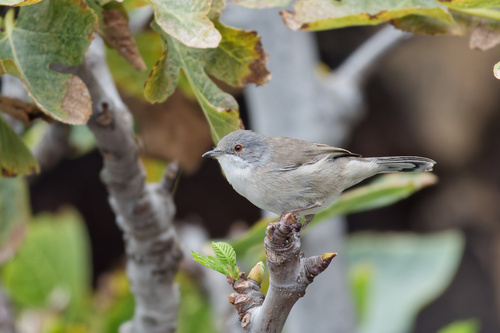
Sardinian Warbler (Curruca melanocephala) Sardinian Warbler
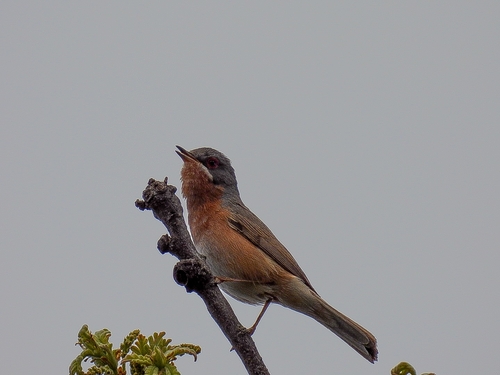
Western Subalpine Warbler (Curruca iberiae) Western Subalpine Warbler

Media

Loading…

In short

The most reliable field mark to separate Sardinian Warbler from Western Subalpine Warbler is the color of the underparts in adult males: Sardinian Warbler males have whitish underparts and a black cap, while Western Subalpine Warbler males show brick-red (rufous) underparts and a grey head. Females and immatures are trickier, but Sardinian Warbler females are generally darker and greyer above, while Western Subalpine Warbler females are browner above with a pinkish flush below. Both species have white malar areas and a naked eye-ring, but the eye itself is red in Sardinian Warbler. Structural differences are subtle, but Sardinian Warbler tends to have a more pointed tail tip and slightly longer wings. In flight, neither species shows a distinctive wing panel or strong pattern, so separation relies on overall color and structure, especially for non-adult males.

Identification tips

  1. Adult male underparts: Sardinian Warbler males have clean whitish underparts, while Western Subalpine Warbler males show brick-red or rufous underparts. This is the single most reliable mark in spring and summer.
  2. Head color in adult males: Sardinian Warbler males have a fully black head (cap), contrasting with the grey back. Western Subalpine Warbler males have a grey head, not black, blending with the back.
  3. White malar area: Both species have a white malar area ('moustache'), but in Western Subalpine Warbler it is usually more sharply defined and stands out against the brick-red underparts; in Sardinian Warbler, it merges into the white throat and pale underparts.
  4. Eye color: Sardinian Warbler (all ages) has a conspicuous red eye, which can be a clincher at close range. Western Subalpine Warbler's eye is not described as red and appears darker.
  5. Female upperparts: Sardinian Warbler females are deep olive brown to greyish olive above, often appearing darker and more uniform. Western Subalpine Warbler females are browner above with a greyer head, giving a slightly two-toned look.
  6. Female/immature underparts: Sardinian Warbler females are generally duller below, while Western Subalpine Warbler females show a pinkish flush to the otherwise whitish underparts, especially in fresh plumage.
  7. Juvenile/immature coloration: Juvenile Sardinian Warbler (in the palest subspecies) can be sandy below, but this is not a general mark for all forms. No strong wing pattern or panel is present in either species at any age.
  8. Tail shape: Sardinian Warbler (nominate) has a rather pointed tail tip, while Western Subalpine Warbler's tail is not described as pointed; this is subtle and best used in combination with other marks.
  9. Wing structure: Sardinian Warbler is described as having large, long wings (nominate), while Western Subalpine Warbler is more compact. This difference is slight and may not be obvious in the field.
  10. Overall darkness: Sardinian Warbler (especially males) appears darker overall, lacking any reddish tones except in some local forms. Western Subalpine Warbler always shows some rufous or pinkish tones below in both sexes.
  11. Flight views: Neither species shows a distinctive wing panel or strong upperwing pattern in flight; rely on overall color and tail shape if seen briefly.
  12. Habitat and range: In much of the Mediterranean, Sardinian Warbler is far more abundant and likely. Western Subalpine Warbler is more localized to southernmost Europe and northwest Africa, but habitat overlap is extensive.
  13. Vocalizations: If heard, Western Subalpine Warbler's fast, rattling song can help, but beware overlap with other Curruca warblers. Sardinian Warbler's vocalizations are not described here.
  14. Seasonal context: In winter, Sardinian Warbler may be more widespread due to migratory movements, while Western Subalpine Warbler is less likely outside breeding season in most areas.
  15. Pitfalls: Immature and female birds are the hardest to separate; use a combination of upperpart color, underpart flush, and eye color, but expect some individuals to be ambiguous without close views.

Size

Both species are similar in size and structure, as is typical for Curruca warblers. Sardinian Warbler is described as having large, long wings and a rather pointed tail tip in the nominate form, while Western Subalpine Warbler is generally small and compact. Any difference in size is slight and unlikely to be diagnostic in the field, especially without direct comparison. Bill size is not highlighted as a key difference between these two.

Plumage

For adult males, the key difference is underpart color: Sardinian Warbler males have whitish underparts, black head, and grey back, while Western Subalpine Warbler males have brick-red underparts, grey head and back, and prominent white malar streaks. Both have white throats and malar areas, but the Sardinian Warbler's head is fully black (not just grey) and the eye is red. Females of Sardinian Warbler are deep olive brown to greyish olive above, with variable but generally duller underparts, while Western Subalpine Warbler females are browner above with a greyer head and a pinkish flush to the whitish underparts. Juvenile Sardinian Warblers are described as 'decidedly sandy' in the palest subspecies, but otherwise both species' immatures lack strong wing patterning or panels, making them hard to separate except by overall coloration and structure. No distinctive upperwing marks (such as panels or W-patterns) are noted for either species at any age.

Behaviour

Both species behave like typical Curruca warblers, often skulking in dense shrubs and making quick, darting movements. No diagnostic behavioral differences are described in the sources. Both may be seen flitting through low vegetation or making short flights between bushes.

Habitat

Both species breed in Mediterranean-type habitats, often in scrubby areas, maquis, or low woodland. Sardinian Warbler is more widespread and common throughout the Mediterranean, while Western Subalpine Warbler is more restricted to southernmost Europe and northwest Africa. In areas of overlap, habitat preferences are very similar and not reliably diagnostic.

Voice

The Western Subalpine Warbler's song is described as fast and rattling, similar to Lesser Whitethroat. No specific vocal description is given for Sardinian Warbler in the provided notes, but both species' calls are not highlighted as a reliable field separation in this context. Use plumage and structure first.

Submit a better description

Use the same sections as the comparison. Your text is published immediately.

The most reliable field mark to separate Sardinian Warbler from Western Subalpine Warbler is the color of the underparts in adult males: Sardinian Warbler males have whitish underparts and a black cap, while Western Subalpine Warbler males show brick-red (rufous) underparts and a grey head. Females and immatures are trickier, but Sardinian Warbler females are generally darker and greyer above, while Western Subalpine Warbler females are browner above with a pinkish flush below. Both species have white malar areas and a naked eye-ring, but the eye itself is red in Sardinian Warbler. Structural differences are subtle, but Sardinian Warbler tends to have a more pointed tail tip and slightly longer wings. In flight, neither species shows a distinctive wing panel or strong pattern, so separation relies on overall color and structure, especially for non-adult males.

  1. Adult male underparts: Sardinian Warbler males have clean whitish underparts, while Western Subalpine Warbler males show brick-red or rufous underparts. This is the single most reliable mark in spring and summer.
  2. Head color in adult males: Sardinian Warbler males have a fully black head (cap), contrasting with the grey back. Western Subalpine Warbler males have a grey head, not black, blending with the back.
  3. White malar area: Both species have a white malar area ('moustache'), but in Western Subalpine Warbler it is usually more sharply defined and stands out against the brick-red underparts; in Sardinian Warbler, it merges into the white throat and pale underparts.
  4. Eye color: Sardinian Warbler (all ages) has a conspicuous red eye, which can be a clincher at close range. Western Subalpine Warbler's eye is not described as red and appears darker.
  5. Female upperparts: Sardinian Warbler females are deep olive brown to greyish olive above, often appearing darker and more uniform. Western Subalpine Warbler females are browner above with a greyer head, giving a slightly two-toned look.
  6. Female/immature underparts: Sardinian Warbler females are generally duller below, while Western Subalpine Warbler females show a pinkish flush to the otherwise whitish underparts, especially in fresh plumage.
  7. Juvenile/immature coloration: Juvenile Sardinian Warbler (in the palest subspecies) can be sandy below, but this is not a general mark for all forms. No strong wing pattern or panel is present in either species at any age.
  8. Tail shape: Sardinian Warbler (nominate) has a rather pointed tail tip, while Western Subalpine Warbler's tail is not described as pointed; this is subtle and best used in combination with other marks.
  9. Wing structure: Sardinian Warbler is described as having large, long wings (nominate), while Western Subalpine Warbler is more compact. This difference is slight and may not be obvious in the field.
  10. Overall darkness: Sardinian Warbler (especially males) appears darker overall, lacking any reddish tones except in some local forms. Western Subalpine Warbler always shows some rufous or pinkish tones below in both sexes.
  11. Flight views: Neither species shows a distinctive wing panel or strong upperwing pattern in flight; rely on overall color and tail shape if seen briefly.
  12. Habitat and range: In much of the Mediterranean, Sardinian Warbler is far more abundant and likely. Western Subalpine Warbler is more localized to southernmost Europe and northwest Africa, but habitat overlap is extensive.
  13. Vocalizations: If heard, Western Subalpine Warbler's fast, rattling song can help, but beware overlap with other Curruca warblers. Sardinian Warbler's vocalizations are not described here.
  14. Seasonal context: In winter, Sardinian Warbler may be more widespread due to migratory movements, while Western Subalpine Warbler is less likely outside breeding season in most areas.
  15. Pitfalls: Immature and female birds are the hardest to separate; use a combination of upperpart color, underpart flush, and eye color, but expect some individuals to be ambiguous without close views.

Both species are similar in size and structure, as is typical for Curruca warblers. Sardinian Warbler is described as having large, long wings and a rather pointed tail tip in the nominate form, while Western Subalpine Warbler is generally small and compact. Any difference in size is slight and unlikely to be diagnostic in the field, especially without direct comparison. Bill size is not highlighted as a key difference between these two.

For adult males, the key difference is underpart color: Sardinian Warbler males have whitish underparts, black head, and grey back, while Western Subalpine Warbler males have brick-red underparts, grey head and back, and prominent white malar streaks. Both have white throats and malar areas, but the Sardinian Warbler's head is fully black (not just grey) and the eye is red. Females of Sardinian Warbler are deep olive brown to greyish olive above, with variable but generally duller underparts, while Western Subalpine Warbler females are browner above with a greyer head and a pinkish flush to the whitish underparts. Juvenile Sardinian Warblers are described as 'decidedly sandy' in the palest subspecies, but otherwise both species' immatures lack strong wing patterning or panels, making them hard to separate except by overall coloration and structure. No distinctive upperwing marks (such as panels or W-patterns) are noted for either species at any age.

Both species behave like typical Curruca warblers, often skulking in dense shrubs and making quick, darting movements. No diagnostic behavioral differences are described in the sources. Both may be seen flitting through low vegetation or making short flights between bushes.

Both species breed in Mediterranean-type habitats, often in scrubby areas, maquis, or low woodland. Sardinian Warbler is more widespread and common throughout the Mediterranean, while Western Subalpine Warbler is more restricted to southernmost Europe and northwest Africa. In areas of overlap, habitat preferences are very similar and not reliably diagnostic.

The Western Subalpine Warbler's song is described as fast and rattling, similar to Lesser Whitethroat. No specific vocal description is given for Sardinian Warbler in the provided notes, but both species' calls are not highlighted as a reliable field separation in this context. Use plumage and structure first.

Discard your changes?

You have unsaved edits. If you leave now, those changes will be lost.

Sardinian Warbler · Western Subalpine Warbler · My Tricky Birds