

Rock Sparrow vs White-winged Snowfinch
Petronia petronia versus Montifringilla nivalis
Play a quiz with Rock Sparrow and White-winged Snowfinch
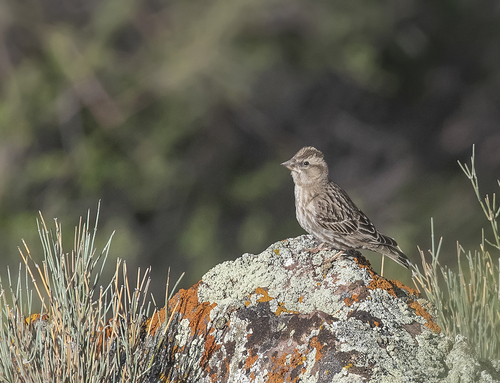 Rock Sparrow
 White-winged Snowfinch
In short
The most reliable field mark is the white-winged snowfinch’s bold white wing panels, which flash in flight and are visible in all plumages—Rock Sparrow never shows this. Rock Sparrow is browner, with a strong whitish supercilium and a subtle yellow throat spot, while snowfinch is paler below with a grey head and, in summer, a black bib. Rock Sparrow has a heavier, conical bill and a more streaked, sparrow-like appearance; snowfinch is bulkier, longer, and shows striking black-and-white contrast in the wings and tail when flying. If you see a large, brown-backed bird with a huge white wing patch in an alpine setting, it’s the snowfinch; a streaky, earth-toned sparrow with a yellow throat patch and no white in the wings is Rock Sparrow.
Identification tips
- White wing panels in flight: If you see a bird with broad, bright white wing panels and a white-edged black tail in flight, it is White-winged Snowfinch—Rock Sparrow never shows any white in the wings or tail. This is the single most diagnostic feature for all ages and seasons.
- Perched wing pattern: Even at rest, the snowfinch’s white wing panel is often visible as a long, narrow white stripe along the folded wing; Rock Sparrow’s wings are brown and patterned, never showing white.
- Bill shape: Rock Sparrow has a notably large, deep, conical bill, giving it a chunky-headed look; snowfinch’s bill is strong but not as deep or conical.
- Supercilium and head pattern: Rock Sparrow shows a strong whitish supercilium and a weak crown stripe, creating a more ‘classic sparrow’ face. Snowfinch has a plain grey head with no strong supercilium.
- Throat patch: Look for the yellow throat patch on Rock Sparrow (both sexes, all seasons, though sometimes hard to see). Snowfinch never has yellow on the throat; in summer, it has a black bib, which is lost in winter.
- Underparts: Rock Sparrow is streaked below; snowfinch is clean white below with no streaking.
- Back and upperparts: Both are brown above, but Rock Sparrow is more patterned and streaked, while snowfinch is plainer.
- Size and structure: Snowfinch is larger, stockier, and longer-bodied, with a more robust jizz, especially when seen with other sparrows.
- Habitat context: If you are in high alpine meadows, rocky slopes above the treeline, or ski resorts, snowfinch is much more likely. Rock Sparrow prefers lower, drier, rocky hills or cliffs.
- Behavior: Snowfinch is fearless and often approaches people in ski areas; Rock Sparrow is more wary and less likely to be seen in close proximity to humans at high elevation.
- Seasonal bill color: In summer, snowfinch has a black bill and black bib; in winter, the bill turns yellow and the bib disappears. Rock Sparrow’s bill is always horn-colored and never black or yellow.
- Vocalizations: Snowfinch’s song is a chattering series of trills and creaks; Rock Sparrow’s is a loud, harsh wheeze. If you hear a mechanical, trilling song in the Alps, think snowfinch.
- Group size: Both can be gregarious, but snowfinch often forms larger, more visible flocks in open alpine areas.
- Pitfalls: Immature snowfinches still show the white wing panels; Rock Sparrow never does, so this mark is safe for all ages. The yellow throat patch of Rock Sparrow can be hard to see, especially in poor light or non-breeding birds, so do not rely on this alone.
- When marks fail: If you cannot see the wings or the bird is distant, use a combination of size, head pattern, habitat, and behavior. But if you see white in the wings or tail, it is always snowfinch, never Rock Sparrow.
Size
White-winged Snowfinch is distinctly larger and bulkier, measuring 16.5–19 cm in length, compared to Rock Sparrow’s 15–17 cm. The snowfinch’s size is accentuated by its stocky build and longer body, giving it a more robust presence than the slightly smaller, slimmer Rock Sparrow. Both are larger than a House Sparrow, but the snowfinch is the biggest of the two. Bill structure also differs: Rock Sparrow has a notably large, deep, conical bill, while snowfinch’s bill is less deep but still strong.
Plumage
- Juvenile/immature and adult in flight: White-winged Snowfinch of all ages shows broad, bright white wing panels and a white-edged black tail—these are extremely conspicuous in flight and diagnostic at any age or season. Rock Sparrow never shows white in the wings or tail.
- Perched birds: Rock Sparrow is brown above with a strong whitish supercilium, a weak crown stripe, and streaked underparts. It has a yellow throat patch (often hard to see) and a generally earth-toned, streaky look. Snowfinch is brown above but much paler below, with a grey head and, in breeding plumage, a black bib. In winter, the snowfinch loses the bib and the bill turns yellow. Sexes are similar in both species, but the yellow throat patch of Rock Sparrow is present in both sexes and is unique among sparrows in its range.
- Age/seasonal variation: Snowfinch’s white wing panels and tail pattern are present year-round and in all plumages. The Rock Sparrow’s yellow throat patch is always present but can be subtle, especially outside the breeding season.
Behaviour
Rock Sparrow is gregarious, often foraging on the ground in open, rocky or semi-open habitats, and can be found near human settlements. It tends to be less confiding than snowfinch. White-winged Snowfinch is fearless, often foraging around ski resorts and alpine buildings, and is much more likely to be seen at high elevations, rarely descending below 1,000 m even in winter. In flight, snowfinch is powerful and direct, often showing off its striking wing pattern, while Rock Sparrow’s flight is more typical of sparrows—less showy, with no white flashes.
Habitat
Rock Sparrow breeds on barren rocky hills, cliffs, and sometimes in human settlements in suitable rocky country, from southern Europe to central Asia. It is very rare north of its range. White-winged Snowfinch is a bird of high mountains, rarely descending below 1,000 m, and is often found in alpine meadows, rocky slopes, and around ski resorts. If you are above the treeline in the Alps or similar ranges, snowfinch is far more likely; Rock Sparrow prefers lower, drier, and less snowy rocky habitats.
Voice
Rock Sparrow has a loud, wheezy song, while White-winged Snowfinch gives a chattering song with many trills and a variety of rolling or creaky calls. The snowfinch’s vocalizations are more varied and mechanical-sounding, whereas Rock Sparrow’s are harsher and less musical. Neither species’ song is likely to be confused with the other if heard well.